Manzo-Merino Joaquin, Lagunas-Martínez Alfredo, Contreras-Ochoa Carla O, Lizano Marcela, Castro-Muñoz Leonardo J, Calderón-Corona Crysele, Torres-Poveda Kirvis, Román-Gonzalez Alicia, Hernández-Pando Rogelio, Bahena-Román Margarita, Madrid-Marina Vicente
CONACyT-Instituto Nacional de Cancerología, Mexico City 14080, Mexico.
Unidad de Investigación Biomédica en Cáncer, Instituto Nacional de Cancerología-Instituto de Investigaciones Biomédicas, Universidad Nacional Autónoma de México, Mexico City 14080, Mexico.
Cancers (Basel). 2018 Dec 17;10(12):521. doi: 10.3390/cancers10120521.
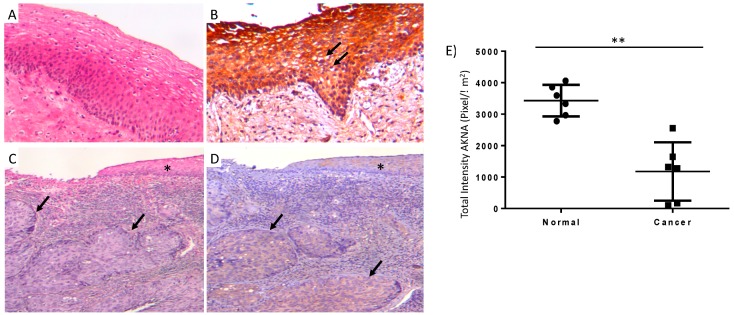
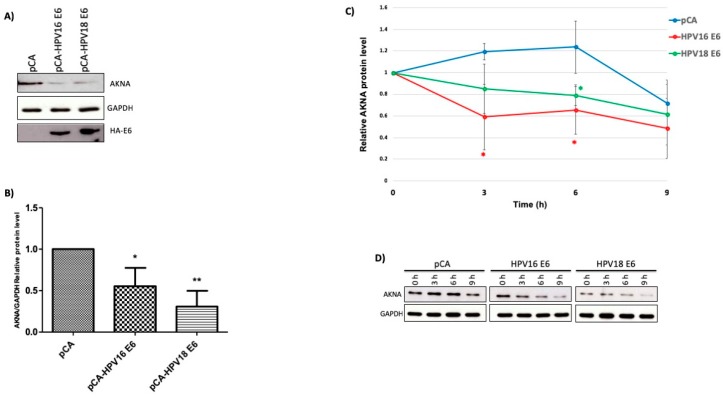
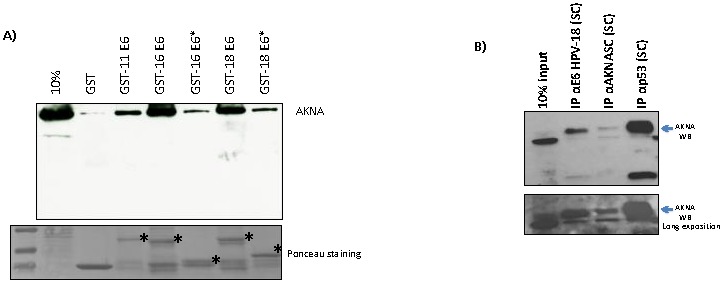
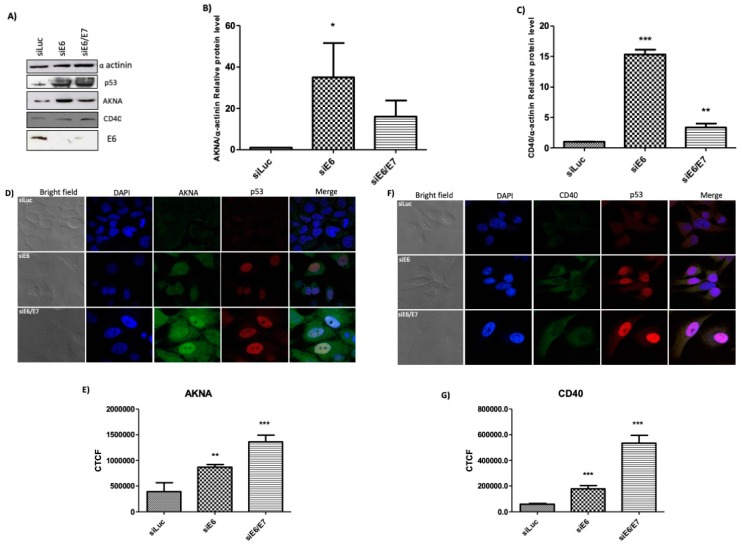
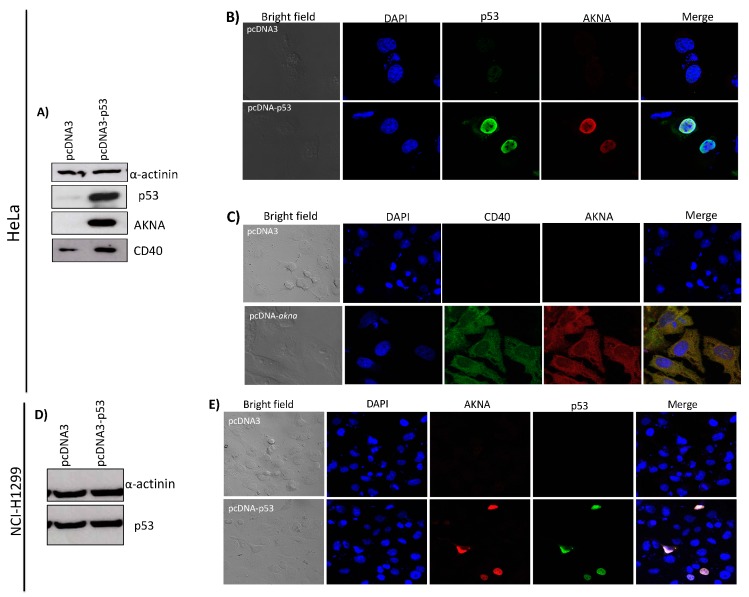
Persistent infection with high-risk Human Papillomavirus (HR-HPV) is the main requisite for cervical cancer development. Normally, HPV is limited to the site of infection and regulates a plethora of cellular elements to avoid the immune surveillance by inducing an anti-inflammatory state, allowing the progress through the viral cycle and the carcinogenic process. Recent findings suggest that the AT-hook transcriptional factor AKNA could play a role in the development of cervical cancer. AKNA is strongly related to the expression of co-stimulatory molecules such CD40/CD40L to achieve an anti-tumoral immune response. To date, there is no evidence demonstrating the effect of the HPV E6 oncoprotein on the AT-hook factor AKNA. In this work, minimal expression of AKNA in cervical carcinoma compared to normal tissue was found. We show the ability of E6 from high-risk HPVs 16 and 18 to interact with and down-regulate AKNA as well as its co-stimulatory molecule CD40 in a proteasome dependent manner. We also found that p53 interacts with AKNA and promotes AKNA expression. Our results indicate that the de-regulation of CD40 and AKNA is induced by the HPV E6 oncoprotein, and this event involves the action of p53 suggesting that the axis E6/p53A/AKNA might play an important role in the de-regulation of the immune system during the carcinogenic process induced by HR-HPV.
高危型人乳头瘤病毒(HR-HPV)的持续感染是宫颈癌发生的主要必要条件。通常情况下,HPV局限于感染部位,并通过诱导抗炎状态来调节众多细胞成分,以逃避免疫监视,从而使病毒循环和致癌过程得以进展。最近的研究结果表明,AT钩转录因子AKNA可能在宫颈癌的发生中起作用。AKNA与共刺激分子如CD40/CD40L的表达密切相关,以实现抗肿瘤免疫反应。迄今为止,尚无证据证明HPV E6癌蛋白对AT钩因子AKNA的影响。在这项研究中,我们发现与正常组织相比,宫颈癌组织中AKNA的表达极低。我们发现高危型HPV 16和18的E6能够以蛋白酶体依赖的方式与AKNA相互作用并下调AKNA及其共刺激分子CD40。我们还发现p53与AKNA相互作用并促进AKNA的表达。我们的结果表明,HPV E6癌蛋白可诱导CD40和AKNA的失调,这一事件涉及p53的作用,提示E6/p53A/AKNA轴可能在HR-HPV诱导的致癌过程中免疫系统失调中起重要作用。