Hauser Daniel, Estermann Manuela, Milosevic Ana, Steinmetz Lukas, Vanhecke Dimitri, Septiadi Dedy, Drasler Barbara, Petri-Fink Alke, Ball Vincent, Rothen-Rutishauser Barbara
Adolphe Merkle Institute, University of Fribourg, Chemin des Verdiers 4, 1700 Fribourg, Switzerland.
Université de Strasbourg, Faculté de Chirurgie Dentaire, 8 Rue Sainte Elisabeth, 67000 Strasbourg, France.
Nanomaterials (Basel). 2018 Dec 17;8(12):1065. doi: 10.3390/nano8121065.
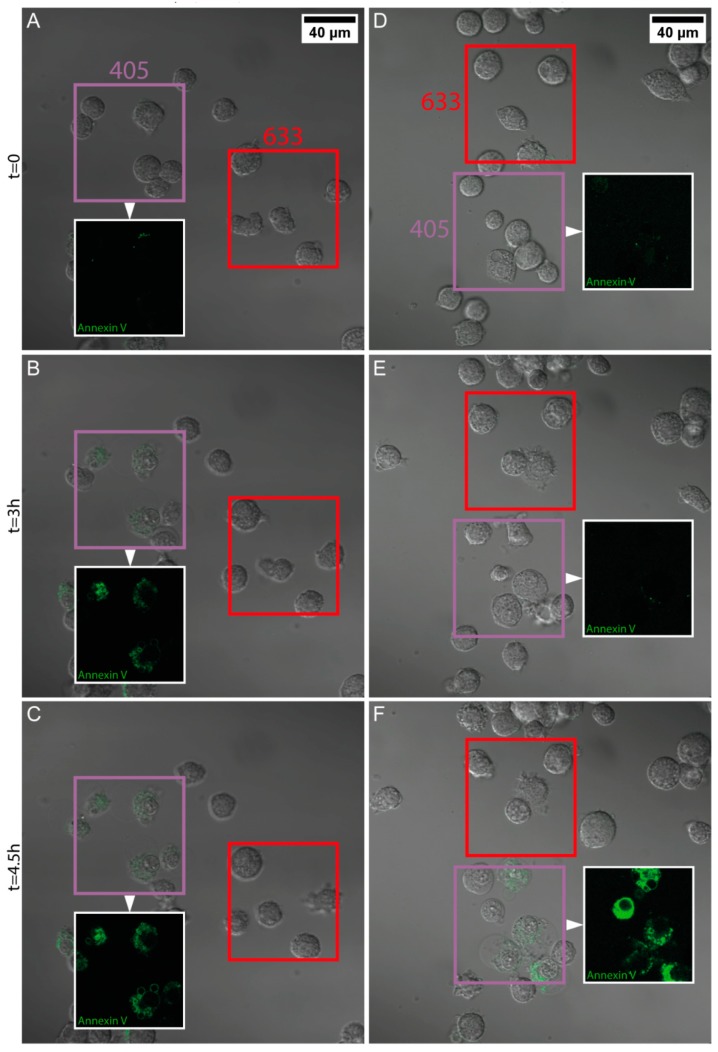
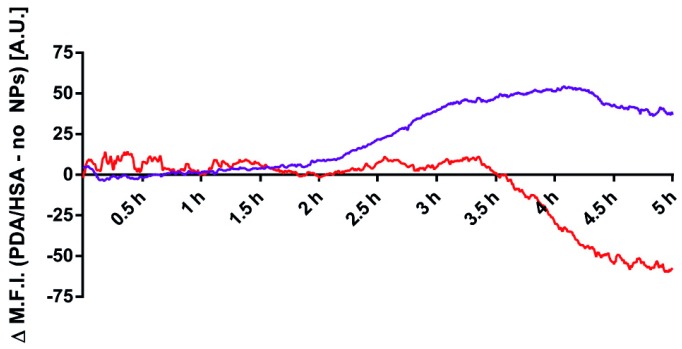
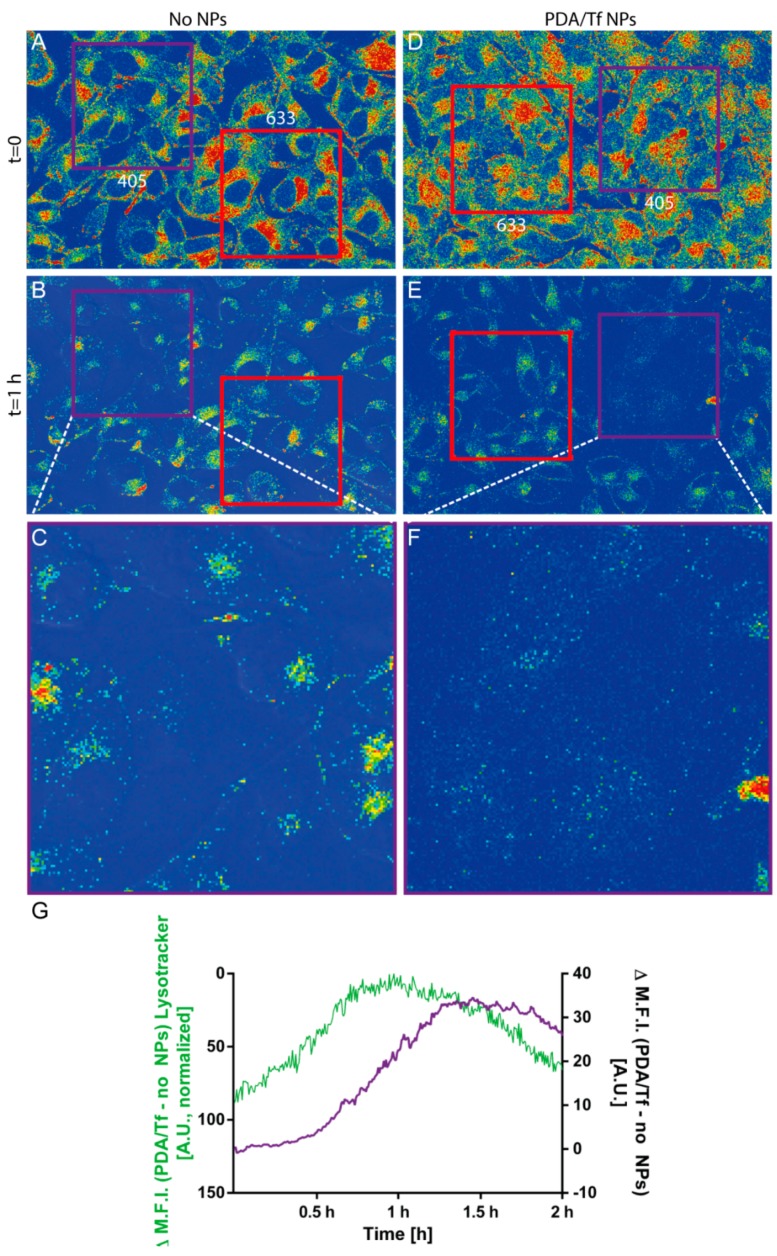
Polydopamine can form biocompatible particles that convert light into heat. Recently, a protocol has been optimized to synthesize polydopamine/protein hybrid nanoparticles that retain the biological function of proteins, and combine it with the stimuli-induced heat generation of polydopamine. We have utilized this novel system to form polydopamine particles, containing transferrin (PDA/Tf). Mouse melanoma cells, which strongly express the transferrin receptor, were exposed to PDA/Tf nanoparticles (NPs) and, subsequently, were irradiated with a UV laser. The cell death rate was monitored in real-time. When irradiated, the melanoma cells exposed to PDA/Tf NPs underwent apoptosis, faster than the control cells, pointing towards the ability of PDA/Tf to mediate UV-light-induced cell death. The system was also validated in an organotypic, 3D-printed tumor spheroid model, comprising mouse melanoma cells, and the exposure and subsequent irradiation with UV-light, yielded similar results to the 2D cell culture. The process of apoptosis was found to be targeted and mediated by the lysosomal membrane permeabilization. Therefore, the herein presented polydopamine/protein NPs constitute a versatile and stable system for cancer cell-targeting and photothermal apoptosis induction.
聚多巴胺可以形成将光转化为热的生物相容性颗粒。最近,一种合成聚多巴胺/蛋白质杂化纳米颗粒的方案得到了优化,该纳米颗粒保留了蛋白质的生物学功能,并将其与聚多巴胺的刺激诱导产热相结合。我们利用这个新系统形成了含有转铁蛋白的聚多巴胺颗粒(PDA/Tf)。强烈表达转铁蛋白受体的小鼠黑色素瘤细胞暴露于PDA/Tf纳米颗粒(NPs),随后用紫外激光照射。实时监测细胞死亡率。照射时,暴露于PDA/Tf NPs的黑色素瘤细胞比对照细胞更快地发生凋亡,这表明PDA/Tf具有介导紫外光诱导细胞死亡的能力。该系统也在包含小鼠黑色素瘤细胞的器官型3D打印肿瘤球体模型中得到验证,紫外光暴露和随后的照射产生了与2D细胞培养相似的结果。发现凋亡过程是由溶酶体膜通透性增加靶向介导的。因此,本文介绍的聚多巴胺/蛋白质NPs构成了一个用于癌细胞靶向和光热诱导凋亡的通用且稳定的系统。