Swamy Sheela, Kupelian Anthony S, Khasriya Rajvinder, Dharmasena Dhanuson, Toteva Hristina, Dehpour Tara, Collins Linda, Rohn Jennifer L, Malone-Lee James
Centre for Nephrology, Division of Medicine, University College London, London, UK.
University College London Hospitals NHS Trust, London, UK.
Int Urogynecol J. 2019 Mar;30(3):409-414. doi: 10.1007/s00192-018-3846-5. Epub 2018 Dec 18.
To measure the effects of an unplanned, sudden cessation of treatment in an unselected group of patients with chronic painful LUTS managed with protracted antimicrobial treatment and to report these observational data collected from a cross-over process.
The imposition of a guideline resulted in the immediate cessation of antibiotic treatment in a cohort of patients with chronic painful LUTS and microscopic pyuria. Patients were assessed before treatment withdrawal, whilst off treatment, and following reinstatement. Outcome measures included a validated symptom score, microscopic enumeration of urinary white cells and uroepithelial cells, and routine urine culture.
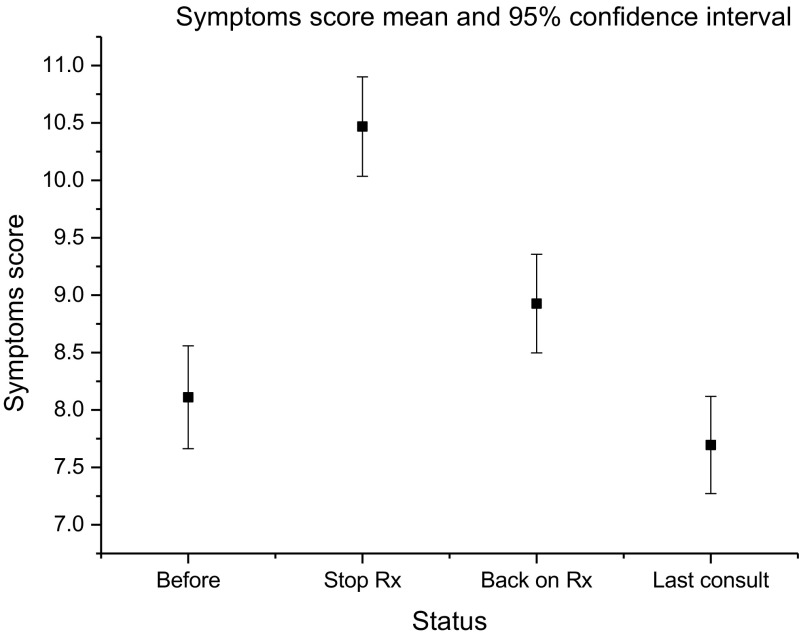
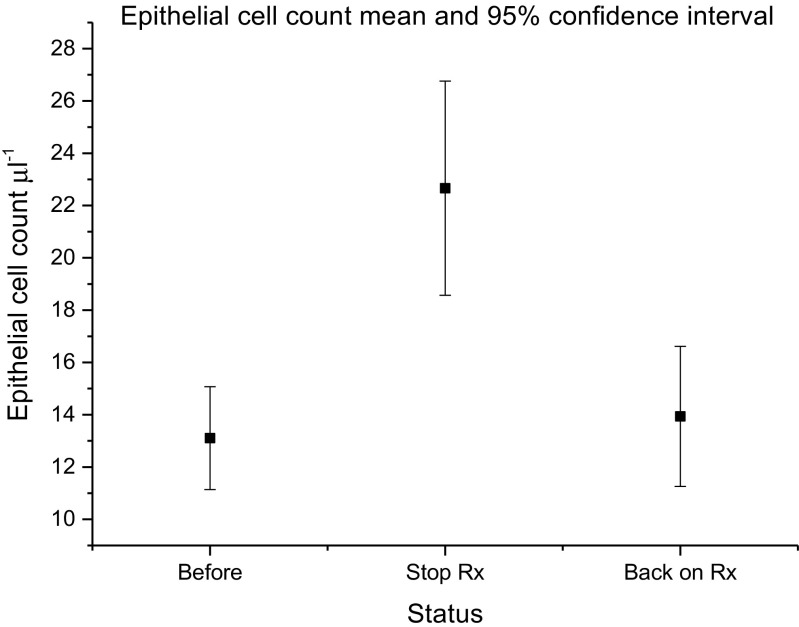
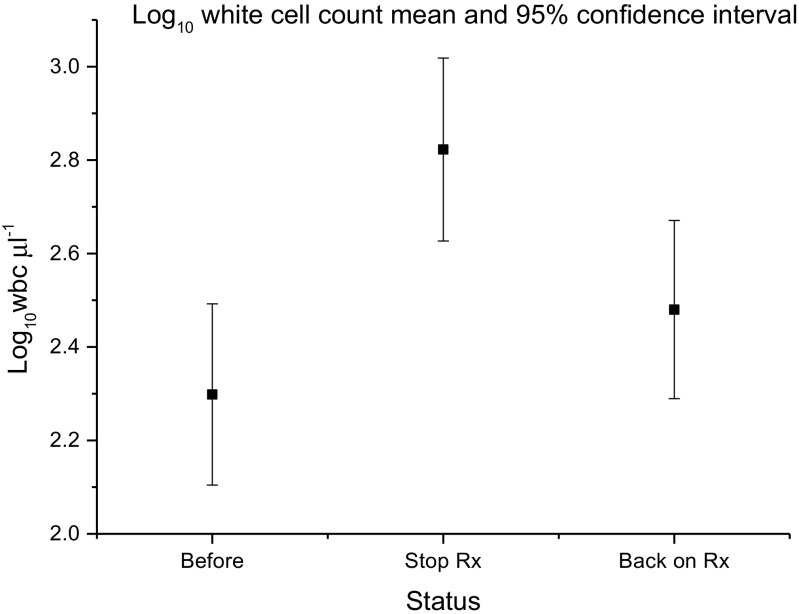
These patients had reported treatment-resistant, painful LUTS for a mean of 6.5 years before treatment at this centre. Treatment was stopped in 221 patients (female = 210; male = 11; mean age = 56 years; SD = 17.81). Sixty-six per cent of women were post-menopausal. After unplanned treatment cessation, 199 patients (90%; female = 188; male = 9) reported deterioration. Eleven patients required hospital care in association with disease recurrence, including acute urinary tract infection (UTI) and urosepsis. Symptom scores increased after cessation and recovered on reinitiating treatment (F = 33; df = 2; p < 0.001). Urinary leucocyte (F = 3.7; df = 2; p = 0.026) and urothelial cells counts mirrored symptomatic changes (F = 6.0; df = 2; p = 0.003). Routine urine culture results did not reflect changes in disease status.
These data support the hypothesis that treating painful LUTS associated with pyuria with long-term antimicrobial courses, despite negative urine culture, is effective. The microscopy of fresh unspun, unstained urine to count white cells and epithelial cells offers a valid method of monitoring disease. An unplanned cessation of antibiotic therapy produced a resurgence of symptoms and lower urinary tract inflammation in patients with chronic LUTS, supporting an infective aetiology below the level of routine detection.
在一组未经挑选、采用长期抗菌治疗的慢性疼痛性下尿路症状(LUTS)患者中,测量计划外突然停止治疗的影响,并报告从交叉过程中收集的这些观察数据。
一项指南的实施导致一组慢性疼痛性LUTS和镜下脓尿患者立即停止抗生素治疗。在停药前、停药期间和恢复治疗后对患者进行评估。结果指标包括经过验证的症状评分、尿白细胞和尿路上皮细胞的显微镜计数,以及常规尿培养。
这些患者在该中心接受治疗前,平均已报告有抗治疗性疼痛性LUTS达6.5年。221例患者(女性210例;男性11例;平均年龄56岁;标准差17.81)停止治疗。66%的女性已绝经。计划外停药后,199例患者(90%;女性188例;男性9例)报告病情恶化。11例患者因疾病复发需要住院治疗,包括急性尿路感染(UTI)和尿脓毒症。停药后症状评分增加,重新开始治疗后恢复(F = 33;自由度 = 2;p < 0.001)。尿白细胞(F = 3.7;自由度 = 2;p = 0.026)和尿路上皮细胞计数反映了症状变化(F = 6.0;自由度 = 2;p = 0.003)。常规尿培养结果未反映疾病状态的变化。
这些数据支持以下假设,即尽管尿培养阴性,但用长期抗菌疗程治疗与脓尿相关的疼痛性LUTS是有效的。对新鲜未离心、未染色尿液进行显微镜检查以计数白细胞和上皮细胞,提供了一种有效的疾病监测方法。抗生素治疗的计划外停止导致慢性LUTS患者症状复发和下尿路感染,支持了常规检测水平以下的感染病因。