De Silvestri Andrea, Ferrari Enrico, Gozzi Simone, Marchi Francesca, Foschino Roberto
Department of Food, Environmental and Nutritional Sciences, Università degli studi di Milano, Milan, Italy.
Department of Agricultural and Environmental Sciences, Università degli studi di Milano, Milan, Italy.
Front Microbiol. 2018 Dec 5;9:3023. doi: 10.3389/fmicb.2018.03023. eCollection 2018.
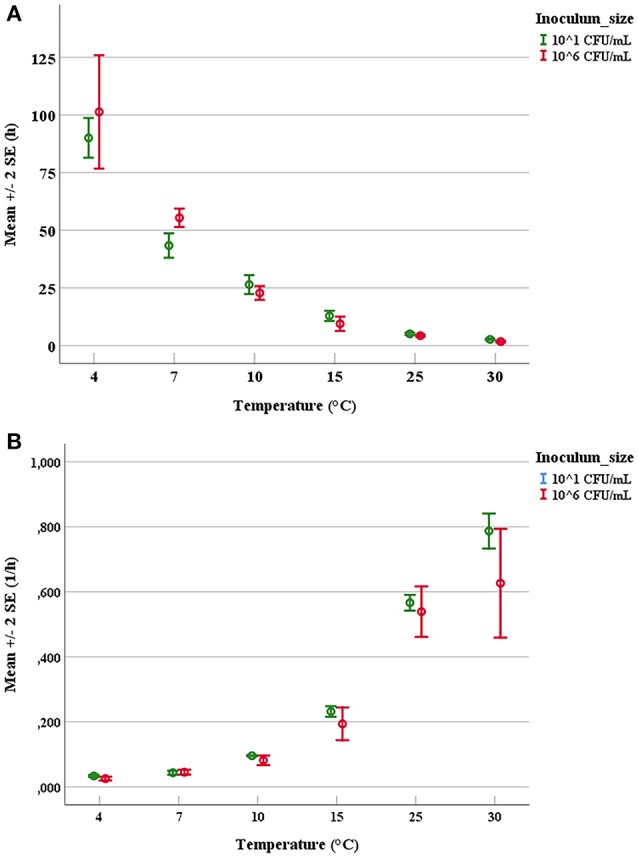
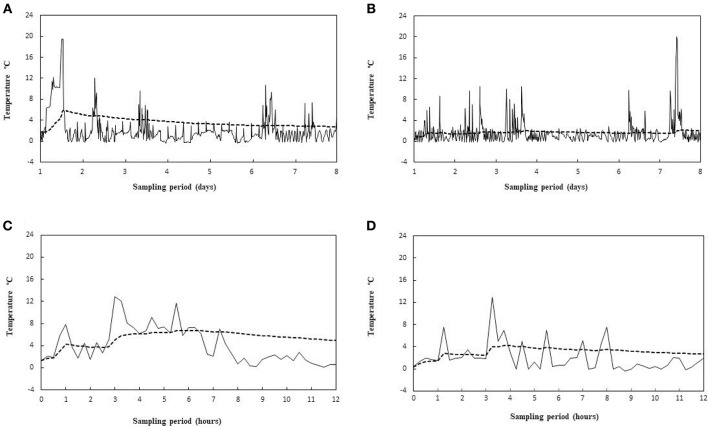
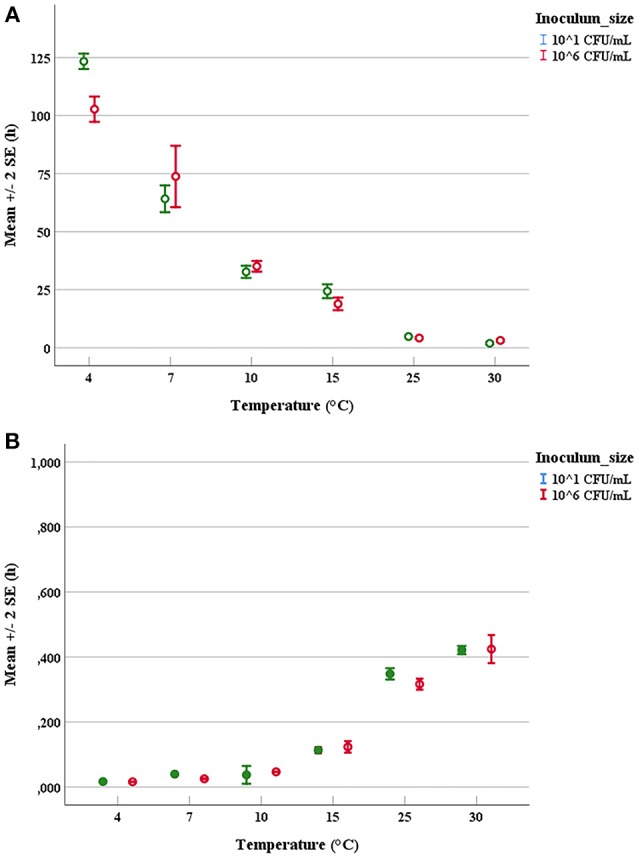
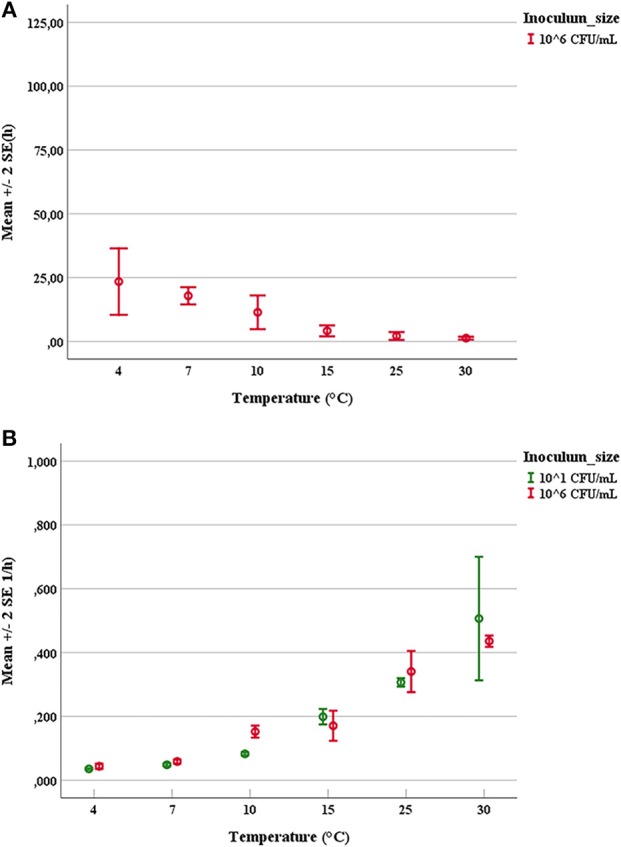
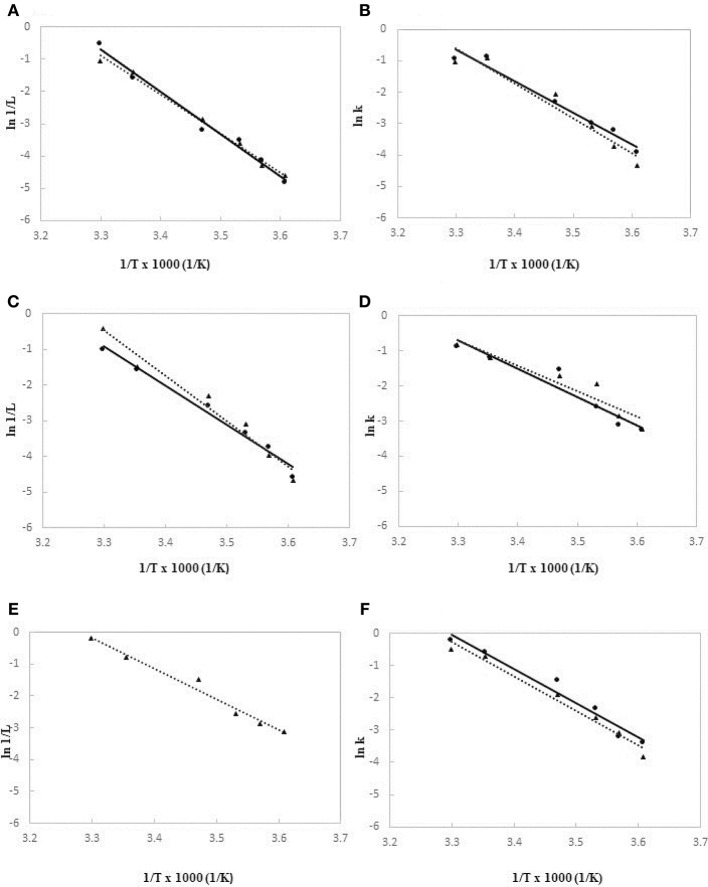
Temperature is the main factor to control the microbial growth in perishable foods. The psychrotrophic pathogen bacteria are microorganisms of concern for food products with extended shelf life in chilling conditions. The aims of this work were two. Firstly, to evaluate growth behavior of DSM-30187, DSM-20600, and DSM-27689 strains, at different temperatures (4, 7, 10, 15, 25, and 30°C) and starting cell concentrations (10 and 10 CFU/mL), in order to determine the activation energies ( ) of the relevant lag phases and growth rates. Secondly, to investigate if Mean Kinetic Temperature (MKT) might be applied in recording temperature devices to alert a thermal abuse in a management control system for food safety. As expected, lag phase and growth rate proved to be heavily affected by temperature whereas the inoculum size did not. The values involved in the duration of latent periods, calculated on the basis of the Arrhenius model, were comparable for and strains (from 21.3 to 24.4 kcal/mol), while significantly differed for (16.6 kcal/mol). The values of growth rates were similar for and strains (from 20.9 to 21.1 kcal/mol), while were considerably lower for (from 14.2 to 16.7 kcal/mol). The use of MKT is widespread and well-accepted in pharmaceutical field as convenient method for estimating drugs degradation in relation to storage temperature. The value of the lag phase found for (23.9 ± 1.2 kcal/mol) was included in the MKT formula. In this work, the air temperature of two chilling rooms was monitored during the normal operating activity in a catering company for a period of 8 months. The MKT profiles were then compared with those of mean temperatures in different conditions (short or prolonged events of thermal abuse) with the purpose to evaluate if it may be applicable to reduce false alarms without lowering the safety level of stored food.
温度是控制易腐食品中微生物生长的主要因素。嗜冷病原菌是冷藏条件下延长保质期食品所关注的微生物。这项工作有两个目标。首先,评估DSM - 30187、DSM - 20600和DSM - 27689菌株在不同温度(4、7、10、15、25和30°C)和起始细胞浓度(10⁴和10⁵CFU/mL)下的生长行为,以确定相关延迟期和生长速率的活化能(Ea)。其次,研究平均动力学温度(MKT)是否可应用于记录温度设备,以便在食品安全管理控制系统中警示热滥用情况。正如预期的那样,延迟期和生长速率受温度影响很大,而接种量则不然。根据阿伦尼乌斯模型计算得出的潜伏期持续时间所涉及的Ea值,对于DSM - 30187和DSM - 20600菌株而言相当(从21.3至24.4千卡/摩尔),而DSM - 27689菌株则显著不同(16.6千卡/摩尔)。DSM - 30187和DSM - 20600菌株的生长速率Ea值相似(从20.9至21.1千卡/摩尔),而DSM - 27689菌株则低得多(从14.2至16.7千卡/摩尔)。MKT的使用在制药领域广泛且被认可,是估计药物与储存温度相关降解的便捷方法。DSM - 30187菌株延迟期的Ea值(23.9±1.2千卡/摩尔)被纳入MKT公式。在这项工作中,一家餐饮公司在正常运营活动期间对两个冷藏室的空气温度进行了为期8个月的监测。然后将MKT曲线与不同条件下(短期或长期热滥用事件)的平均温度曲线进行比较,目的是评估它是否可用于减少误报,同时又不降低储存食品的安全水平。