Sista Federico, Abruzzese Valentina, Carandina Sergio, Salvatorelli Andrea, Furia Marino Di, Cipolloni Gianluca, Vicentini Vincenzo, Guadagni Stefano, Clementi Marco
Department of Applied Clinical Science and Biotechnology, University of L'Aquila, Via Vetoio, 67100, Coppito (AQ), Italy.
ELSAN, Surgical Obesity Center(CCO), Clinique Saint Michel, Toulon, France.
Ann Med Surg (Lond). 2018 Sep 19;36:252-255. doi: 10.1016/j.amsu.2018.09.010. eCollection 2018 Dec.
Gastric Carcinoid Tumors (GCT) are very rare in general population, but some studies evidenced a higher incidence among bariatric surgery patients. Laparoscopic Sleeve Gastrectomy (LSG) is a widely accepted procedure for the surgical treatment of morbid obesity. LSG acts both in reducing food intake and interfering with hormonal balance in the gut-brain axis. In these patients, incidental GCT diagnosis can occur both during pre-bariatric surgery investigation and during post-operative follow-up.
We retrospectively analyzed the database of obesity patients submitted to LSG in two different centers to find out incidence of GCT in patients treated by surgery from May 2013 to March 2018.
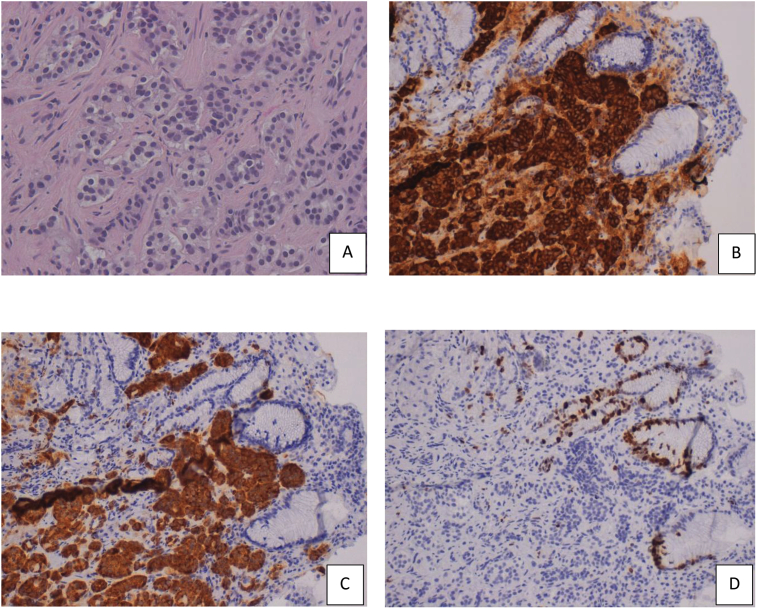
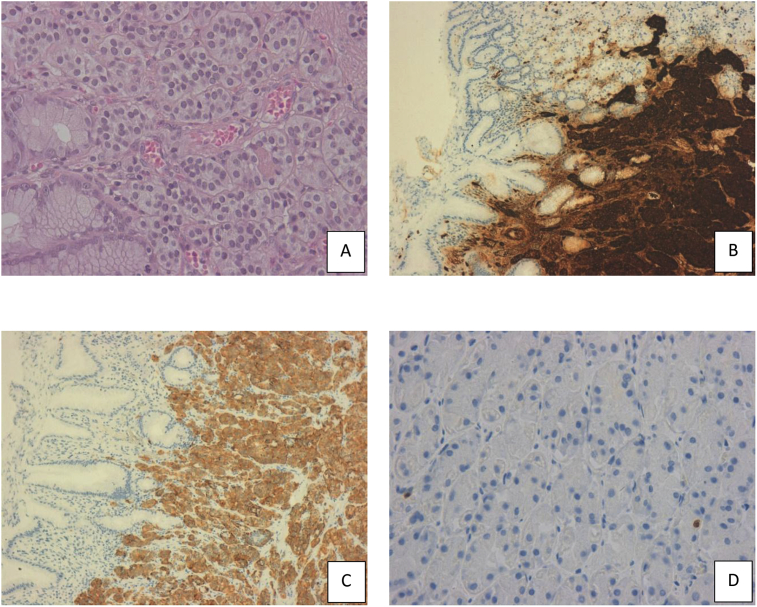
From the 560 obese consecutive patients underwent LSG, we recorded two cases of patients with GCT (0.36%): the case 1 was a patient who had a pre-operative diagnosis of GTC receiving a curative LSG which totally included the carcinoid in the resected portion; the case 2 was a patient that received a curative endoscopic resection 42 months after LSG.
the predisposing factors that can correlate GCT with obesity and LSG and in particular the hormonal changes have been discussed. We illustrated our experience about the management of these tumors in obese patients.
there are neither certain data which evidence a correlation between obesity and GCT, nor data to support the hypothesis of a higher incidence of GCT after bariatric surgery. Based on our experience in obese patients the finding of GCT in the pre-operatory phase is not an absolute contraindication for bariatric surgery.
胃类癌肿瘤(GCT)在普通人群中非常罕见,但一些研究表明,在接受减肥手术的患者中发病率较高。腹腔镜袖状胃切除术(LSG)是一种广泛接受的治疗病态肥胖的手术方法。LSG既能减少食物摄入量,又能干扰肠-脑轴中的激素平衡。在这些患者中,偶然的GCT诊断可能发生在减肥手术前的检查期间和术后随访期间。
我们回顾性分析了两个不同中心接受LSG的肥胖患者数据库,以找出2013年5月至2018年3月接受手术治疗的患者中GCT的发病率。
在560例连续接受LSG的肥胖患者中,我们记录了2例GCT患者(0.36%):病例1是一名术前诊断为GTC的患者,接受了根治性LSG,切除部分完全包含类癌;病例2是一名在LSG后42个月接受根治性内镜切除的患者。
讨论了可能使GCT与肥胖和LSG相关的诱发因素,特别是激素变化。我们阐述了我们在肥胖患者中处理这些肿瘤的经验。
既没有确凿的数据证明肥胖与GCT之间存在相关性,也没有数据支持减肥手术后GCT发病率更高的假设。根据我们在肥胖患者中的经验,术前发现GCT并非减肥手术的绝对禁忌证。