Department of Biomedical, Experimental and Clinical Sciences, Division of Obstetrics and Gynecology, University of Florence, I‑50134 Florence, Italy.
Department of Surgery and Translational Medicine, Division of Pathological Anatomy, University of Florence, I‑50134 Florence, Italy.
Oncol Rep. 2019 Mar;41(3):1560-1574. doi: 10.3892/or.2018.6939. Epub 2018 Dec 18.
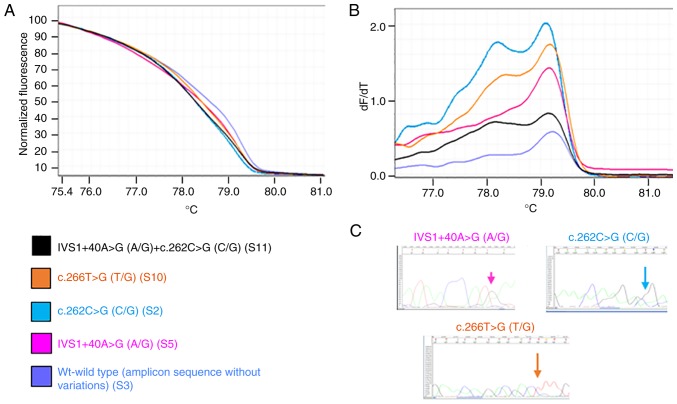
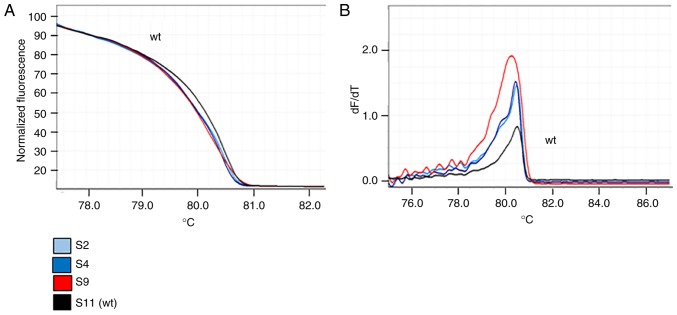
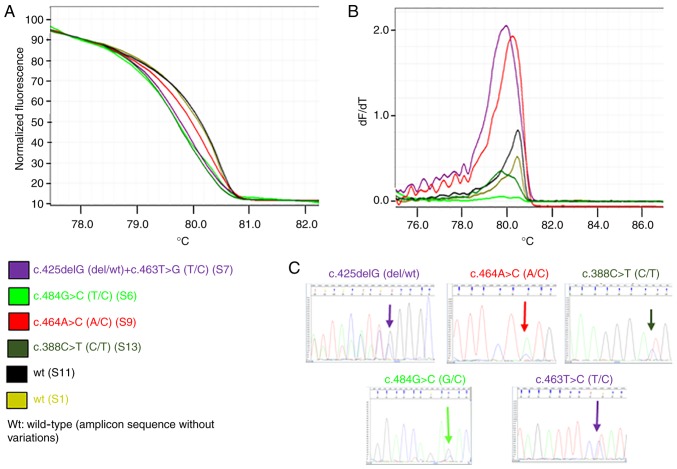
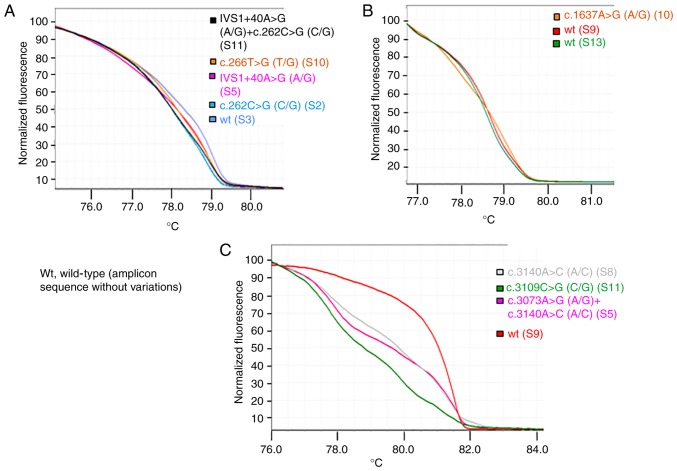
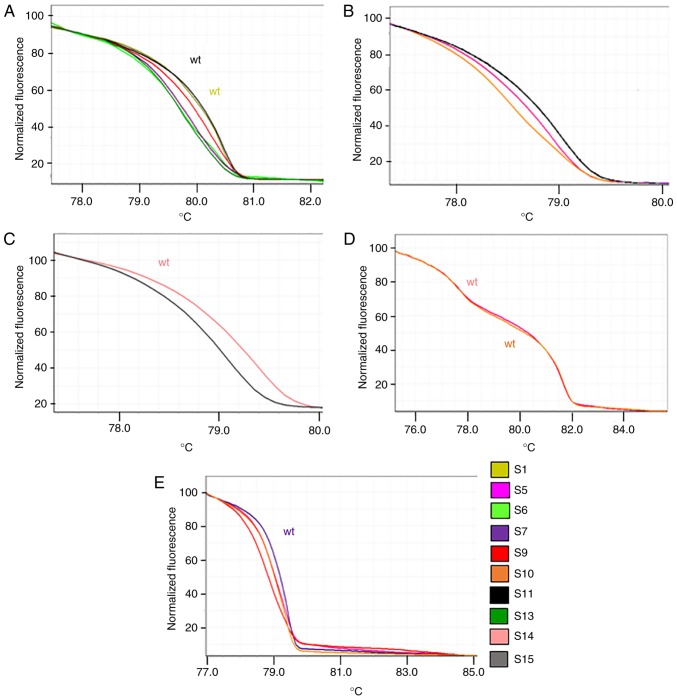
Endometrial cancer (EC) comprises a biological and clinical heterogeneous group of tumors. Several genetic alterations are involved in the development and progression of EC, and may be used for targeted therapy, particularly in patients with advanced‑stage EC. In the present study, a combined procedure was developed based on polymerase chain reaction (PCR)‑high resolution melting analysis (HRMA) and Sanger sequencing for the evaluation of somatic mutations in selected phosphoinositide 3‑kinase (PI3K) catalytic subunit α (PIK3CA; exons 1, 9 and 21) and phosphatase and tensin homolog (PTEN; exons 5, 6, 7 and 8) exons. This combined procedure has the specificity and sensitivity of the two techniques, and overcomes their limitations. A pilot study was performed on 18 selected homogenous EC samples, of grade 3 endometrioid subtype (G3 EEC). First, the feasibility of the combined procedure was investigated to properly identify the presence of somatic mutations on PIK3CA and PTEN, the variations identified were analyzed using Catalogue of Somatic Mutations in Cancer, PolyPhen‑2 and Mutation Taster software, and the frequency of mutations/variations was determined in the selected samples. The evaluation of mutational load revealed that the majority of the G3 EEC samples exhibited PIK3CA mutations (39%) and PTEN mutations (67%), and the majority of the samples (83%) had mutations in at least one of the two genes, and 33% had mutations in the two genes. The results of the present pilot study suggested that the cost‑effective combined PCR‑HRMA and Sanger sequencing procedure may be suitable for identification of PTEN and PIK3CA mutations in G3 EEC and that their frequency was consistent in G3 EEC, indicating that the PI3K pathway serves a pivotal function that may have potential for defining targeted therapy for the treatment of G3 EEC.
子宫内膜癌(EC)是一组生物学和临床异质性肿瘤。几种遗传改变参与了 EC 的发生和发展,可用于靶向治疗,特别是在晚期 EC 患者中。在本研究中,基于聚合酶链反应(PCR)-高分辨率熔解分析(HRMA)和 Sanger 测序,开发了一种联合方法,用于评估选定的磷酸肌醇 3-激酶(PI3K)催化亚单位α(PIK3CA;外显子 1、9 和 21)和磷酸酶和张力蛋白同源物(PTEN;外显子 5、6、7 和 8)外显子中的体细胞突变。该联合方法结合了两种技术的特异性和敏感性,并克服了它们的局限性。在 18 个选定的均质子宫内膜样 3 级(G3 EEC)EC 样本中进行了一项初步研究。首先,研究了联合方法的可行性,以正确识别 PIK3CA 和 PTEN 上的体细胞突变,使用 Catalogue of Somatic Mutations in Cancer、PolyPhen-2 和 Mutation Taster 软件分析鉴定的变异,并确定所选样本中的突变/变异频率。突变负荷的评估表明,大多数 G3 EEC 样本显示 PIK3CA 突变(39%)和 PTEN 突变(67%),大多数样本(83%)至少有一个基因发生突变,33%的样本有两个基因发生突变。本初步研究结果表明,具有成本效益的 PCR-HRMA 和 Sanger 测序联合方法可能适用于 G3 EEC 中 PTEN 和 PIK3CA 突变的鉴定,并且在 G3 EEC 中其频率一致,表明 PI3K 途径具有重要作用,可能有助于确定 G3 EEC 的靶向治疗方法。