Instituto de Parasitología y Biomedicina "López-Neyra", CSIC, PTS Granada, Granada, Spain.
Systemic Autoimmune Disease Unit, Instituto de Investigación Biosanitaria de Granada, Granada, Spain.
Genome Med. 2018 Dec 20;10(1):97. doi: 10.1186/s13073-018-0604-8.
In recent years, research has consistently proven the occurrence of genetic overlap across autoimmune diseases, which supports the existence of common pathogenic mechanisms in autoimmunity. The objective of this study was to further investigate this shared genetic component.
For this purpose, we performed a cross-disease meta-analysis of Immunochip data from 37,159 patients diagnosed with a seropositive autoimmune disease (11,489 celiac disease (CeD), 15,523 rheumatoid arthritis (RA), 3477 systemic sclerosis (SSc), and 6670 type 1 diabetes (T1D)) and 22,308 healthy controls of European origin using the R package ASSET.
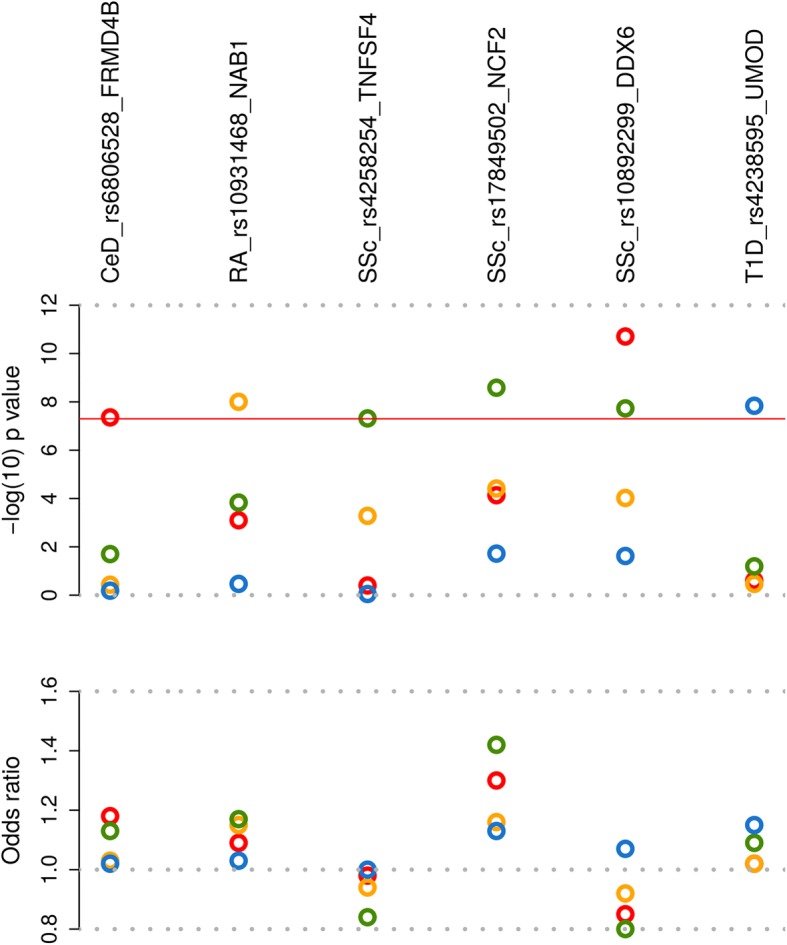
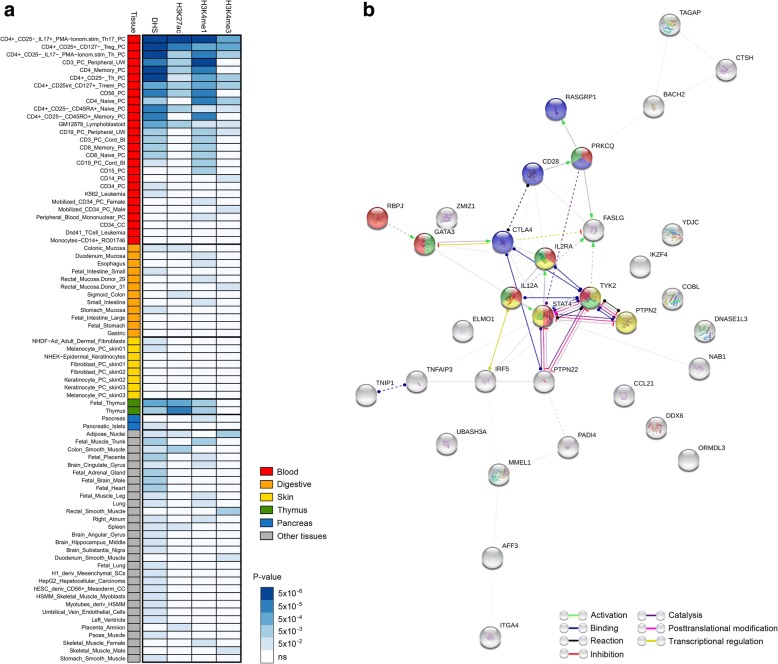
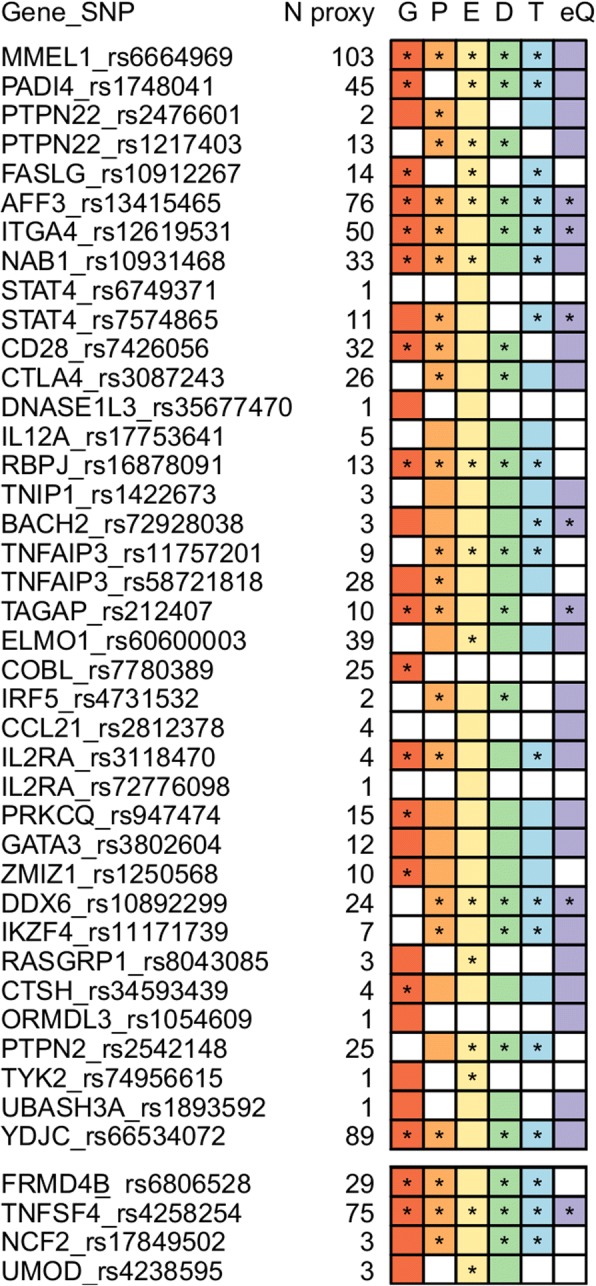
We identified 38 risk variants shared by at least two of the conditions analyzed, five of which represent new pleiotropic loci in autoimmunity. We also identified six novel genome-wide associations for the diseases studied. Cell-specific functional annotations and biological pathway enrichment analyses suggested that pleiotropic variants may act by deregulating gene expression in different subsets of T cells, especially Th17 and regulatory T cells. Finally, drug repositioning analysis evidenced several drugs that could represent promising candidates for CeD, RA, SSc, and T1D treatment.
In this study, we have been able to advance in the knowledge of the genetic overlap existing in autoimmunity, thus shedding light on common molecular mechanisms of disease and suggesting novel drug targets that could be explored for the treatment of the autoimmune diseases studied.
近年来,研究一致证明自身免疫性疾病之间存在遗传重叠,这支持自身免疫中存在共同的致病机制。本研究的目的是进一步研究这种共同的遗传成分。
为此,我们使用 R 包 ASSET 对来自 37159 名诊断为阳性自身免疫疾病(11489 例乳糜泻(CeD)、15523 例类风湿关节炎(RA)、3477 例系统性硬化症(SSc)和 6670 例 1 型糖尿病(T1D))和 22308 名欧洲血统健康对照者的 Immunochip 数据进行了跨疾病荟萃分析。
我们确定了至少两种分析疾病共享的 38 个风险变异,其中 5 个是自身免疫中的新多效性位点。我们还确定了这六种新的疾病全基因组关联。细胞特异性功能注释和生物学途径富集分析表明,多效性变异可能通过调节不同 T 细胞亚群(尤其是 Th17 和调节性 T 细胞)中的基因表达而起作用。最后,药物重定位分析证明了几种药物可能是 CeD、RA、SSc 和 T1D 治疗的有前途的候选药物。
在这项研究中,我们能够深入了解自身免疫中存在的遗传重叠,从而揭示疾病的共同分子机制,并提出新的药物靶点,可用于研究自身免疫性疾病的治疗。