Department of Otorhinolaryngology, Head and Neck Surgery, The First Affiliated Hospital, Jiangxi Medical College, Nanchang University, Nanchang, Jiangxi, China.
Department of Otolaryngology, Yong Loo Lin School of Medicine, National University of Singapore, National University Health System, Singapore, Singapore.
Sci Rep. 2024 Oct 25;14(1):25406. doi: 10.1038/s41598-024-77131-0.
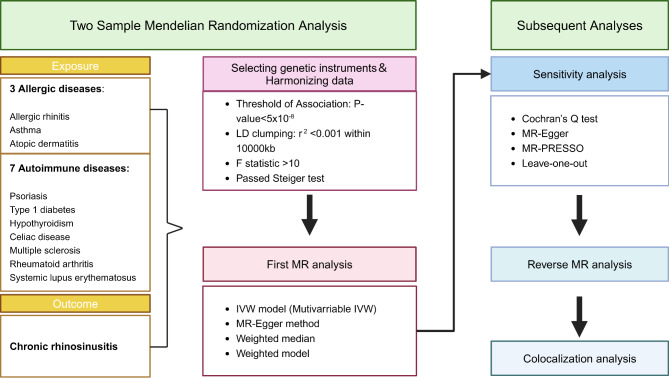
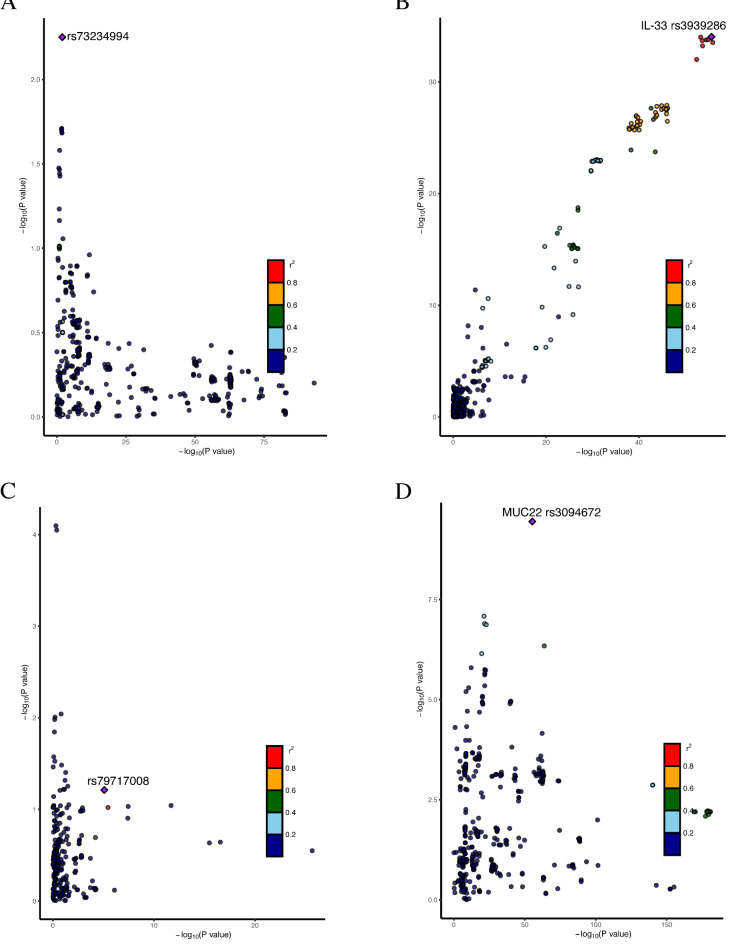
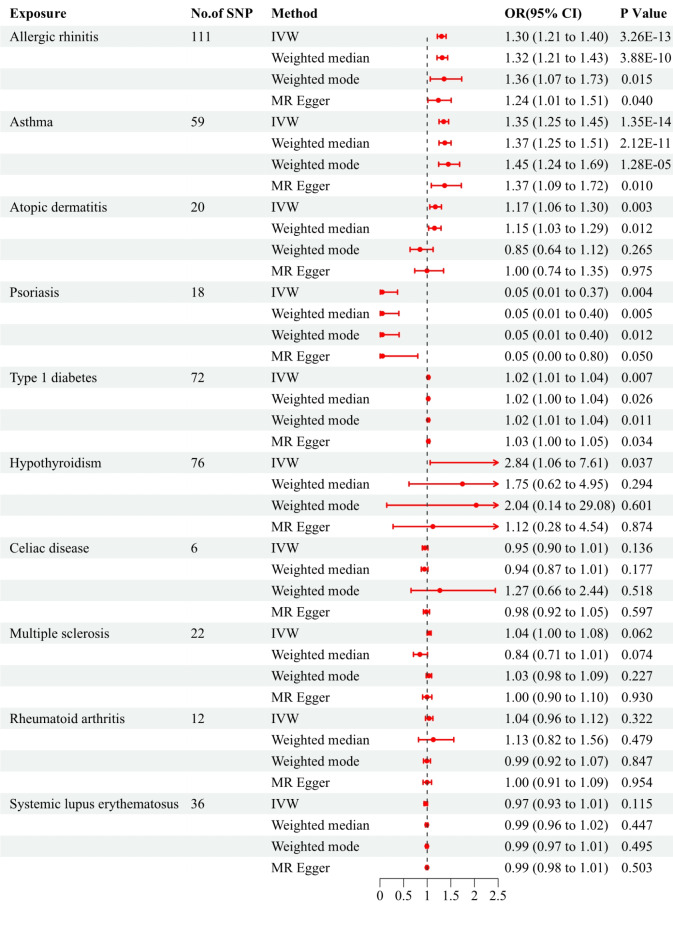
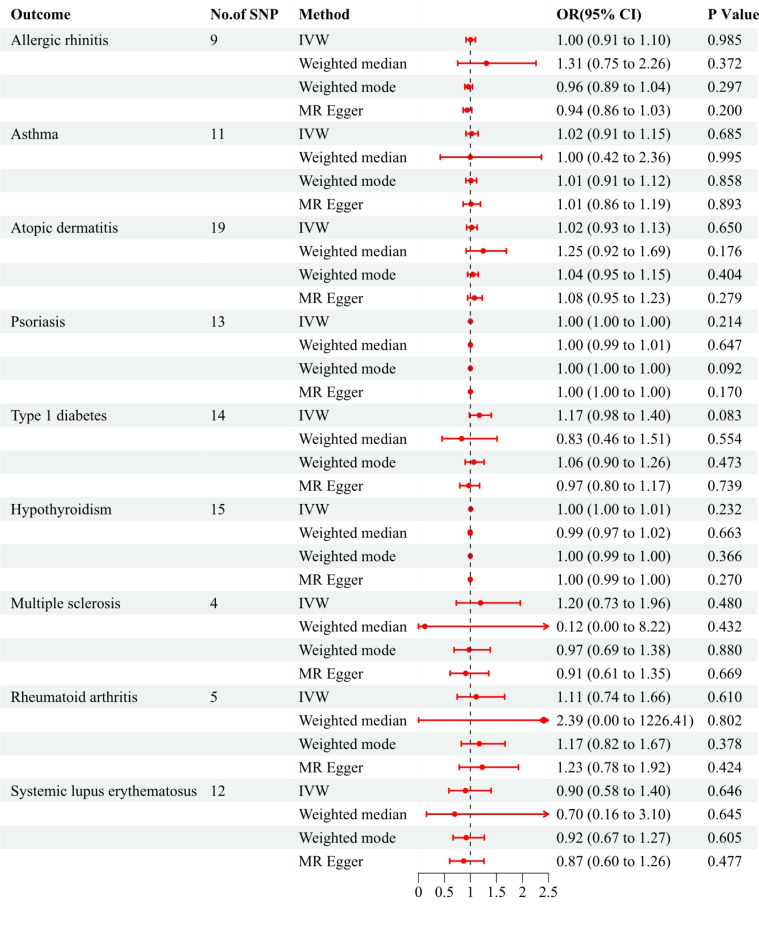
Chronic rhinosinusitis (CRS) is a prevalent inflammatory airway disease affecting over 10% of the global population, leading to considerable socio-economic impacts, especially in developing countries. The pathogenesis of CRS is multifactorial, involving potential contributions from both genetic and environmental factors. While the influence of allergic and autoimmune diseases on CRS has been observed, the causal relationships between these diseases and CRS remain unclear. We extracted data from large-scale genome-wide association studies (GWAS) and utilized a bidirectional two-sample Mendelian randomization (MR) analysis to explore the causal relationships between CRS and ten autoimmune and allergic diseases, including asthma, allergic rhinitis (AR), atopic dermatitis (AD), psoriasis, type 1 diabetes (T1D), hypothyroidism, celiac disease (CeD), multiple sclerosis (MS), rheumatoid arthritis (RA), and systemic lupus erythematosus (SLE). Additionally, we conducted colocalization analysis to determine whether the allergic/autoimmune diseases showing statistical causal relationships with CRS are driven by the same genetic variants. The MR analysis identified that AR (OR = 1.30; 95% CI = 1.21-1.40; P = 3.26E-13), asthma (OR = 1.35; 95% CI = 1.25-1.45; P = 1.35E-14), and AD (OR = 1.17; 95% CI = 1.06-1.30; P = 0.003) were significantly associated with an increased risk of developing CRS. Interestingly, psoriasis (OR = 0.05; 95% CI = 0.01-0.37; P = 0.004) appeared to have a protective effect against CRS. Associations for T1D and hypothyroidism were also suggestive as potential risk factors for CRS. No significant associations in the reverse MR analysis, suggesting a one-directional relationship. Colocalization analysis indicated that asthma (PP.H4 = 0.99) shared the same genetic variant (IL-33 rs3939286) with CRS. In conclusion, our study confirmed the causal relationships between allergic and autoimmune diseases (AR, asthma, AD, and psoriasis) and CRS. Notably, we identified a shared genetic variant, rs3939286 in the IL-33 gene, between asthma and CRS, suggesting that targeting the IL-33 pathway may provide a therapeutic strategy for both diseases.
慢性鼻-鼻窦炎(CRS)是一种常见的炎症性气道疾病,影响全球超过 10%的人口,导致相当大的社会经济影响,特别是在发展中国家。CRS 的发病机制是多因素的,涉及遗传和环境因素的潜在贡献。虽然已经观察到过敏和自身免疫性疾病对 CRS 的影响,但这些疾病与 CRS 之间的因果关系仍不清楚。我们从大规模全基因组关联研究(GWAS)中提取数据,并利用双向两样本孟德尔随机化(MR)分析来探讨 CRS 与十种自身免疫和过敏性疾病(包括哮喘、过敏性鼻炎[AR]、特应性皮炎[AD]、银屑病、1 型糖尿病[T1D]、甲状腺功能减退症、乳糜泻[CeD]、多发性硬化症[MS]、类风湿关节炎[RA]和系统性红斑狼疮[SLE])之间的因果关系。此外,我们进行了共定位分析,以确定与 CRS 呈统计学因果关系的过敏性/自身免疫性疾病是否由相同的遗传变异驱动。MR 分析确定 AR(OR=1.30;95%CI=1.21-1.40;P=3.26E-13)、哮喘(OR=1.35;95%CI=1.25-1.45;P=1.35E-14)和 AD(OR=1.17;95%CI=1.06-1.30;P=0.003)与 CRS 发病风险增加显著相关。有趣的是,银屑病(OR=0.05;95%CI=0.01-0.37;P=0.004)似乎对 CRS 具有保护作用。T1D 和甲状腺功能减退症的关联也表明它们可能是 CRS 的潜在危险因素。反向 MR 分析中没有显著关联,表明存在单向关系。共定位分析表明,哮喘(PP.H4=0.99)与 CRS 共享相同的遗传变异(IL-33 rs3939286)。总之,我们的研究证实了过敏和自身免疫性疾病(AR、哮喘、AD 和银屑病)与 CRS 之间的因果关系。值得注意的是,我们在 IL-33 基因中发现了哮喘和 CRS 之间的一个共享遗传变异 rs3939286,表明靶向 IL-33 途径可能为这两种疾病提供一种治疗策略。