International Centre for Infectiology Research, INSERM U1111, CNRS UMR5308, Ecole Normale Supérieure de Lyon, University of Lyon, Lyon, France.
GeNeuro Innovation, Lyon, France.
Front Immunol. 2018 Dec 6;9:2803. doi: 10.3389/fimmu.2018.02803. eCollection 2018.
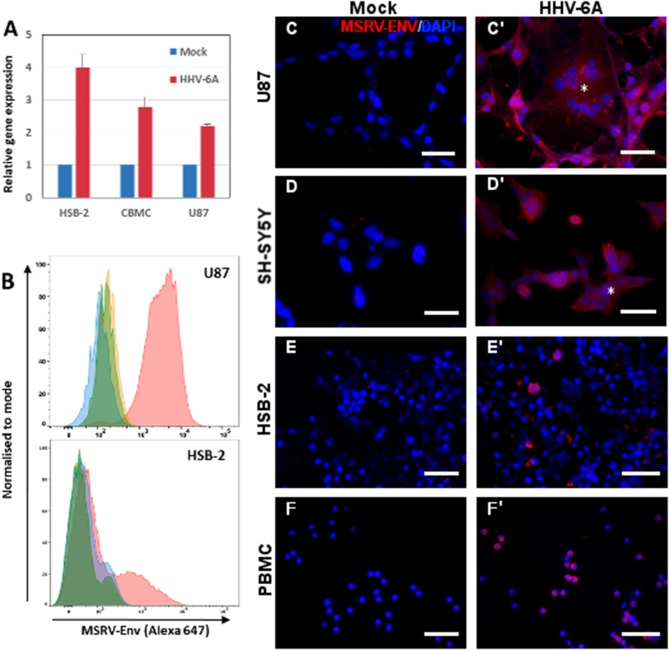
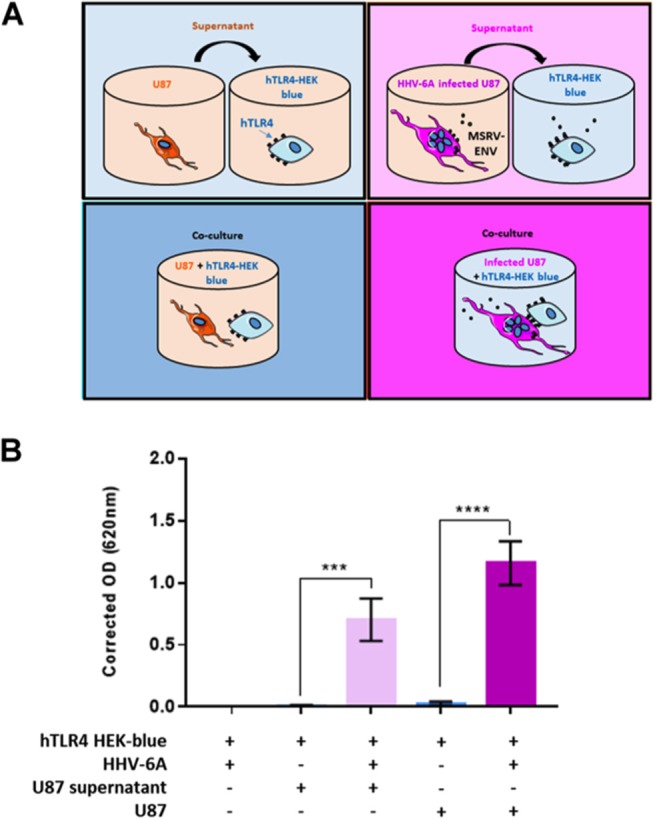
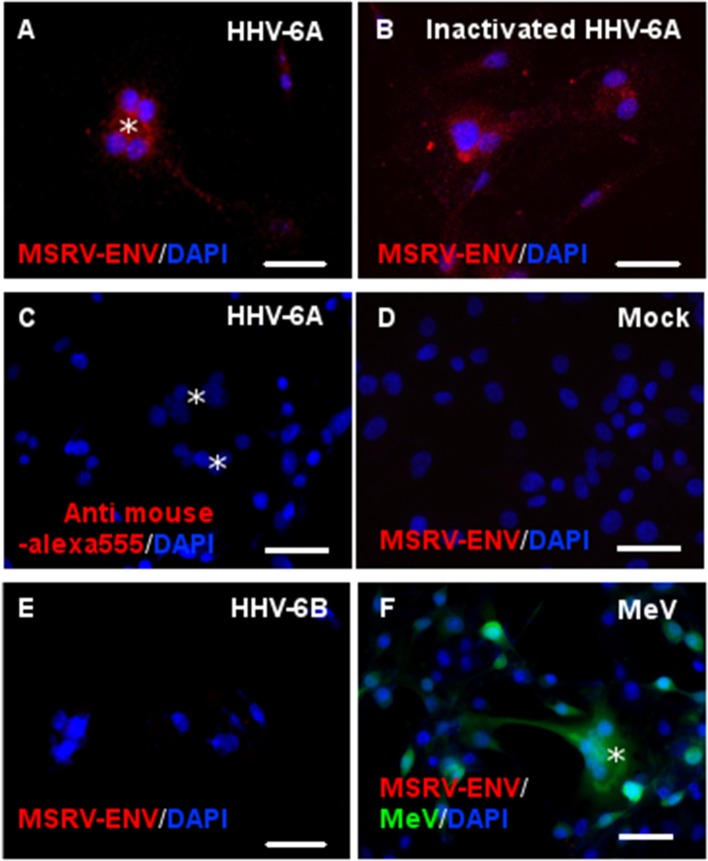
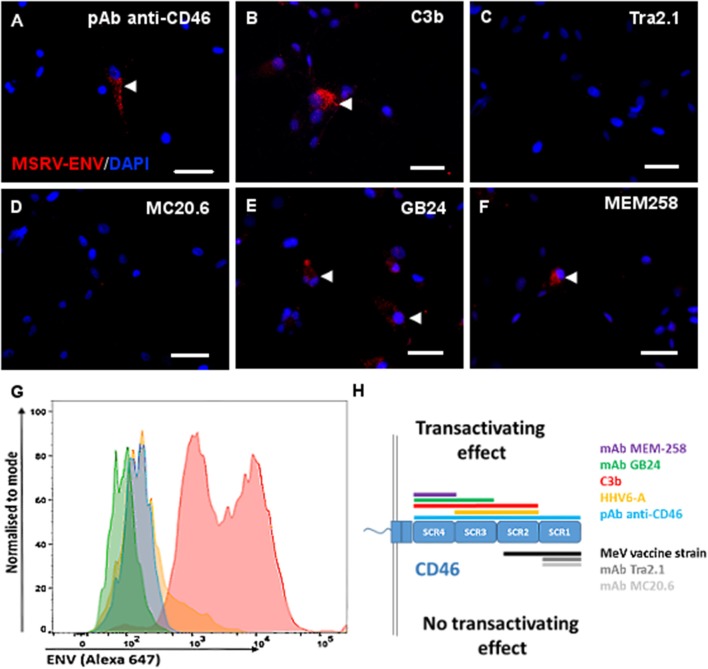
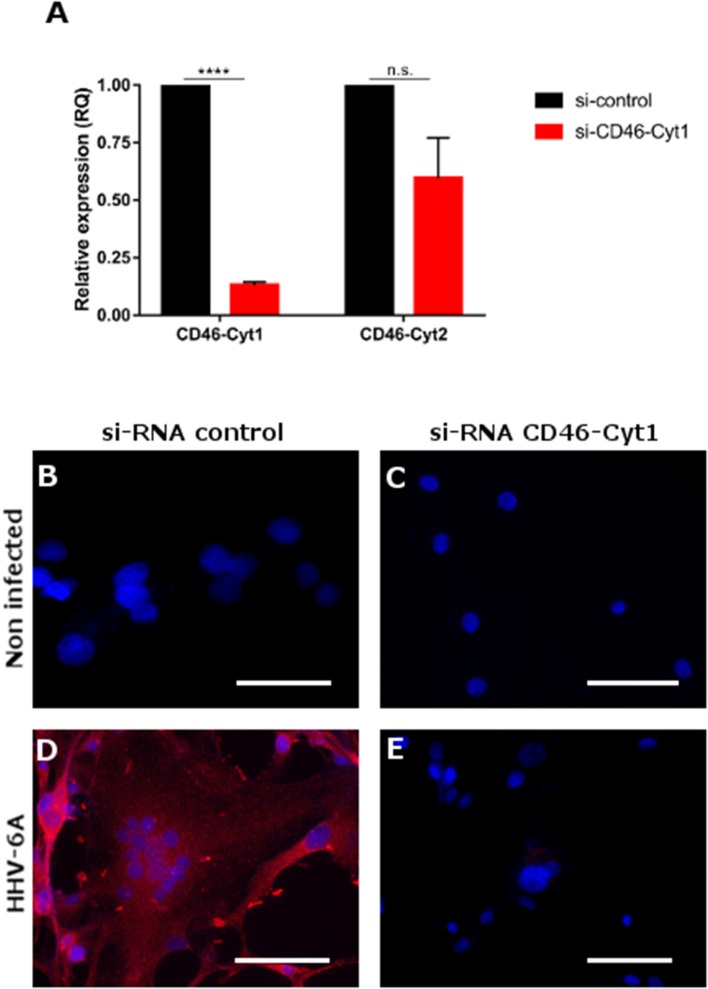
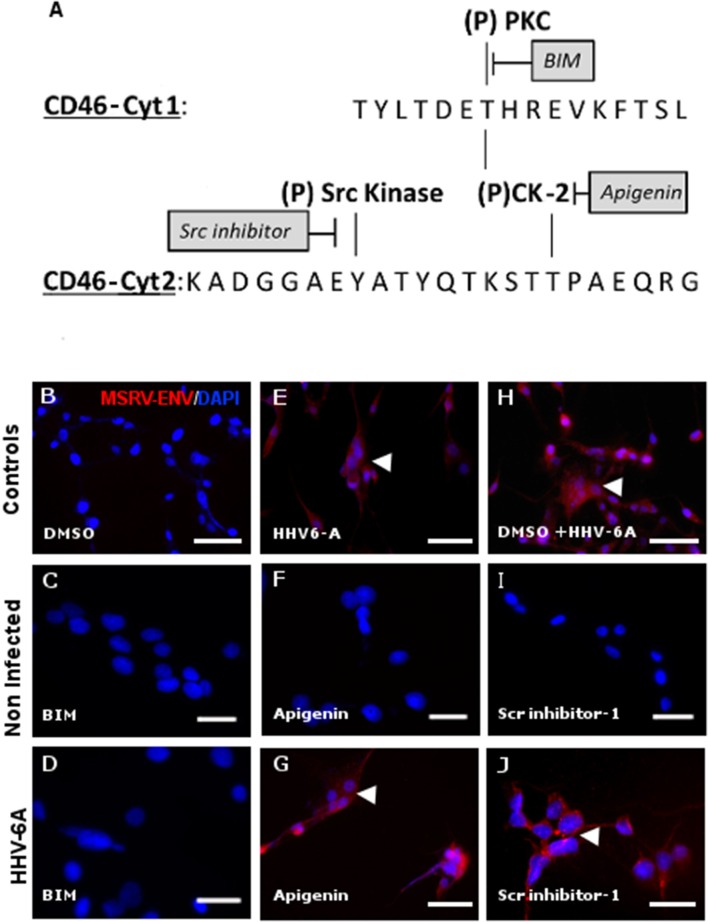
The aberrant expression of human endogenous retrovirus (HERV) elements of the HERV-W family has been associated with different diseases, including multiple sclerosis (MS). In particular, the expression of the envelope protein (Env) from the multiple sclerosis-associated retrovirus (MSRV), a member of HERV-W family and known for its potent proinflammatory activity, is repeatedly detected in the brain lesions and blood of MS patients. Furthermore, human herpesvirus 6 (HHV-6) infection has long been suspected to play a role in the pathogenesis of MS and neuroinflammation. We show here that both HHV-6A and stimulation of its receptor, transmembrane glycoprotein CD46, induce the expression of MSRV-Env. The engagement of extracellular domains SCR3 and SCR4 of CD46-Cyt1 isoform was required for MSRV-env transactivation, limiting thus the MSRV-Env induction to the CD46 ligands binding these domains, including C3b component of complement, specific monoclonal antibodies, and both infectious and UV-inactivated HHV-6A, but neither HHV-6B nor measles virus vaccine strain. Induction of MSRV-Env required CD46 Cyt-1 singling and was abolished by the inhibitors of protein kinase C. Finally, both membrane-expressed and secreted MSRV-Env trigger TLR4 signaling, displaying thus a proinflammatory potential, characteristic for this viral protein. These data expand the specter of HHV-6A effects in the modulation of the immune response and support the hypothesis that cross-talks between exogenous and endogenous viruses may contribute to inflammatory diseases and participate in neuroinflammation. Furthermore, they reveal a new function of CD46, known as an inhibitor of complement activation and receptor for several pathogens, in transactivation of HERV genes, which may play an important role in the pathogenesis of inflammatory diseases.
人类内源性逆转录病毒(HERV)家族的 HERV-W 成员的异常表达与多种疾病有关,包括多发性硬化症(MS)。特别是,与多发性硬化症相关的逆转录病毒(MSRV)的包膜蛋白(Env)的表达,是 HERV-W 家族的一个成员,以其强烈的促炎活性而闻名,在 MS 患者的脑部病变和血液中反复被检测到。此外,人类疱疹病毒 6(HHV-6)感染长期以来一直被怀疑在 MS 和神经炎症的发病机制中起作用。我们在这里表明,HHV-6A 的感染及其受体跨膜糖蛋白 CD46 的刺激均可诱导 MSRV-Env 的表达。需要 CD46-Cyt1 同工型的细胞外结构域 SCR3 和 SCR4 的结合,才能进行 MSRV-env 的反式激活,从而将 MSRV-Env 的诱导限制在结合这些结构域的 CD46 配体上,包括补体 C3b 成分、特异性单克隆抗体、以及具有感染性和 UV 失活的 HHV-6A,但不包括 HHV-6B 和麻疹病毒疫苗株。MSRV-Env 的诱导需要 CD46 Cyt-1 信号,并且被蛋白激酶 C 抑制剂所阻断。最后,膜表达和分泌的 MSRV-Env 均可触发 TLR4 信号转导,从而表现出该病毒蛋白的促炎潜能。这些数据扩大了 HHV-6A 在调节免疫反应中的作用范围,并支持这样一种假说,即外源性和内源性病毒之间的串扰可能有助于炎症性疾病,并参与神经炎症。此外,它们揭示了 CD46 的一个新功能,CD46 作为补体激活的抑制剂和几种病原体的受体,在 HERV 基因的反式激活中起作用,这可能在炎症性疾病的发病机制中发挥重要作用。