Human Genetics, Genome Institute of Singapore, Singapore, 138672, Singapore.
Infectious Disease, Genome Institute of Singapore, Singapore, 138672, Singapore.
BMC Genomics. 2018 Dec 27;19(1):969. doi: 10.1186/s12864-018-5295-4.
The epithelium is the first line of defense against pathogens. Notably the epithelial cells lining the respiratory track are crucial in sensing airborne microbes and mounting an effective immune response via the expression of target genes such as cytokines and chemokines. Gene expression regulation following microbial recognition is partly regulated by chromatin re-organization and has been described in immune cells but data from epithelial cells is not as detailed. Here, we report genome-wide changes of the H3K27ac mark, characteristic of activated enhancers and promoters, after stimulation of nasopharyngeal epithelial cells with the bacterial endotoxin Lipopolysaccharide (LPS).
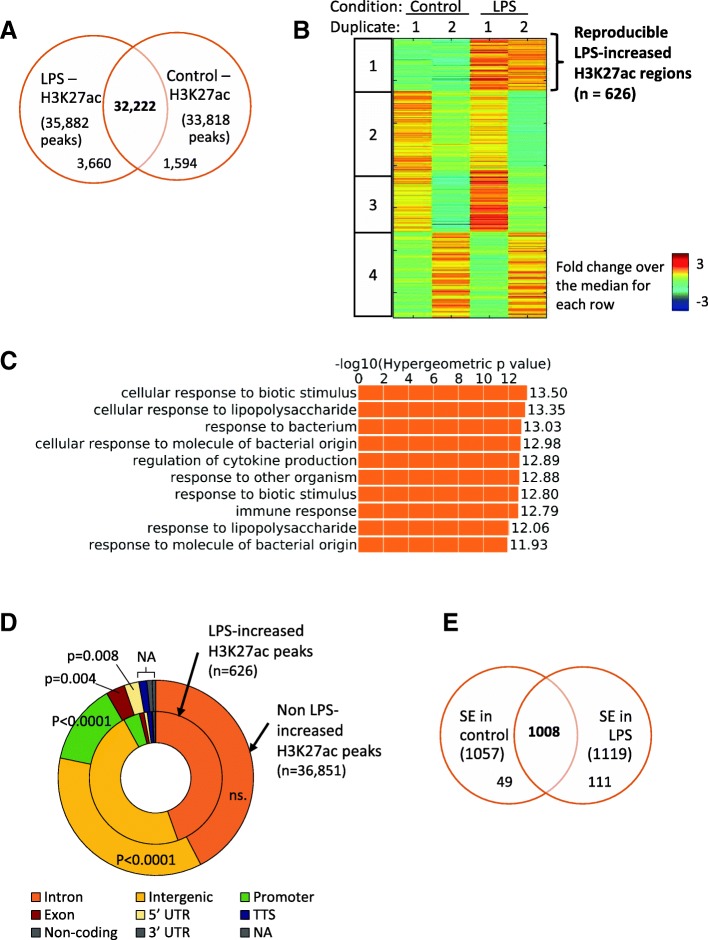
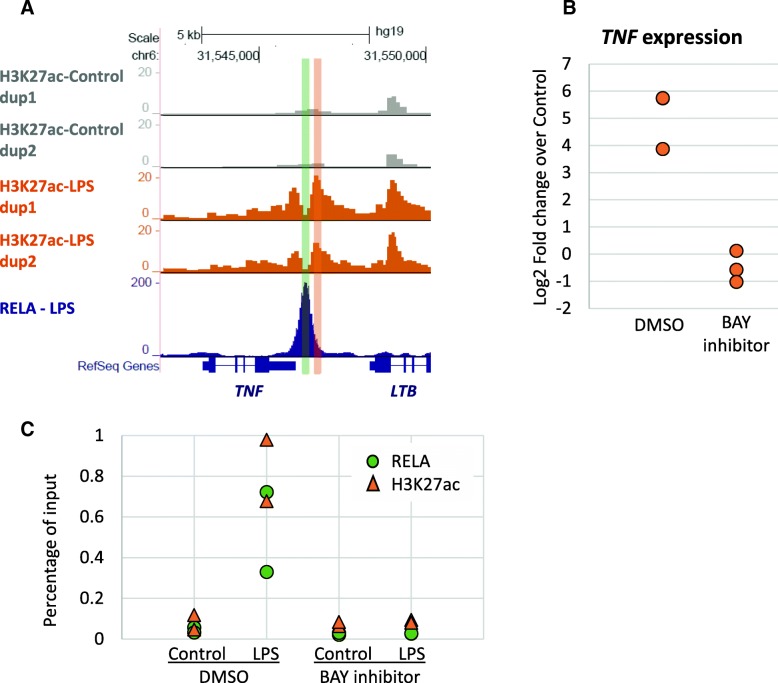
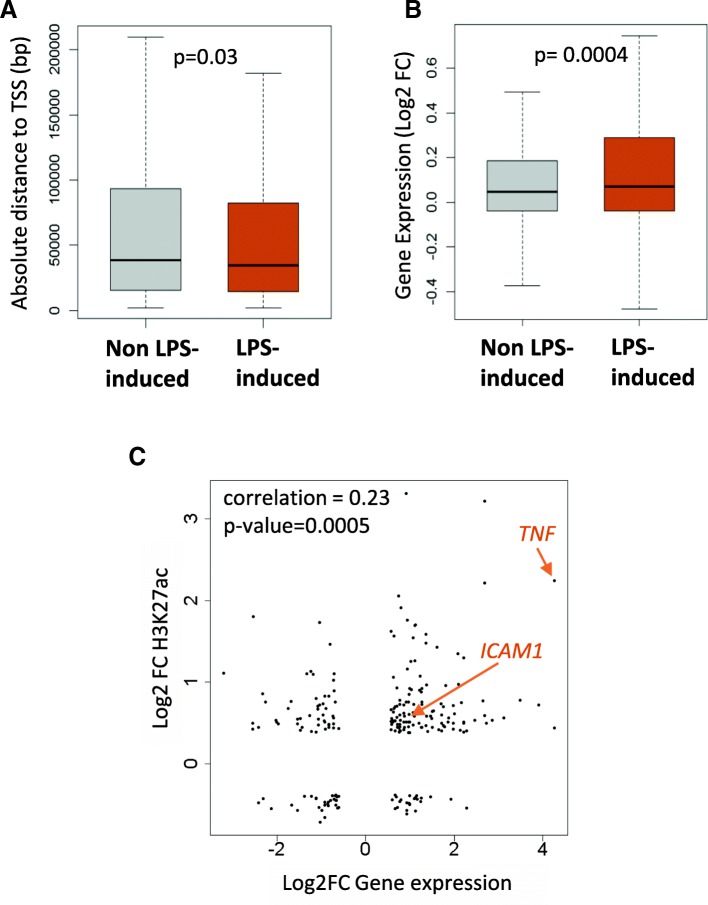
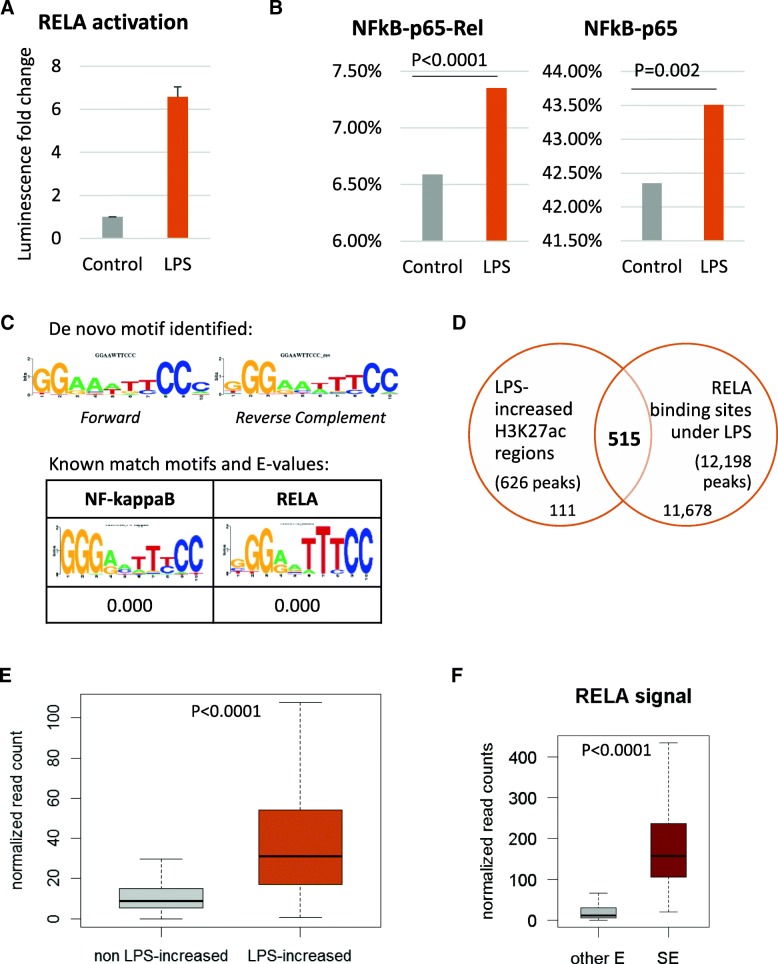
In this study, we have identified 626 regions where the H3K27ac mark showed reproducible increase following LPS induction in epithelial cells. This indicated that sensing of LPS led to opening of the chromatin in our system. Moreover, this phenomenon seemed to happen extensively at enhancers regions and we could observe instances of Super-enhancer formation. As expected, LPS-increased H3K27ac regions were found in the vicinity of genes relevant for LPS response and these changes correlated with up-regulation of their expression. In addition, we found the induction of H3K27ac mark to overlap with the binding of one of the NF-kB members and key regulator of the innate immune response, RELA, following LPS sensing. Indeed, inhibiting the NF-kB pathway abolished the deposition of H3K27ac at the TNF locus, a target of RELA, suggesting that these two phenomena are associated.
Enhancers' selection and activation following microbial or inflammatory stimuli has been described previously and shown to be mediated via the NF-kB pathway. Here, we demonstrate that this is also likely to occur in the case of LPS-sensing by nasopharyngeal epithelial cells as well. In addition to validating previous findings, we generated a valuable data set relevant to the host immune response to epithelial cell colonizing or infecting pathogens.
上皮组织是抵御病原体的第一道防线。特别是呼吸道上皮细胞在感知空气传播的微生物和通过表达细胞因子和趋化因子等靶基因来产生有效的免疫反应方面至关重要。微生物识别后的基因表达调控部分受染色质重组织的调节,已在免疫细胞中进行了描述,但来自上皮细胞的数据并不那么详细。在这里,我们报告了在细菌内毒素脂多糖(LPS)刺激鼻咽上皮细胞后,H3K27ac 标记(特征为激活的增强子和启动子)的全基因组变化。
在这项研究中,我们已经确定了 626 个区域,在 LPS 诱导后,上皮细胞中的 H3K27ac 标记在这些区域中表现出可重复的增加。这表明在我们的系统中,LPS 的感应导致了染色质的开放。此外,这种现象似乎广泛发生在增强子区域,我们可以观察到超级增强子形成的实例。正如预期的那样,在 LPS 反应相关基因的附近发现了 LPS 增加的 H3K27ac 区域,并且这些变化与它们的表达上调相关。此外,我们发现 H3K27ac 标记的诱导与 RELA(NF-κB 家族的一个成员和先天免疫反应的关键调节剂)结合重叠,在 LPS 感应后。事实上,抑制 NF-κB 途径会使 RELA 的靶标 TNF 基因座上的 H3K27ac 沉积减少,这表明这两种现象是相关的。
先前已经描述了微生物或炎症刺激后增强子的选择和激活,并表明这是通过 NF-κB 途径介导的。在这里,我们证明这也可能发生在鼻咽上皮细胞感知 LPS 的情况下。除了验证以前的发现外,我们还生成了一个与宿主对定植或感染病原体的上皮细胞的免疫反应相关的有价值的数据集。