Center for Public Health Research, Medical School, Nanjing University, Nanjing, China.
Department of Oncology, Wannan Medical College, Wuhu, Anhui, China,
Int J Nanomedicine. 2018 Dec 18;14:17-32. doi: 10.2147/IJN.S175340. eCollection 2019.
Docetaxel (DOC) is widely used as a chemotherapy drug for various tumors, including gastric cancer (GC), but the clinical application of DOC has been limited due to the hydrophobicity of the drug. We aimed to formulate a multifunctional nanoparticle (NP) system to reduce the side effects of the chemotherapy agent, to promote synergistic therapeutic effects, and to achieve targeted delivery of the therapy.
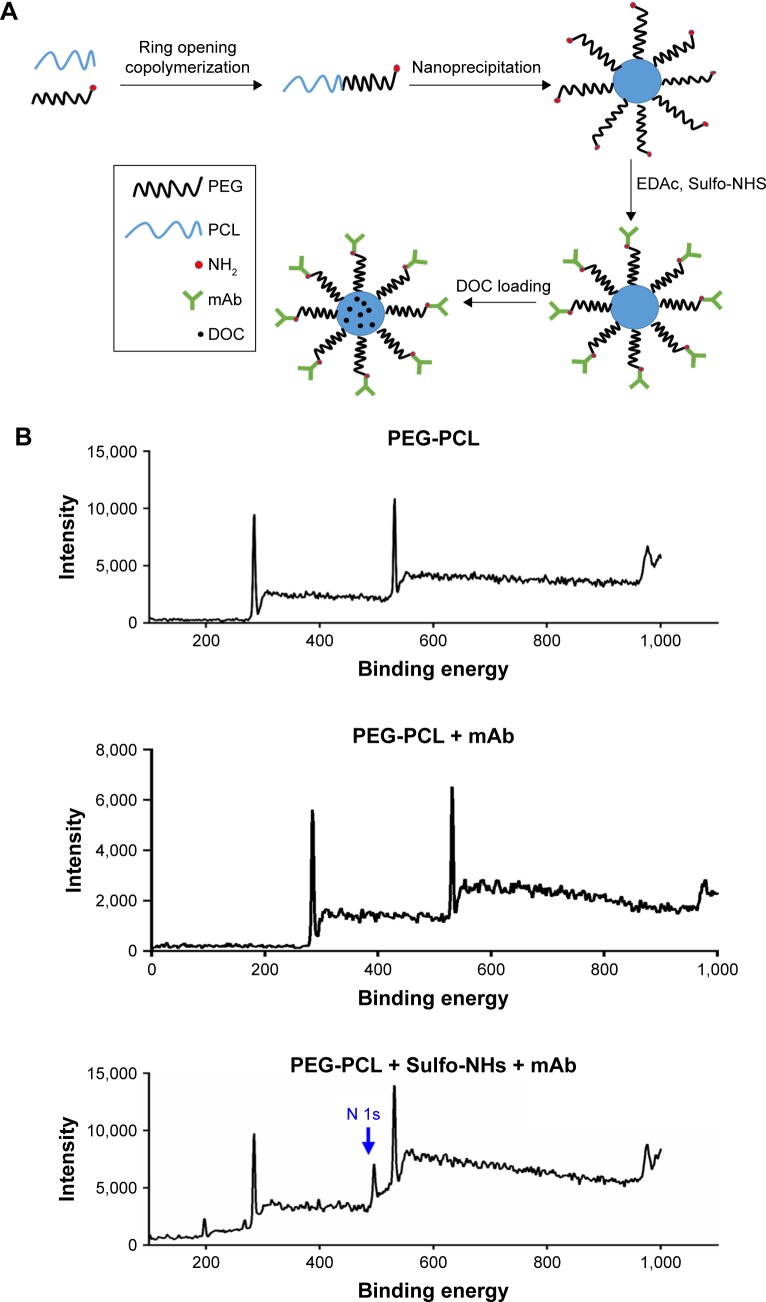
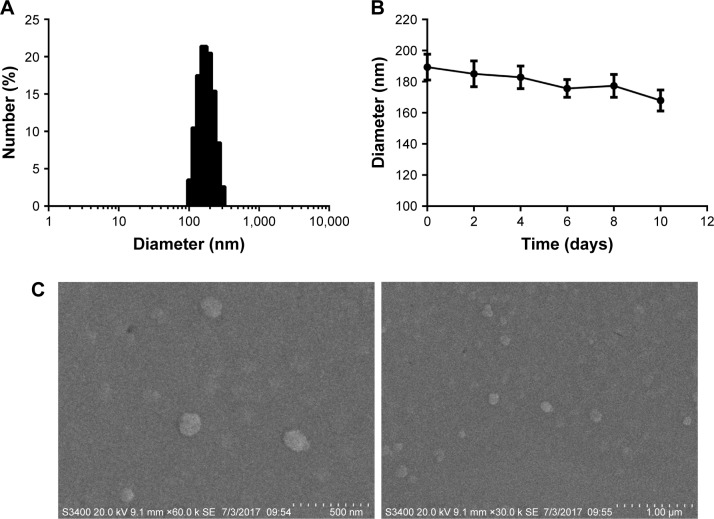
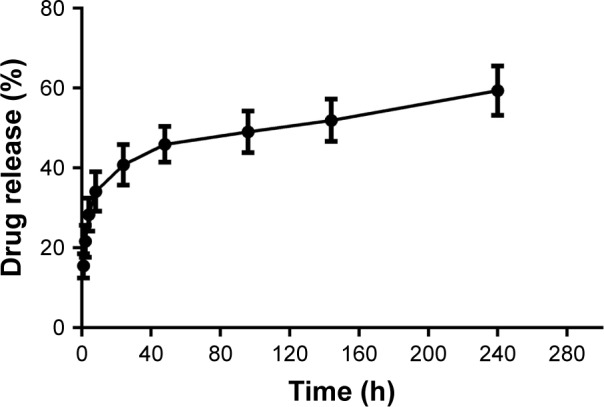
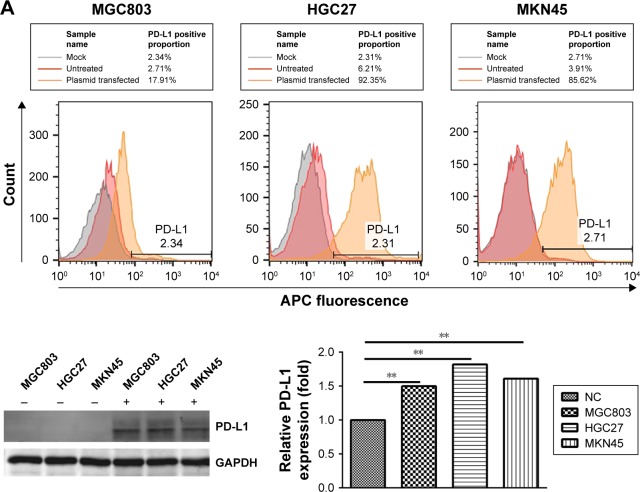
The polyethylene glycol-poly(ε-caprolactone) NPs (PEG-PCL NPs) were prepared by a ring opening copolymerization technique and were then conjugated with a programmed death-ligand 1 (PD-L1) monoclonal antibody (mAb). The effects of the surface coating on particle size, size distribution, zeta potential, drug encapsulation efficiency, loading capacity, and the drug release kinetics were investigated. By using a panel of PD-L1-expressing human GC cell lines and PD-L1-overexpressing cells, we studied cellular uptake, cytotoxic effects, and cellular apoptosis in the presence of PD-L1 mAb-conjugated NPs.
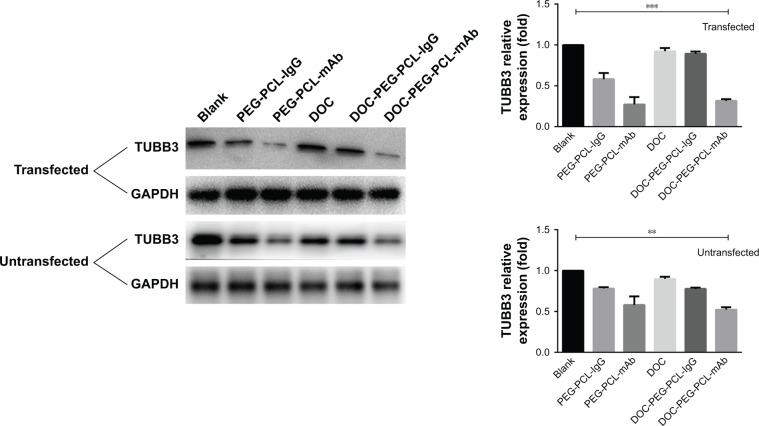
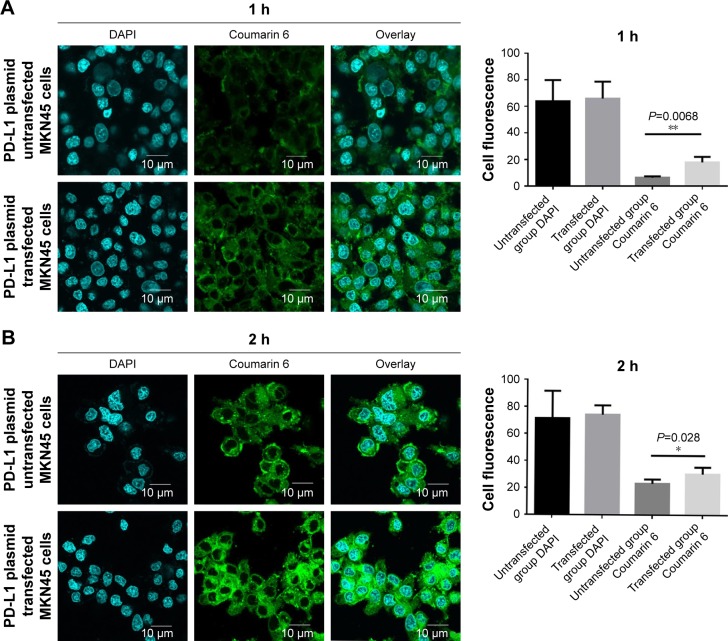
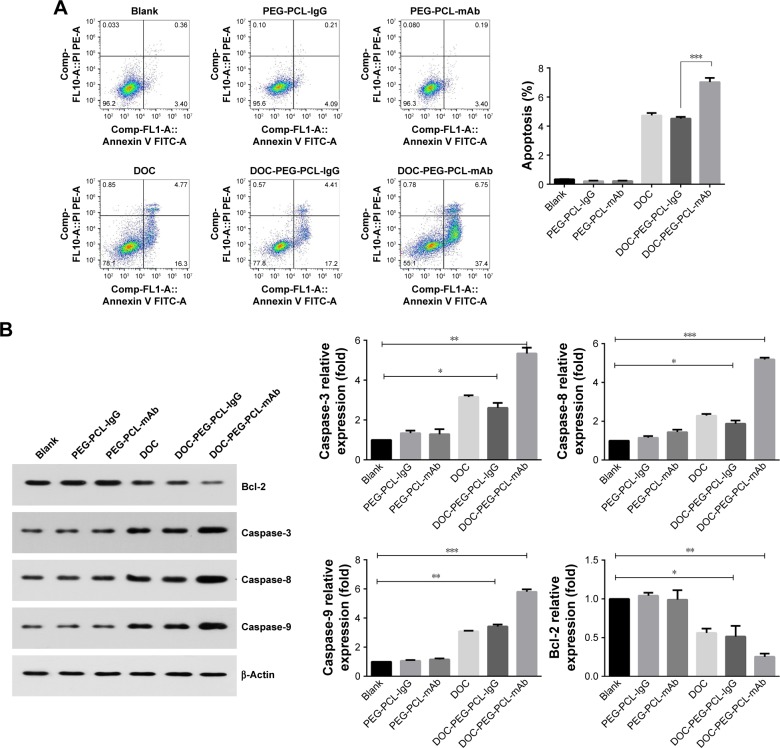
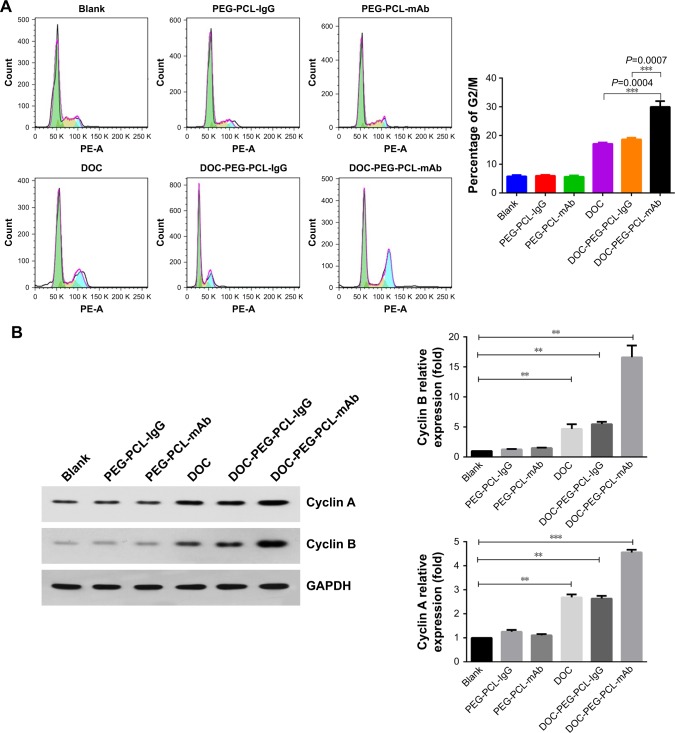
The characterization of the structure and biological functions of DOC-PEG-PCL-mAb NPs was investigated in vitro. X-ray photoelectron spectroscopy validated the presence of the PD-L1 mAbs on the NP surface. The cellular uptake analysis showed that the antibody-conjugated NPs achieved significantly higher cellular uptake. The results of an in vitro cytotoxicity experiment on three GC lines further proved the targeting effects of the antibody conjugation. In addition, we found that the DOC-PEG-PCL-mAb NPs induced cell apoptosis and enhanced G2-M arrest in cancer cells, indicating the inhibition of microtubule synthesis. When compared with the control groups, DOC-PEG-PCL-mAb NPs are more effective in inhibiting PD-L1 expression in GC cells.
Our results reported here highlight the biological and clinical potential of DOC-PEG-PCL-mAb NPs using PD-L1 mAbs in GC treatment.
多西紫杉醇(DOC)被广泛用作治疗各种肿瘤的化疗药物,包括胃癌(GC),但由于药物的疏水性,DOC 的临床应用受到限制。我们旨在构建一种多功能纳米粒子(NP)系统,以减少化疗药物的副作用,促进协同治疗效果,并实现治疗的靶向输送。
通过开环共聚技术制备聚乙二醇-聚(ε-己内酯)纳米粒子(PEG-PCL NPs),然后将其与程序性死亡配体 1(PD-L1)单克隆抗体(mAb)缀合。研究了表面涂层对粒径、粒径分布、Zeta 电位、药物包封效率、载药量和药物释放动力学的影响。通过使用一组表达 PD-L1 的人 GC 细胞系和 PD-L1 过表达细胞,我们研究了 PD-L1 mAb 缀合的 NPs 存在时的细胞摄取、细胞毒性作用和细胞凋亡。
体外研究了 DOC-PEG-PCL-mAb NPs 的结构和生物学功能的表征。X 射线光电子能谱验证了 PD-L1 mAb 存在于 NP 表面。细胞摄取分析表明,抗体缀合的 NPs 实现了更高的细胞摄取。对三种 GC 系进行的体外细胞毒性实验结果进一步证明了抗体结合的靶向作用。此外,我们发现 DOC-PEG-PCL-mAb NPs 诱导癌细胞凋亡并增强细胞周期 G2-M 期阻滞,表明抑制微管合成。与对照组相比,DOC-PEG-PCL-mAb NPs 更有效地抑制 GC 细胞中 PD-L1 的表达。
我们的研究结果强调了使用 PD-L1 mAb 在 GC 治疗中使用 DOC-PEG-PCL-mAb NPs 的生物学和临床潜力。