Kucharczuk Colleen R, Ganetsky Alex, Vozniak J Michael
Hospital of the University of Pennsylvania, Philadelphia, Pennsylvania.
Hospital of the University of Pennsylvania, Philadelphia, Pennsylvania at the time of article submission, currently at Merck & Co., Inc, Kenilworth, New Jersey.
J Adv Pract Oncol. 2018 Mar;9(2):189-200. Epub 2018 Mar 1.
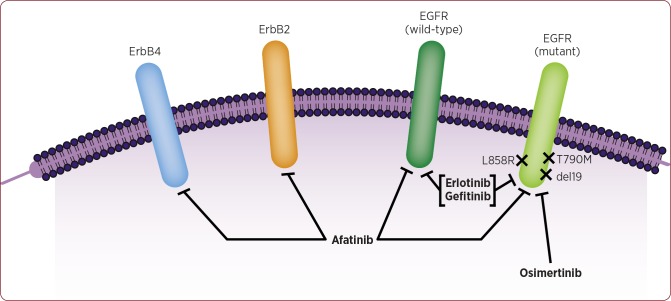
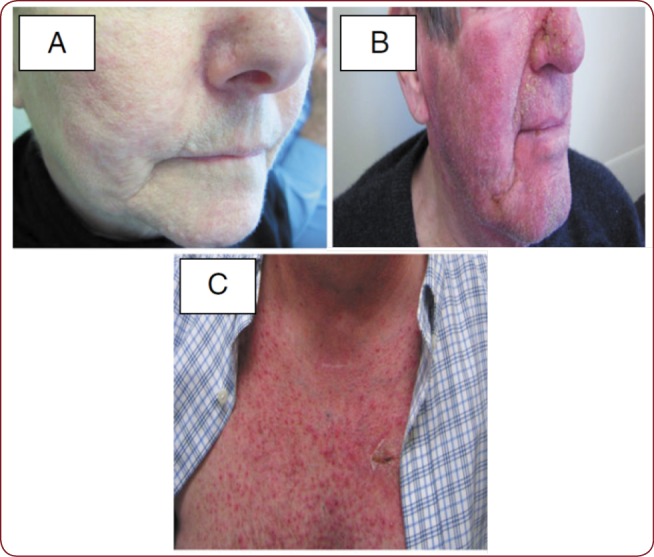
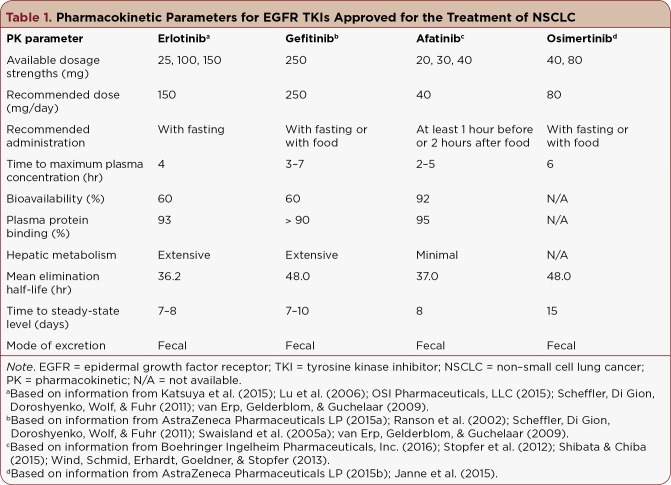
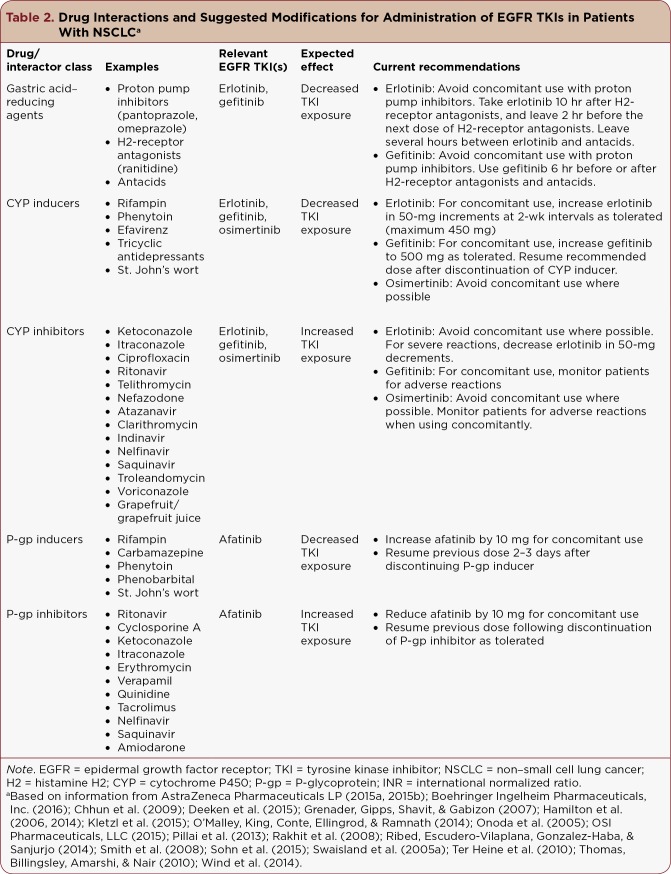
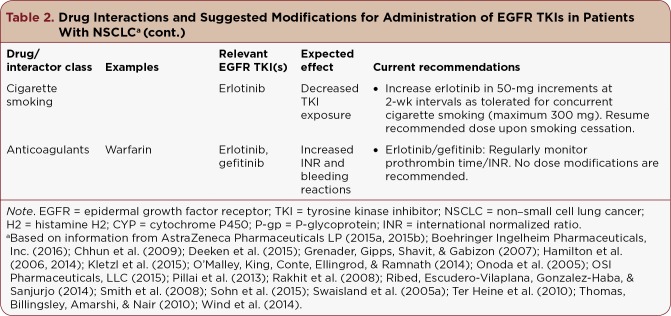
Inhibitors of the epidermal growth factor receptor (EGFR) are important treatment options for non-small cell lung cancer (NSCLC) patients with activating mutations. Erlotinib, gefitinib, afatinib, and osimertinib are approved for use in NSCLC patients, and several other agents are in clinical development. The objectives of this article are to review the pharmacokinetic and known drug interaction data for EGFR tyrosine kinase inhibitors (TKIs) available for use in NSCLC patients, as well as adverse events (AEs) commonly observed with EGFR-TKI treatment, and to discuss relevant management strategies. The importance of this information for patient care is explored from the perspective of advanced practitioners. Pharmacokinetic, drug-interaction, and safety data are included for EGFR inhibitors approved for NSCLC (erlotinib, gefitinib, afatinib, and osimertinib). Relevant dose modifications and AE management strategies are also reviewed. The interdisciplinary health-care team plays an essential role in patient education, care planning, and medication administration. As such, it is essential that advanced practitioners understand the safety profiles and the potential for drug interactions with EGFR TKIs to ensure patients achieve the maximum benefit from these agents.
表皮生长因子受体(EGFR)抑制剂是具有激活突变的非小细胞肺癌(NSCLC)患者的重要治疗选择。厄洛替尼、吉非替尼、阿法替尼和奥希替尼已获批用于NSCLC患者,其他几种药物也在临床开发中。本文的目的是回顾可用于NSCLC患者的EGFR酪氨酸激酶抑制剂(TKIs)的药代动力学和已知药物相互作用数据,以及EGFR-TKI治疗中常见的不良事件(AEs),并讨论相关的管理策略。从高级从业者的角度探讨了这些信息对患者护理的重要性。纳入了获批用于NSCLC的EGFR抑制剂(厄洛替尼、吉非替尼、阿法替尼和奥希替尼)的药代动力学、药物相互作用和安全性数据。还回顾了相关的剂量调整和AE管理策略。跨学科医疗团队在患者教育、护理计划和药物管理中起着至关重要的作用。因此,高级从业者必须了解EGFR TKIs的安全性概况和药物相互作用的可能性,以确保患者从这些药物中获得最大益处。