Drug Metabolism, Pharmacokinetics and Bioanalytical, H3 Biomedicine, 300 Technology Square, Cambridge, Massachusetts, 02139, USA.
Nonclinical Development, Relay Therapeutics, 215 First Street, Cambridge, Massachusetts, USA.
Pharm Res. 2018 Dec 28;36(2):30. doi: 10.1007/s11095-018-2551-x.
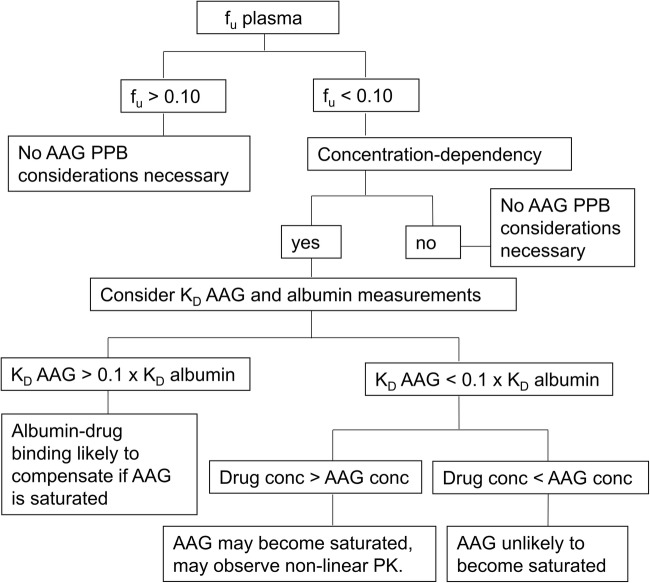
According to the free drug hypothesis only the unbound drug is available to act at physiological sites of action, and as such the importance of plasma protein binding primarily resides in its impact on pharmacokinetics and pharmacodynamics. Of the major plasma proteins, alpha-1-acid glycoprotein (AAG) represents an intriguing one primarily due to the high affinity, low capacity properties of this protein. In addition, there are marked species and age differences in protein expression, homology and drug binding affinity. As such, a thorough understanding of drug binding to AAG can help aid and improve the translation of pharmacokinetic/pharmacodynamic (PK/PD) relationships from preclinical species to human as well as adults to neonates. This review provides a comprehensive overview of our current understanding of the biochemistry of AAG; endogenous function, impact of disease, utility as a biomarker, and impact on PK/PD. Experimental considerations are discussed as well as recommendations for understanding the potential impact of AAG on PK through drug discovery and early development.
根据游离药物假说,只有游离药物可用于作用于生理作用部位,因此,血浆蛋白结合对药代动力学和药效动力学的影响主要在于其影响。在主要的血浆蛋白中,α-1-酸性糖蛋白(AAG)是一种有趣的蛋白,主要是因为该蛋白具有高亲和力、低容量的特性。此外,蛋白质表达、同源性和药物结合亲和力在物种和年龄上存在显著差异。因此,深入了解药物与 AAG 的结合可以帮助促进和改善从临床前物种到人类以及从成人到新生儿的药代动力学/药效动力学(PK/PD)关系的转化。本综述全面概述了我们目前对 AAG 的生物化学的理解;内源性功能、疾病的影响、作为生物标志物的用途以及对 PK/PD 的影响。还讨论了实验方面的考虑因素以及通过药物发现和早期开发了解 AAG 对 PK 潜在影响的建议。