Bennie Lindsey A, McCarthy Helen O, Coulter Jonathan A
School of Pharmacy, Queens University Belfast, Lisburn Road, Belfast, BT9 7BL UK.
Cancer Nanotechnol. 2018;9(1):10. doi: 10.1186/s12645-018-0044-6. Epub 2018 Nov 21.
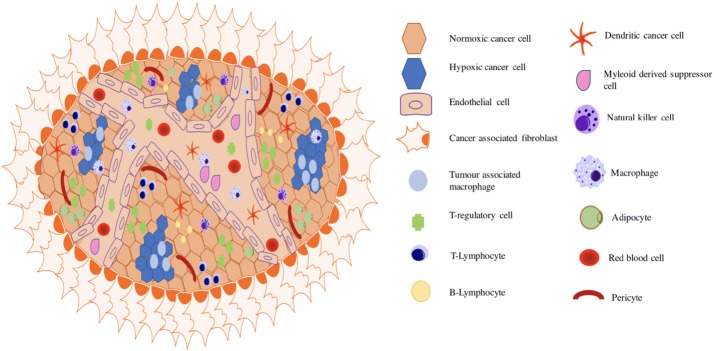
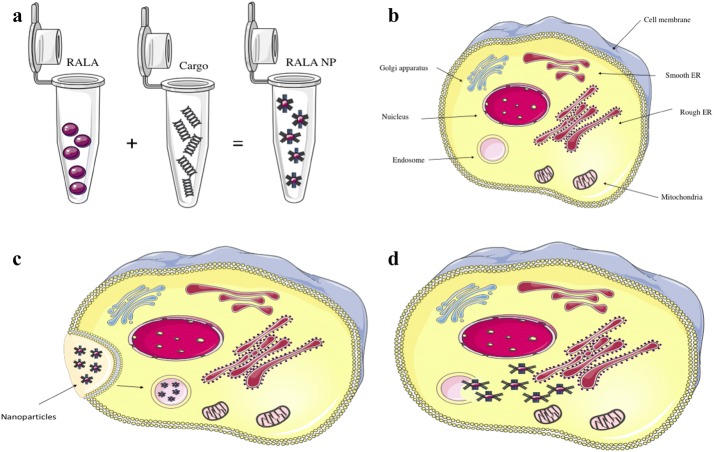
Nanoparticles can be used as drug carriers, contrast agents and radiosensitisers for the treatment of cancer. Nanoparticles can either passively accumulate within tumour sites, or be conjugated with targeting ligands to actively enable tumour deposition. With respect to passive accumulation, particles < 150 nm accumulate with higher efficiency within the tumour microenvironment, a consequence of the enhanced permeability and retention effect. Despite these favourable properties, clinical translation of nano-therapeutics is inhibited due to poor in vivo stability, biodistribution and target cell internalisation. Nano-therapeutics can be modified to exploit features of the tumour microenvironment such as elevated hypoxia, increased pH and a compromised extracellular matrix. This is in contrast to cytotoxic chemotherapies which generally do not exploit the characteristic pathological features of the tumour microenvironment, and as such are prone to debilitating systemic toxicities. This review examines strategies for tumour microenvironment targeting to improve nanoparticle delivery, with particular focus on the delivery of nucleic acids and gold nanoparticles. Evidence for key research areas and future technologies are presented and critically evaluated. Among the most promising technologies are the development of next-generation cell penetrating peptides and the incorporation of micro-environment responsive stealth molecules.
纳米颗粒可作为药物载体、造影剂和放射增敏剂用于癌症治疗。纳米颗粒既可以被动地在肿瘤部位蓄积,也可以与靶向配体偶联以主动实现肿瘤沉积。关于被动蓄积,小于150纳米的颗粒在肿瘤微环境中蓄积效率更高,这是增强的渗透和滞留效应的结果。尽管具有这些有利特性,但由于体内稳定性差、生物分布不佳以及靶细胞内化能力弱,纳米治疗剂的临床转化受到了阻碍。纳米治疗剂可以进行修饰,以利用肿瘤微环境的特征,如缺氧加剧、pH值升高和细胞外基质受损。这与细胞毒性化疗形成对比,细胞毒性化疗通常不利用肿瘤微环境的特征性病理特征,因此容易产生使人衰弱的全身毒性。本综述探讨了针对肿瘤微环境进行靶向以改善纳米颗粒递送的策略,特别关注核酸和金纳米颗粒的递送。介绍并批判性地评估了关键研究领域的证据和未来技术。最有前景的技术包括下一代细胞穿透肽的开发以及微环境响应性隐身分子的纳入。