Millar Brett M, English Devin, Moody Raymond L, Rendina H Jonathon, Cain Demetria, Antebi-Gruszka Nadav, Carter Joseph A, Parsons Jeffrey T
Center for HIV/AIDS Educational Studies & Training, Hunter College of the City University of New York (CUNY), New York, New York.
Health Psychology and Clinical Science Doctoral Program, The Graduate Center of the City University of New York (CUNY), New York, New York.
Transgend Health. 2018 Dec 26;3(1):210-219. doi: 10.1089/trgh.2018.0032. eCollection 2018.
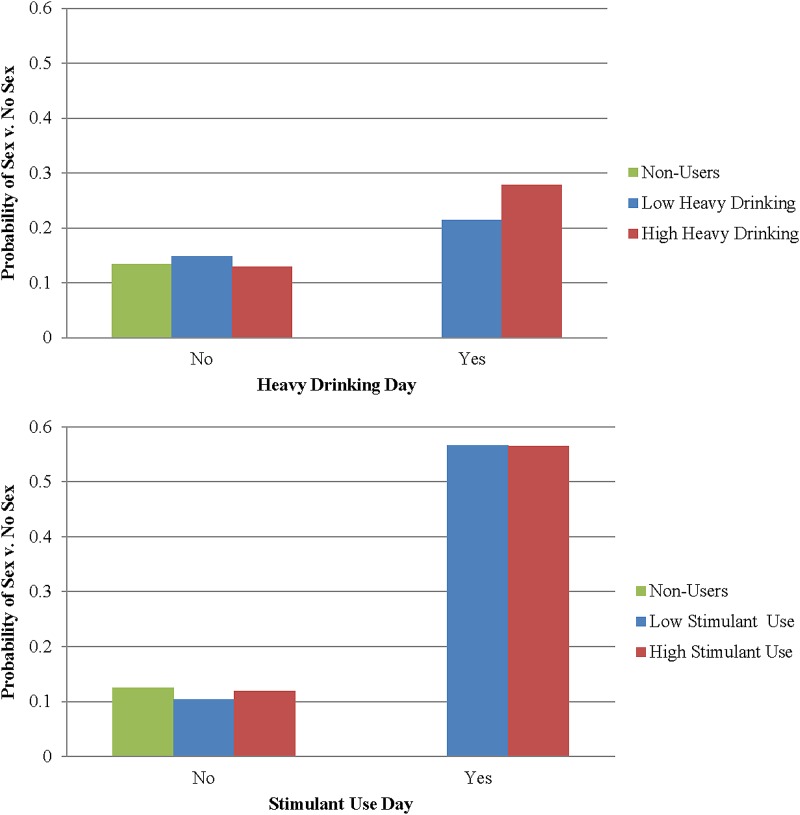
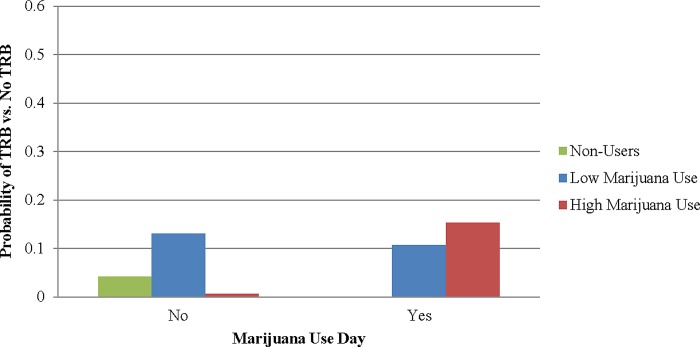
Transgender women in the United States face elevated rates of HIV and of substance use. Studies measuring overall or aggregate levels of substance use have linked use to increased HIV transmission risk behavior (TRB). Although intensive longitudinal studies in other populations have found day-level links between substance use and TRB, no study has yet explored such links among transgender women. This study aimed to fill this gap in the literature. Utilizing survey and 60-day timeline follow-back interview data from a sample of 214 transgender women in New York City, we tested whether day-level heavy drinking, marijuana use, and/or nonprescription stimulant use were associated with odds of engaging in any sex (vs. no sexual activity) or engaging in TRB (vs. sex without TRB), adjusting for overall levels of use. Multilevel models showed that each of the three substance types was associated with greater odds of engaging in sex on a given day-and more strongly so for heavy drinking among those with higher rates of heavy drinking, and for stimulant use among those with lower rates of stimulant use. Only marijuana use was associated with greater odds of TRB on a given day, but only among those with higher rates of use. These findings substantiate day-level links between substance use and engaging in sexual activity among transgender women, and importantly, between marijuana use and greater likelihood of TRB on a day when sexual activity occurs. This highlights the importance of addressing substance use for sexual health among transgender women especially focusing on marijuana use.
美国的跨性别女性面临着更高的艾滋病毒感染率和物质使用问题。衡量物质使用总体或综合水平的研究已将物质使用与增加的艾滋病毒传播风险行为(TRB)联系起来。尽管在其他人群中进行的深入纵向研究发现了物质使用与TRB之间的每日水平联系,但尚未有研究探讨跨性别女性中的此类联系。本研究旨在填补这一文献空白。利用来自纽约市214名跨性别女性样本的调查和60天时间线随访访谈数据,我们测试了每日重度饮酒、使用大麻和/或使用非处方兴奋剂是否与进行任何性行为(与无性行为相比)或从事TRB(与无TRB的性行为相比)的几率相关,并对总体使用水平进行了调整。多层次模型显示,这三种物质类型中的每一种都与在特定日期进行性行为的几率增加相关——对于重度饮酒率较高的人群中的重度饮酒以及兴奋剂使用率较低的人群中的兴奋剂使用,这种相关性更强。只有大麻使用与在特定日期从事TRB的几率增加相关,但仅在使用率较高的人群中如此。这些发现证实了跨性别女性中物质使用与进行性活动之间的每日水平联系,重要的是,证实了大麻使用与在发生性活动的当天从事TRB的可能性增加之间的联系。这突出了在跨性别女性中解决物质使用对性健康问题的重要性,尤其要关注大麻使用。