Lund Center for Stem Cell Biology and Cell Therapy, Lund University, Lund, Sweden.
Division of Molecular Haematology, Department of Laboratory Medicine, Lund University, Lund, Sweden.
Br J Haematol. 2018 Nov;183(4):588-600. doi: 10.1111/bjh.15578. Epub 2018 Sep 14.
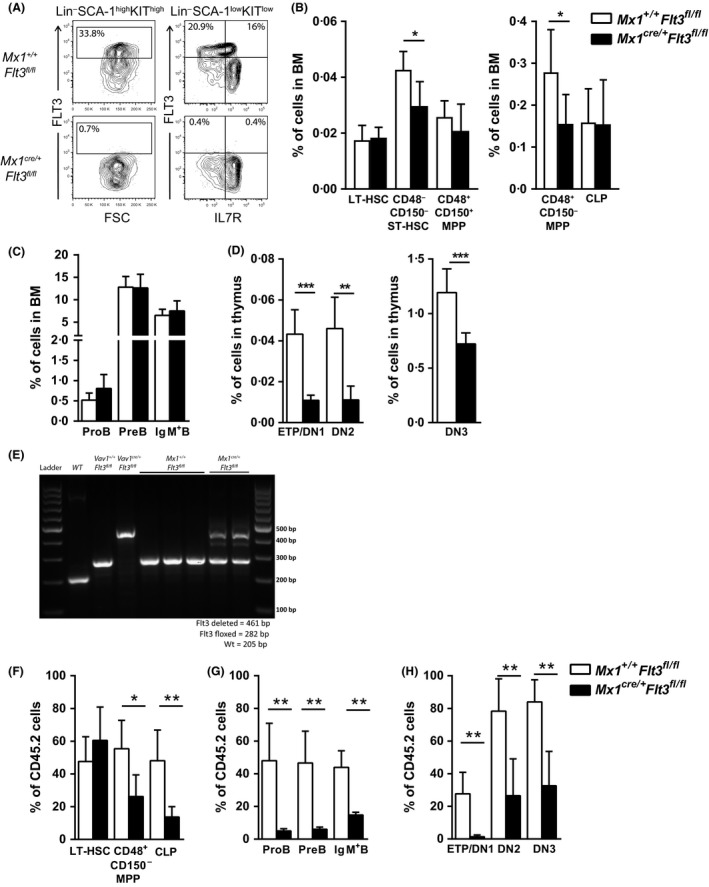
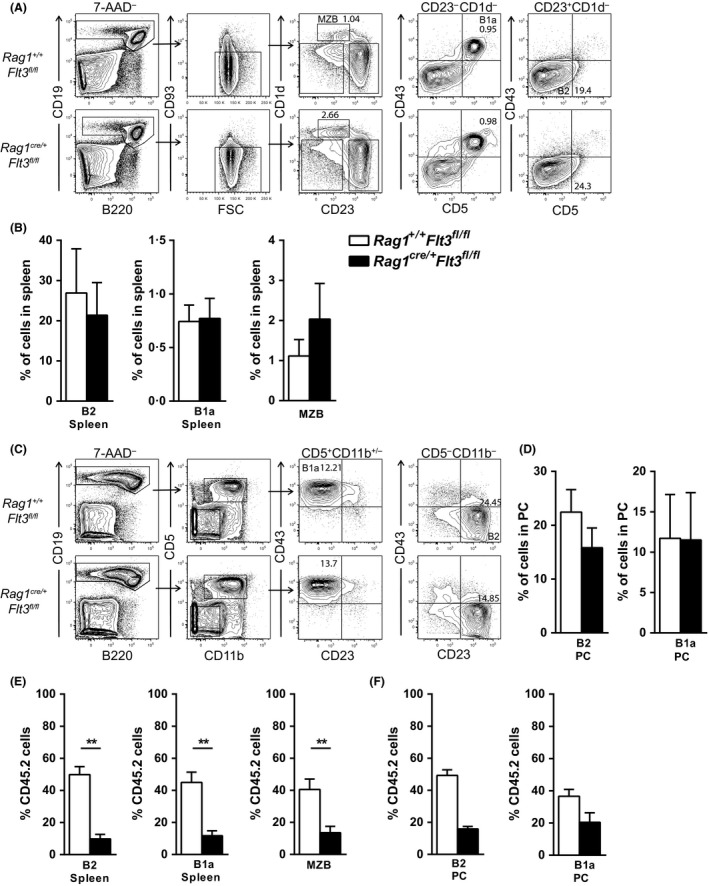
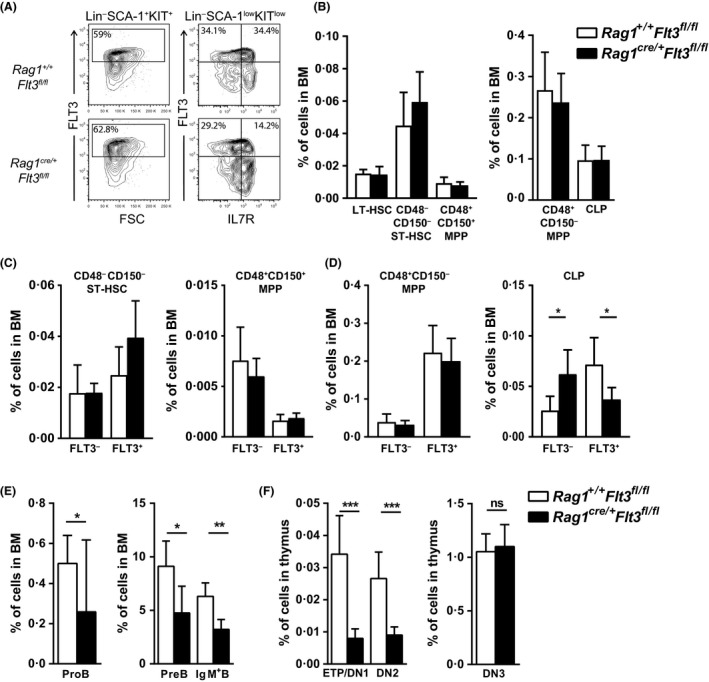
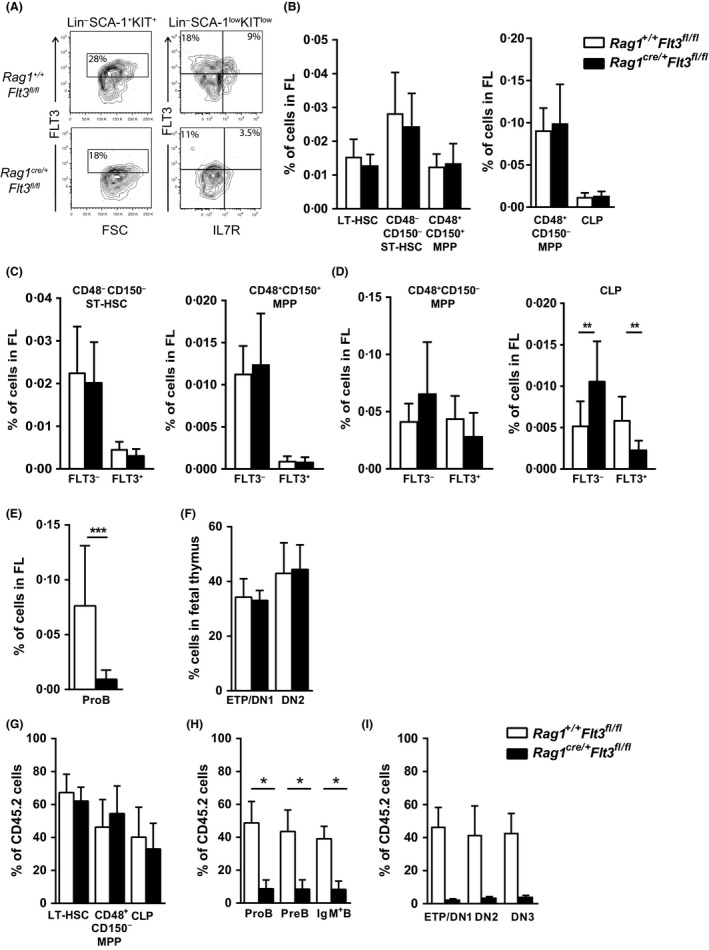
Given that FLT3 expression is highly restricted on lymphoid progenitors, it is possible that the established role of FLT3 in the regulation of B and T lymphopoiesis reflects its high expression and role in regulation of lymphoid-primed multipotent progenitors (LMPPs) or common lymphoid progenitors (CLPs). We generated a Flt3 conditional knock-out (Flt3) mouse model to address the direct role of FLT3 in regulation of lymphoid-restricted progenitors, subsequent to turning on Rag1 expression, as well as potentially ontogeny-specific roles in B and T lymphopoiesis. Our studies establish a prominent and direct role of FLT3, independently of the established role of FLT3 in regulation of LMPPs and CLPs, in regulation of fetal as well as adult early B cell progenitors, and the early thymic progenitors (ETPs) in adult mice but not in the fetus. Our findings highlight the potential benefit of targeting poor prognosis acute B-cell progenitor leukaemia and ETP leukaemia with recurrent FLT3 mutations using clinical FLT3 inhibitors.
鉴于 FLT3 表达在淋巴祖细胞上受到高度限制,因此 FLT3 在 B 和 T 淋巴发生中的调节作用可能反映了其在淋巴前体多能祖细胞(LMPP)或共同淋巴祖细胞(CLP)中的高表达和作用。我们生成了一种 Flt3 条件性敲除(Flt3)小鼠模型,以解决在 Rag1 表达后,FLT3 在调节淋巴受限祖细胞中的直接作用,以及在 B 和 T 淋巴发生中潜在的个体发育特异性作用。我们的研究确立了 FLT3 的突出和直接作用,而与 FLT3 在调节 LMPP 和 CLP 中的作用无关,在调节胎儿和成年早期 B 细胞祖细胞以及成年小鼠中的早期胸腺祖细胞(ETP)中,但在胎儿中则没有。我们的发现强调了使用临床 FLT3 抑制剂靶向具有不良预后的急性 B 细胞祖细胞白血病和具有复发性 FLT3 突变的 ETP 白血病的潜在益处。