Center for Lifespan Changes in Brain and Cognition (LCBC), Department of Psychology, University of Oslo, Oslo, Norway.
Department of Radiology and Nuclear Medicine, Oslo University Hospital, Oslo, Norway.
PLoS One. 2018 Dec 31;13(12):e0209915. doi: 10.1371/journal.pone.0209915. eCollection 2018.
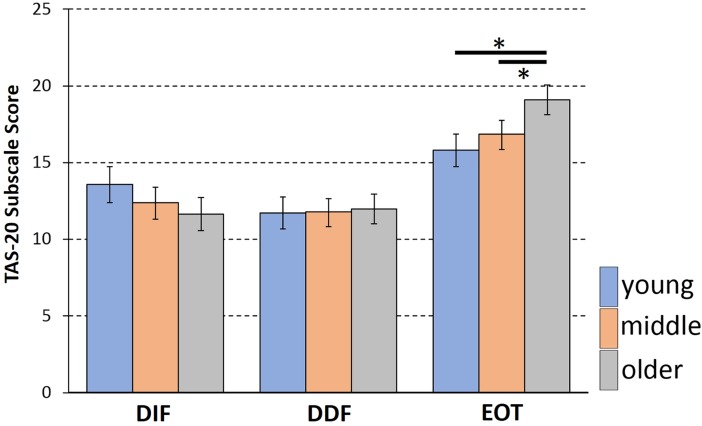
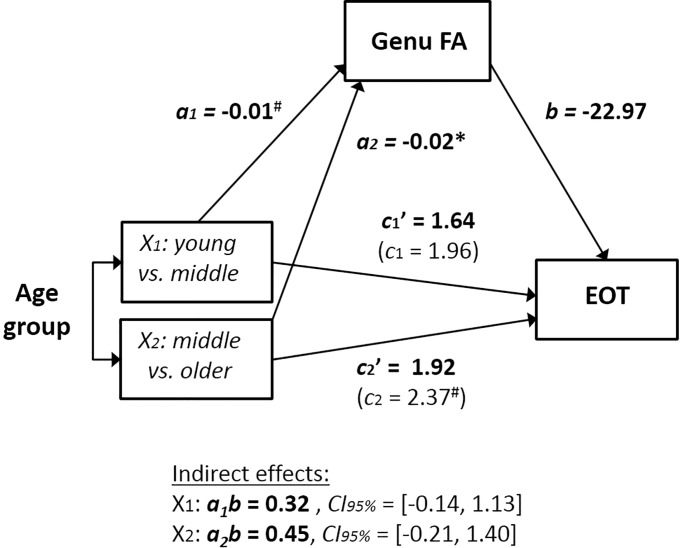
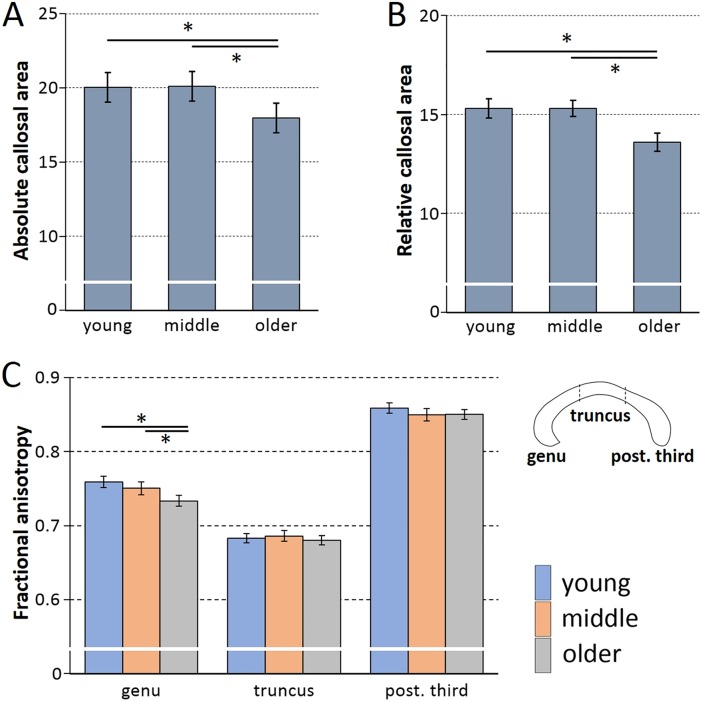
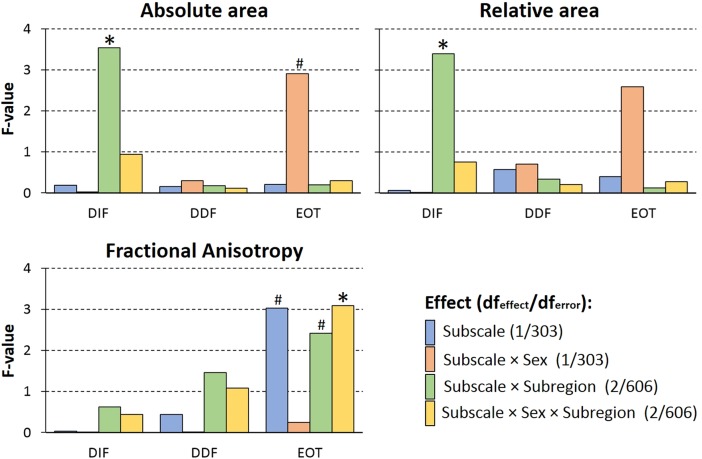
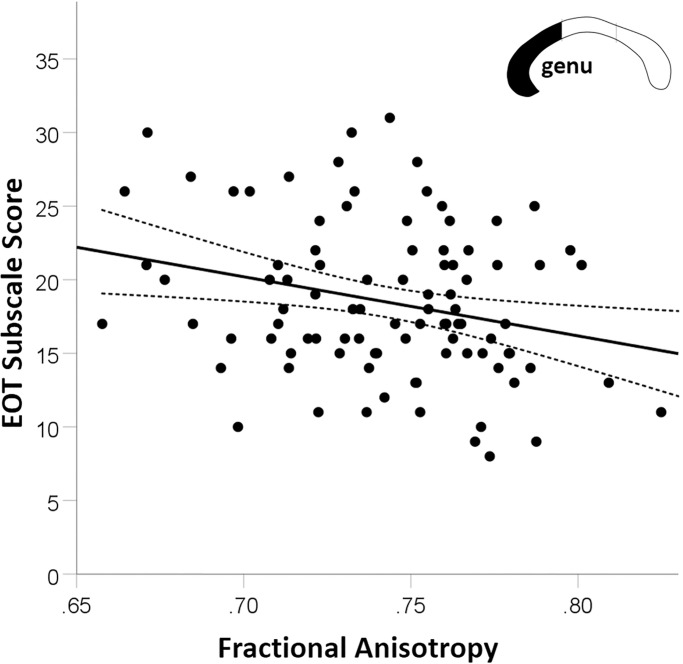
Differential functional specialization of the left and right hemispheres for linguistic and emotional functions, respectively, suggest that interhemispheric communication via the corpus callosum is critical for emotional awareness. Accordingly, it has been hypothesized that the age-related decline in callosal connectivity mediates the frequently demonstrated reduction in emotional awareness in older age. The present study tests this hypothesis in a sample of 307 healthy individuals between 20-89 years using combined structural and diffusion-tensor magnetic resonance imaging (MRI) of the corpus callosum. As assumed, inter-hemispheric connectivity (midsagittal callosal area and thickness, as well as fractional anisotropy, FA) and emotional awareness (i.e., increase in externally-oriented thinking, EOT; assessed with the Toronto Alexithymia Scale, TAS-20) were found to be reduced in older (> 60 years) compared to younger participants. Furthermore, relating callosal measures to emotional awareness, FA in the genu of the corpus callosum was found to be negatively correlated with EOT in male participants. Thus, "stronger" structural connectivity (higher FA) was related with higher emotional awareness (lower EOT). However, a formal mediation analysis did not support the notion that age-related decline in emotional awareness is mediated by the corpus callosum. Thus, the observed reduction of emotional awareness and callosal connectivity in older age likely reflects parallel but not inter-dependent processes.
左、右半球在语言和情感功能上的差异功能专业化,分别表明通过胼胝体的大脑两半球间的交流对于情感意识至关重要。因此,有人假设,胼胝体连接的年龄相关下降介导了在老年中经常表现出的情感意识的降低。本研究在 20-89 岁的 307 名健康个体样本中使用胼胝体的结构和扩散张量磁共振成像(MRI)来测试这一假设。如假设的那样,与年轻参与者相比,在年龄较大(> 60 岁)的参与者中发现了半球间连接(正中胼胝体区域和厚度,以及各向异性分数,FA)和情感意识(即,外部定向思维的增加,EOT;用多伦多述情障碍量表,TAS-20 评估)降低。此外,将胼胝体测量值与情感意识相关联,发现男性参与者的胼胝体膝部的 FA 与 EOT 呈负相关。因此,“更强”的结构连接(更高的 FA)与更高的情感意识(更低的 EOT)相关。然而,正式的中介分析并不支持这样的观点,即情感意识的年龄相关下降是由胼胝体介导的。因此,在老年中观察到的情感意识和胼胝体连接的降低可能反映了平行但不相互依赖的过程。