Lonsinger Robert C, Adams Jennifer R, Waits Lisette P
Department of Natural Resource Management South Dakota State University Brookings South Dakota.
Department of Fish and Wildlife Sciences University of Idaho Moscow Idaho.
Ecol Evol. 2018 Nov 8;8(23):12011-12021. doi: 10.1002/ece3.4660. eCollection 2018 Dec.
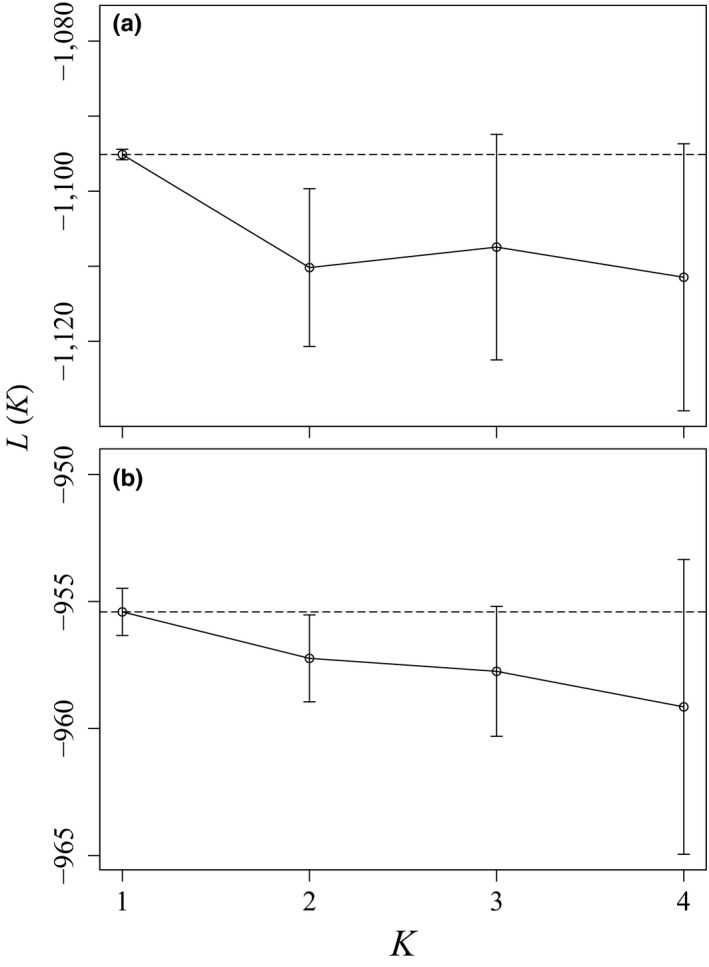
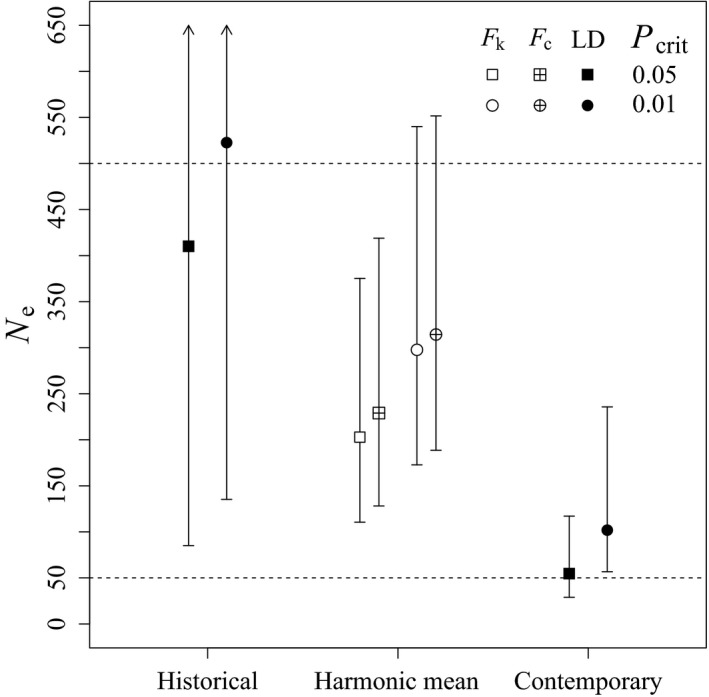
Loss of genetic diversity has serious conservation consequences (e.g., loss of adaptive potential, reduced population viability), but is difficult to evaluate without developing long-term, multigenerational datasets. Alternatively, historical samples can provide insights into changes in genetic diversity and effective population size ( ). Kit foxes () are a species of conservation concern across much of their range. In western Utah, kit fox abundance has declined precipitously from historical levels, causing concern about population persistence. We analyzed genetic samples from museum specimens and contemporary scats to evaluate temporal changes in (a) genetic diversity and (b) for kit foxes in western Utah, and (c) discuss our findings with respect to population risk and conservation. The of kit foxes in western Utah has decreased substantially. When compared to established conservation thresholds for (e.g., the 50/500 rule), observed levels suggest the population may be at risk of inbreeding depression and local extinction. In contrast, we found no significant decrease in genetic diversity associated with declining . We detected evidence of low levels of immigration into the population and suspect genetic diversity may have been maintained by this previously undescribed gene flow from adjacent populations. Low or intermittent immigration may serve to temper the potential short-term negative consequences of low . We recommend that kit fox conservation efforts focus on evaluating and maintaining landscape connectivity. We demonstrate how historical specimens can provide a baseline of comparison for contemporary populations, highlighting the importance of natural history collections to conservation during a period of declining funding and support.
遗传多样性的丧失会带来严重的保护后果(例如,适应潜力丧失、种群生存力降低),但如果不建立长期的多代数据集,就很难进行评估。另外,历史样本可以为了解遗传多样性和有效种群大小的变化提供线索。敏狐在其大部分分布范围内都是受保护关注的物种。在犹他州西部,敏狐的数量已从历史水平急剧下降,这引发了对该种群持续性的担忧。我们分析了博物馆标本和当代粪便中的基因样本,以评估(a)犹他州西部敏狐的遗传多样性和(b)有效种群大小随时间的变化,并(c)就种群风险和保护问题讨论我们的发现。犹他州西部敏狐的有效种群大小已大幅下降。与既定的有效种群大小保护阈值(例如50/500法则)相比,观察到的水平表明该种群可能面临近亲繁殖衰退和局部灭绝的风险。相比之下,我们发现有效种群大小下降并未伴随遗传多样性的显著降低。我们检测到有少量迁入该种群的证据,并推测遗传多样性可能是由来自相邻种群的这种先前未描述的基因流动所维持的。低水平或间歇性的迁入可能有助于缓和有效种群大小低带来的潜在短期负面后果。我们建议敏狐保护工作应专注于评估和维持景观连通性。我们展示了历史标本如何能为当代种群提供一个比较基线,凸显了在资金和支持减少的时期,自然历史收藏对保护工作的重要性。