USDA-ARS, Crop Improvement and Protection Research Unit, Salinas, California, United States of America.
Plant Pathology and Microbiology Department, University of California, Riverside, California, United States of America.
PLoS One. 2019 Jan 2;14(1):e0208606. doi: 10.1371/journal.pone.0208606. eCollection 2019.
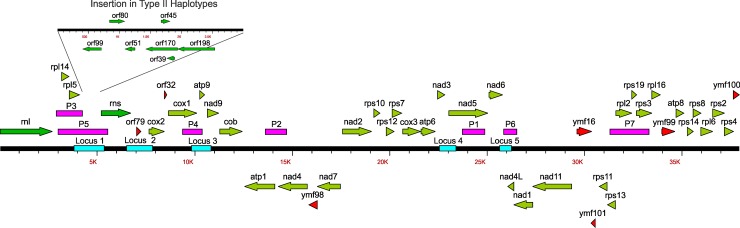
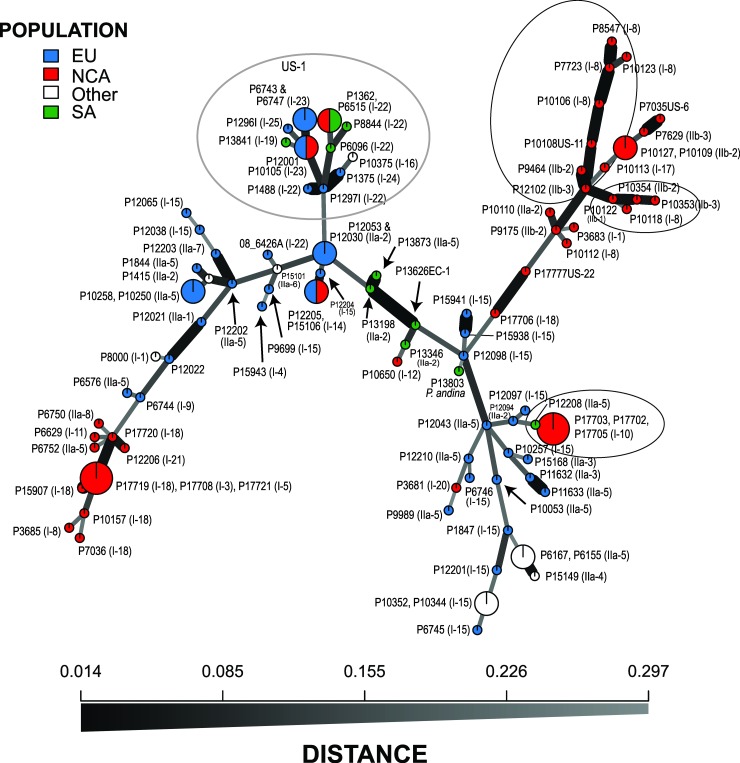
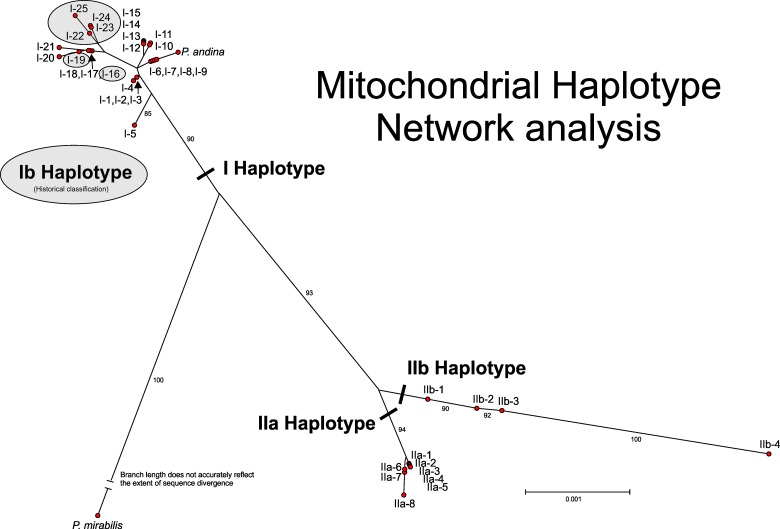
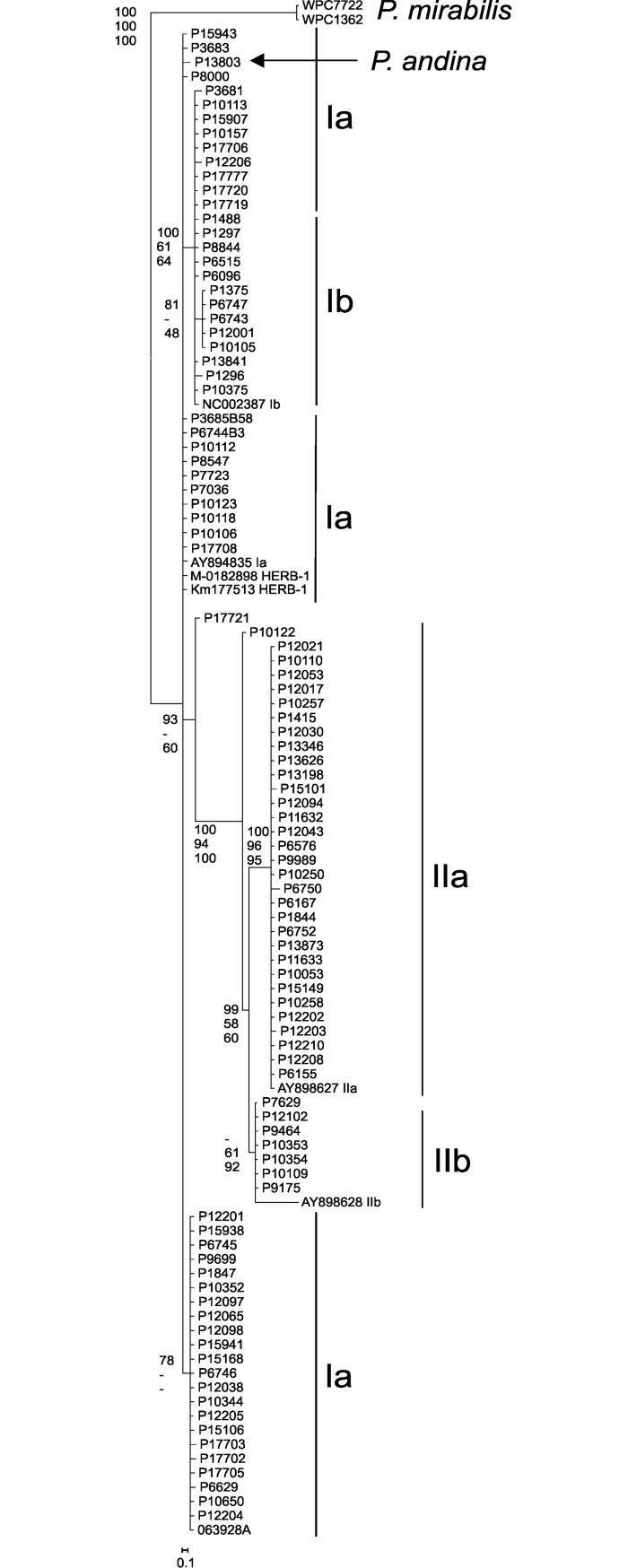
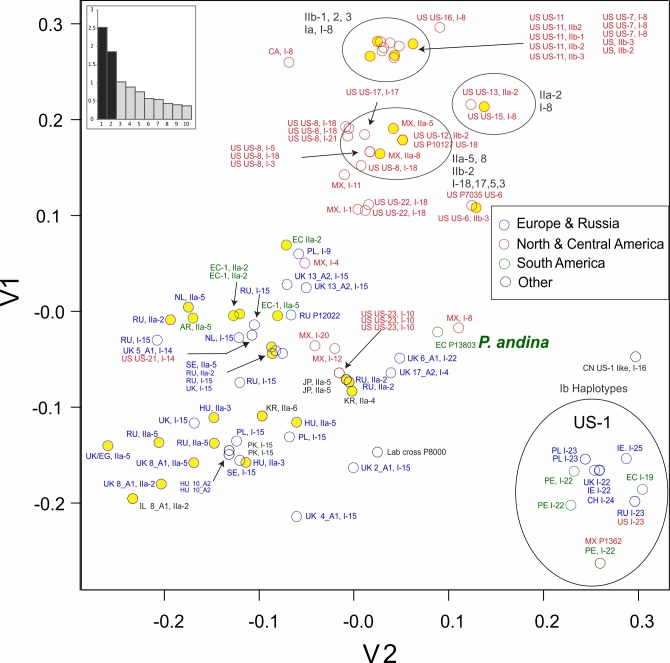
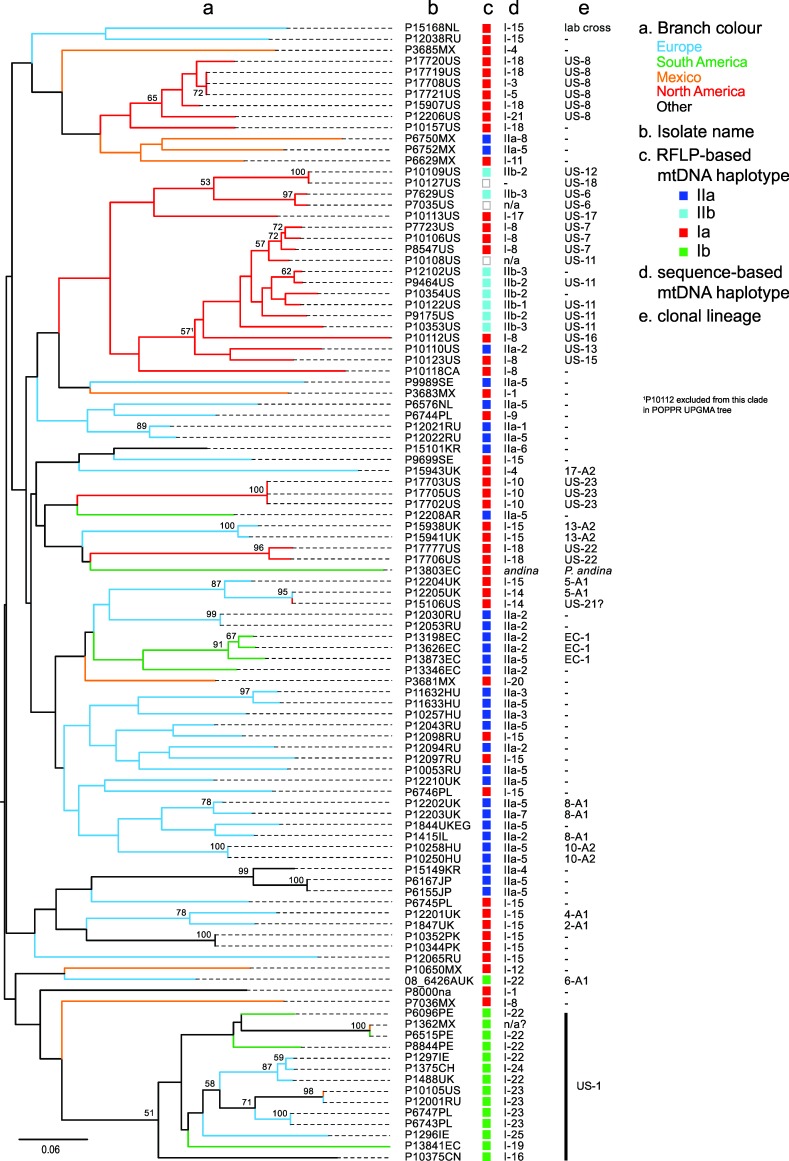
In many parts of the world the damaging potato late blight pathogen, Phytophthora infestans, is spread as a succession of clonal lineages. The discrimination of genetic diversity within such evolving populations provides insights into the processes generating novel lineages and the pathways and drivers of pathogen evolution and dissemination at local and global scales. This knowledge, in turn, helps optimise management practices. Here we combine two key methods for dissecting mitochondrial and nuclear diversity and resolve intra and inter-lineage diversity of over 100 P. infestans isolates representative of key clonal lineages found globally. A novel set of PCR primers that amplify five target regions are provided for mitochondrial DNA sequence analysis. These five loci increased the number of mtDNA haplotypes resolved from four with the PCR RFLP method to 37 (17, 6, 8 and 4 for Ia, Ib, IIa, and IIb haplotypes, respectively, plus 2 Herb-1 haplotypes). As with the PCR RFLP method, two main lineages, I and II were defined. Group I contained 25 mtDNA haplotypes that grouped broadly according to the Ia and Ib types and resolved several sub-clades amongst the global sample. Group II comprised two distinct clusters with four haplotypes corresponding to the RFLP type IIb and eight haplotypes resolved within type IIa. The 12-plex SSR assay revealed 90 multilocus genotypes providing accurate discrimination of dominant clonal lineages and other genetically diverse isolates. Some association of genetic diversity and geographic region of contemporary isolates was observed; US and Mexican isolates formed a loose grouping, distinct from isolates from Europe, South America and other regions. Diversity within clonal lineages was observed that varied according to the age of the clone. In combination, these fine-scale nuclear and maternally inherited mitochondrial markers enabled a greater level of discrimination among isolates than previously available and provided complementary perspectives on evolutionary questions relating to the diversity, phylogeography and the origins and spread of clonal lineages of P. infestans.
在世界许多地区,破坏性的马铃薯晚疫病病原体致病疫霉以克隆谱系的连续形式传播。在这种不断进化的种群中,遗传多样性的区分提供了深入了解产生新谱系的过程,以及在地方和全球尺度上病原体进化和传播的途径和驱动因素。这种知识反过来又有助于优化管理实践。在这里,我们结合了两种用于剖析线粒体和核多样性的关键方法,解析了代表全球发现的关键克隆谱系的 100 多个致病疫霉分离株的种内和种间多样性。提供了一套新的 PCR 引物,用于扩增线粒体 DNA 序列分析的五个目标区域。这五个基因座将通过 PCR-RFLP 方法解析的 mtDNA 单倍型数量从 4 个增加到 37 个(Ia、Ib、IIa 和 IIb 单倍型分别为 17、6、8 和 4,外加 2 个 Herb-1 单倍型)。与 PCR-RFLP 方法一样,定义了两个主要谱系 I 和 II。组 I 包含 25 个 mtDNA 单倍型,根据 Ia 和 Ib 类型大致分组,并在全球样本中解析了几个亚谱系。组 II 由两个不同的聚类组成,有四个与 RFLP 类型 IIb 对应的单倍型和在类型 IIa 内解析的八个单倍型。12 plex SSR 检测揭示了 90 个多基因座基因型,能够准确区分主要的克隆谱系和其他遗传多样的分离株。观察到当代分离株的遗传多样性与地理区域之间存在一些关联;美国和墨西哥的分离株形成了一个松散的群组,与来自欧洲、南美洲和其他地区的分离株不同。在克隆谱系内观察到多样性,其变化与克隆的年龄有关。综合这些精细的核和母系遗传线粒体标记,使分离株之间的鉴别水平高于以往,为有关致病疫霉多样性、系统地理学以及克隆谱系的起源和传播的进化问题提供了互补的视角。