Department of Pharmacology, Vanderbilt University, 2220 Pierce Avenue, Nashville, TN, 37232, USA.
Epigenetics Chromatin. 2019 Jan 7;12(1):7. doi: 10.1186/s13072-018-0251-8.
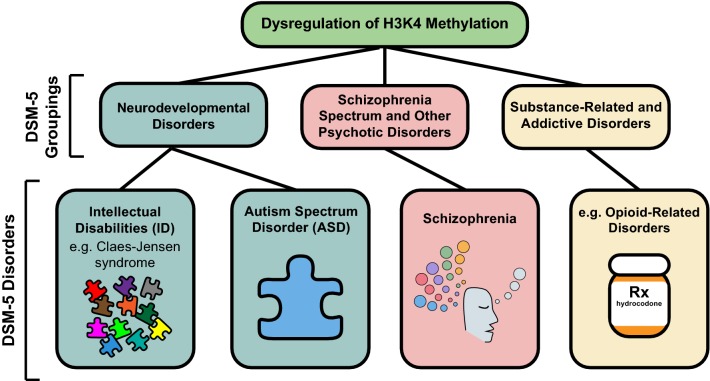
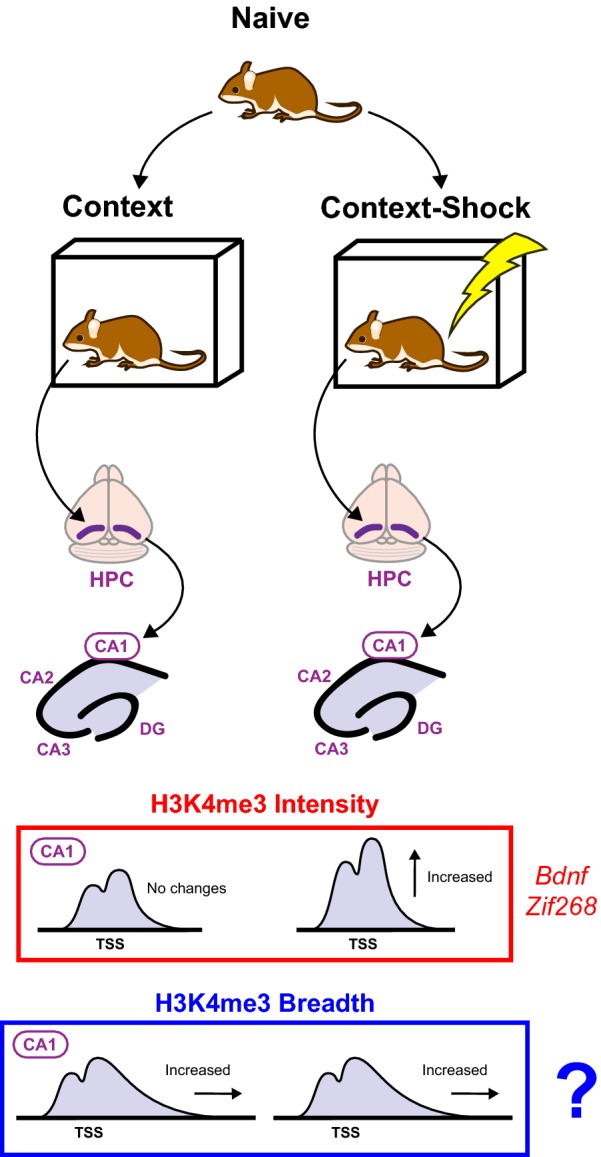
Epigenetic modifications such as histone methylation permit change in chromatin structure without accompanying change in the underlying genomic sequence. A number of studies in animal models have shown that dysregulation of various components of the epigenetic machinery causes cognitive deficits at the behavioral level, suggesting that proper epigenetic control is necessary for the fundamental processes of learning and memory. Histone H3 lysine K4 (H3K4) methylation comprises one component of such epigenetic control, and global levels of this mark are increased in the hippocampus during memory formation. Modifiers of H3K4 methylation are needed for memory formation, shown through animal studies, and many of the same modifiers are mutated in human cognitive diseases. Indeed, all of the known H3K4 methyltransferases and four of the known six H3K4 demethylases have been associated with impaired cognition in a neurologic or psychiatric disorder. Cognitive impairment in such patients often manifests as intellectual disability, consistent with a role for H3K4 methylation in learning and memory. As a modification quintessentially, but not exclusively, associated with transcriptional activity, H3K4 methylation provides unique insights into the regulatory complexity of writing, reading, and erasing chromatin marks within an activated neuron. The following review will discuss H3K4 methylation and connect it to transcriptional events required for learning and memory within the developed nervous system. This will include an initial discussion of the most recent advances in the developing methodology to analyze H3K4 methylation, namely mass spectrometry and deep sequencing, as well as how these methods can be applied to more deeply understand the biology of this mark in the brain. We will then introduce the core enzymatic machinery mediating addition and removal of H3K4 methylation marks and the resulting epigenetic signatures of these marks throughout the neuronal genome. We next foray into the brain, discussing changes in H3K4 methylation marks within the hippocampus during memory formation and retrieval, as well as the behavioral correlates of H3K4 methyltransferase deficiency in this region. Finally, we discuss the human cognitive diseases connected to each H3K4 methylation modulator and summarize advances in developing drugs to target them.
表观遗传修饰,如组蛋白甲基化,允许在不伴随潜在基因组序列变化的情况下改变染色质结构。许多动物模型的研究表明,表观遗传机制的各种成分的失调会导致行为水平的认知缺陷,这表明适当的表观遗传控制对于学习和记忆的基本过程是必要的。组蛋白 H3 赖氨酸 K4(H3K4)甲基化是这种表观遗传控制的一个组成部分,在记忆形成过程中,该标记在海马体中的整体水平增加。动物研究表明,H3K4 甲基化的调节剂是记忆形成所必需的,许多相同的调节剂在人类认知疾病中发生突变。事实上,所有已知的 H3K4 甲基转移酶和已知的六个 H3K4 去甲基酶中的四个都与神经或精神障碍中的认知障碍有关。这些患者的认知障碍通常表现为智力障碍,这与 H3K4 甲基化在学习和记忆中的作用一致。作为一种典型的但不是唯一与转录活性相关的修饰,H3K4 甲基化为活跃神经元中染色质标记的写入、读取和擦除的调控复杂性提供了独特的见解。以下综述将讨论 H3K4 甲基化,并将其与发育中的神经系统中学习和记忆所需的转录事件联系起来。这将包括对分析 H3K4 甲基化的最新发展方法(即质谱和深度测序)的初步讨论,以及这些方法如何应用于更深入地了解大脑中这种标记的生物学。然后,我们将介绍介导 H3K4 甲基化标记添加和去除的核心酶机制,以及这些标记在整个神经元基因组中的表观遗传特征。接下来,我们将深入探讨大脑,讨论在记忆形成和检索过程中海马体中 H3K4 甲基化标记的变化,以及该区域 H3K4 甲基转移酶缺陷的行为相关性。最后,我们讨论与每个 H3K4 甲基化调节剂相关的人类认知疾病,并总结开发靶向这些调节剂的药物的进展。