Fahimi Hnazaee Mansoureh, Khachatryan Elvira, Van Hulle Marc M
Laboratory for Neuro- and Psychophysiology, Department of Neurosciences, KU Leuven, Leuven, Belgium.
Front Hum Neurosci. 2018 Dec 13;12:503. doi: 10.3389/fnhum.2018.00503. eCollection 2018.
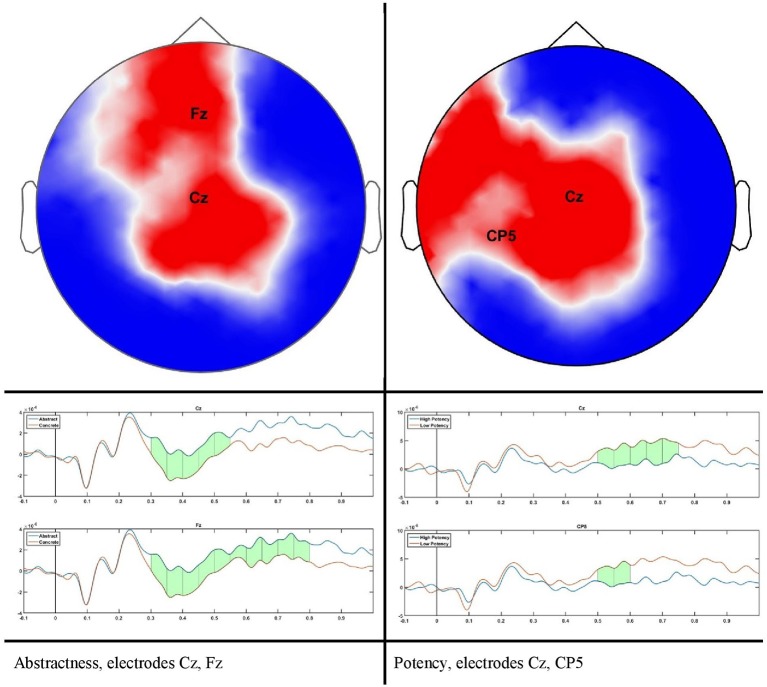
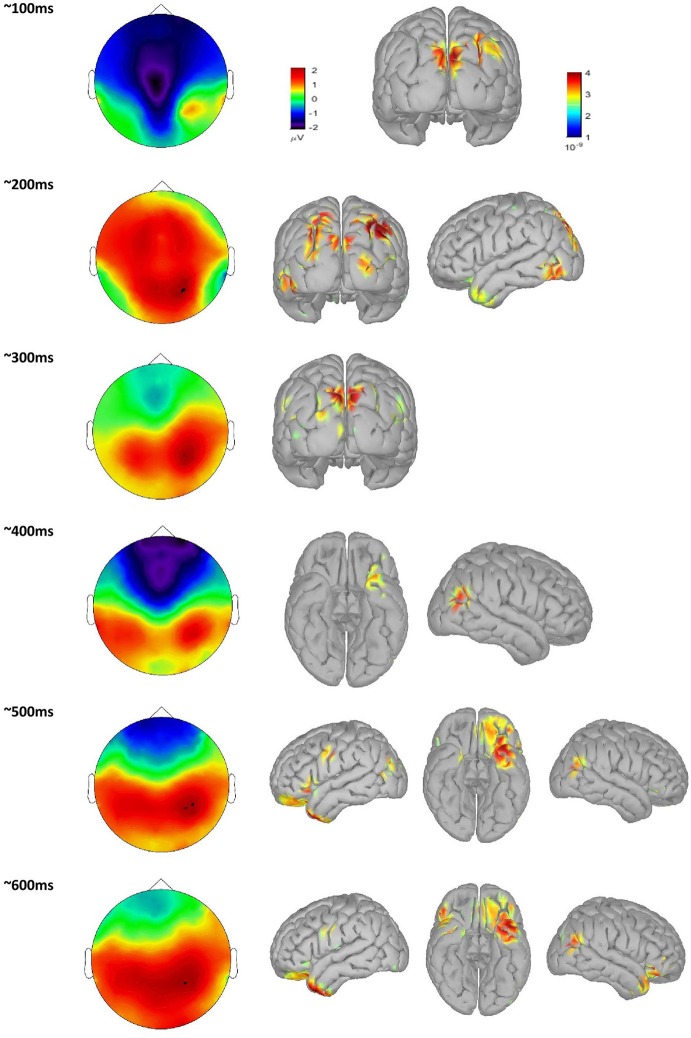
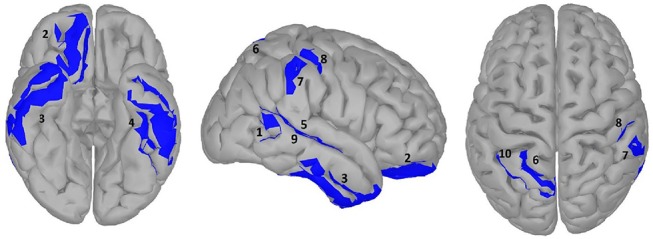
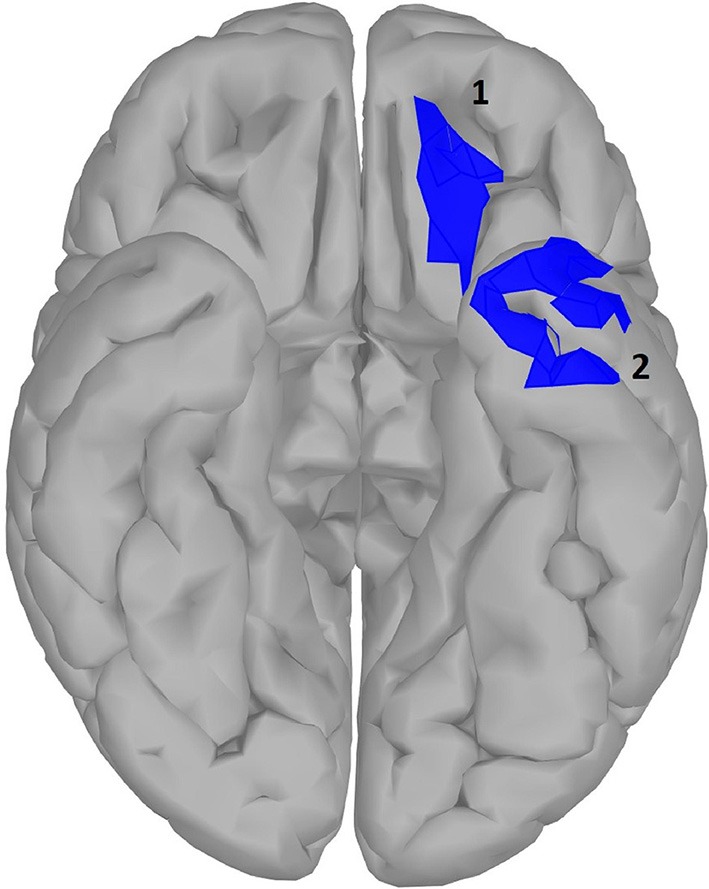
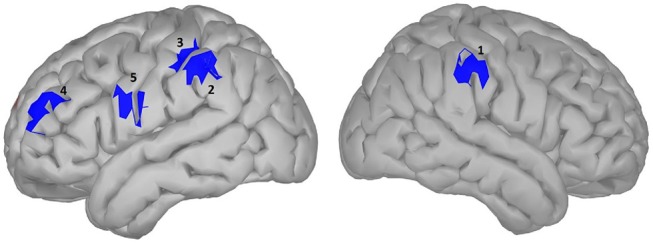
The neural principles behind semantic category representation are still under debate. Dominant theories mostly focus on distinguishing concrete from abstract concepts but, in such theories, divisions into categories of concrete concepts are more developed than for their abstract counterparts. An encompassing theory on semantic category representation could be within reach when charting the semantic attributes that are capable of describing both concept types. A good candidate are the three semantic dimensions defined by Osgood (potency, valence, arousal). However, to show to what extent they affect semantic processing, specific neuroimaging tools are required. Electroencephalography (EEG) is on par with the temporal resolution of cognitive behavior and source reconstruction. Using high-density set-ups, it is able to yield a spatial resolution in the scale of millimeters, sufficient to identify anatomical brain parcellations that could differentially contribute to semantic category representation. Cognitive neuroscientists traditionally focus on scalp domain analysis and turn to source reconstruction when an effect in the scalp domain has been detected. Traditional methods will potentially miss out on the fine-grained effects of semantic features as they are possibly obscured by the mixing of source activity due to volume conduction. For this reason, we have developed a mass-univariate analysis in the source domain using a mixed linear effect model. Our analyses reveal distinct networks of sources for different semantic features that are active during different stages of lexico-semantic processing of single words. With our method we identified differences in the spatio-temporal activation patterns of abstract and concrete words, high and low potency words, high and low valence words, and high and low arousal words, and in this way shed light on how word categories are represented in the brain.
语义范畴表征背后的神经学原理仍在争论之中。主流理论大多聚焦于区分具体概念与抽象概念,然而在这些理论中,具体概念的分类比抽象概念的分类更为成熟。当描绘出能够描述这两种概念类型的语义属性时,一个关于语义范畴表征的综合性理论可能就会出现。一个很好的候选是由奥斯古德定义的三个语义维度(效价、价值、唤醒度)。然而,为了表明它们在多大程度上影响语义加工,需要特定的神经成像工具。脑电图(EEG)在时间分辨率上与认知行为及源重建相当。使用高密度设置,它能够产生毫米级别的空间分辨率,足以识别可能对语义范畴表征有不同贡献的大脑解剖分区。认知神经科学家传统上专注于头皮区域分析,当在头皮区域检测到效应时才转向源重建。传统方法可能会错过语义特征的细粒度效应,因为它们可能会被由于容积传导导致的源活动混合所掩盖。出于这个原因,我们在源域中使用混合线性效应模型开发了一种多变量分析方法。我们的分析揭示了在单个单词的词汇 - 语义加工的不同阶段活跃的、针对不同语义特征的不同源网络。通过我们的方法,我们识别出了抽象词与具体词、高效价词与低效价词、高唤醒度词与低唤醒度词在时空激活模式上的差异,从而阐明了单词类别在大脑中是如何被表征的。