Frare Carla, Jenkins Mackenzie E, Soldin Steven J, Drew Kelly L
Department of Chemistry and Biochemistry, University of Alaska Fairbanks, Fairbanks, AK, United States.
Institute of Arctic Biology, University of Alaska Fairbanks, Fairbanks, AK, United States.
Front Physiol. 2018 Dec 12;9:1747. doi: 10.3389/fphys.2018.01747. eCollection 2018.
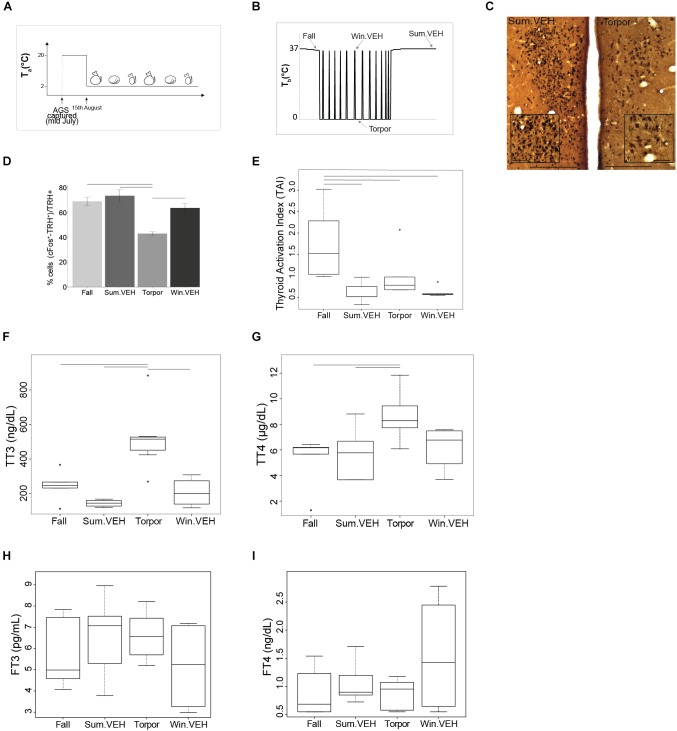
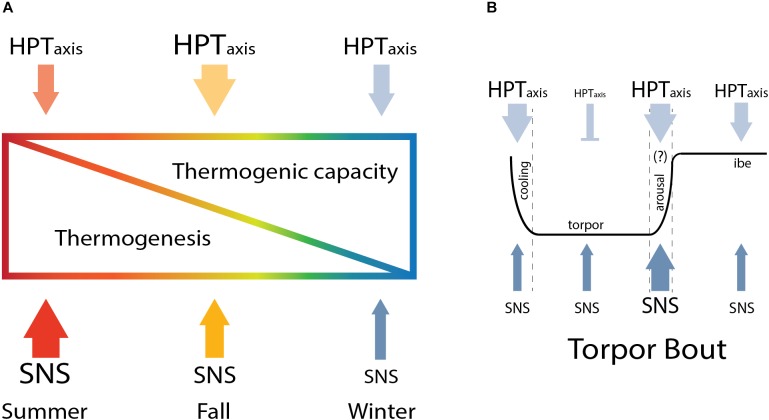
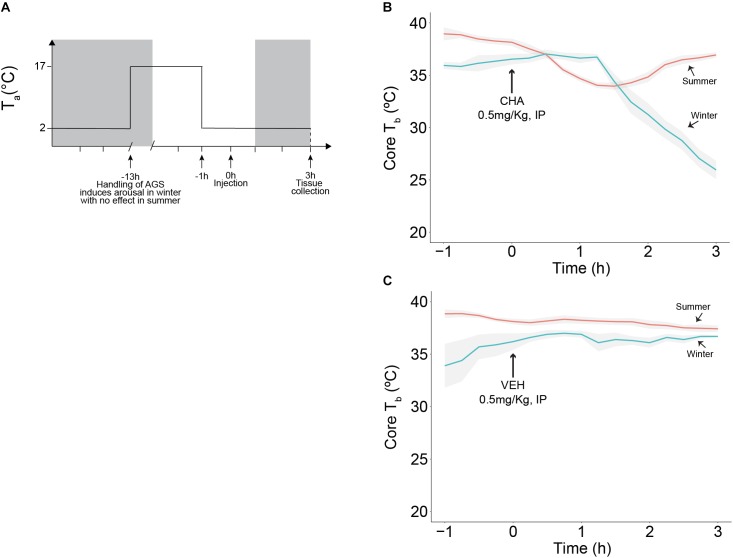
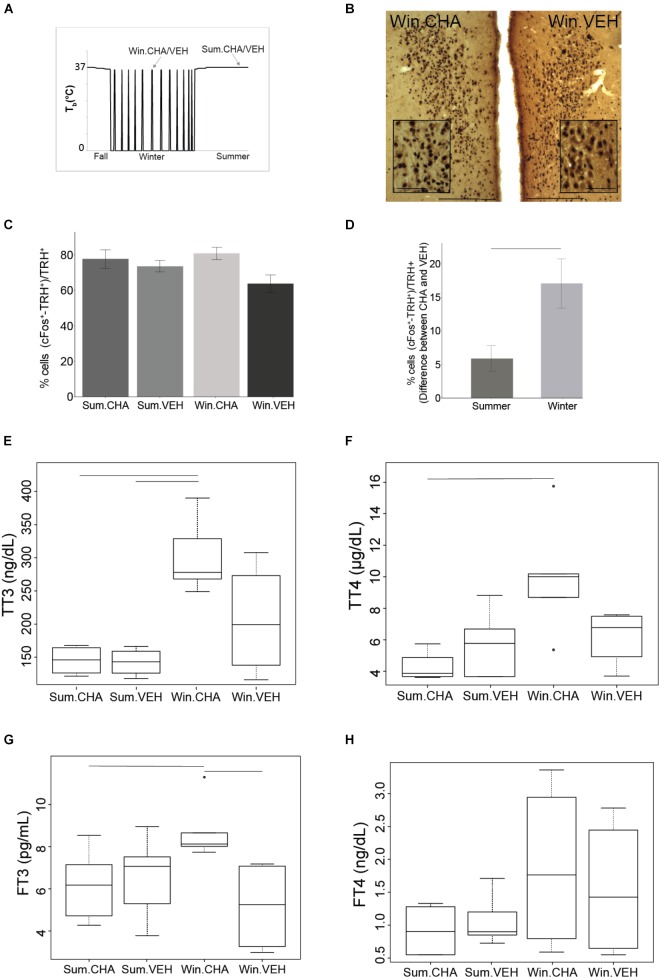
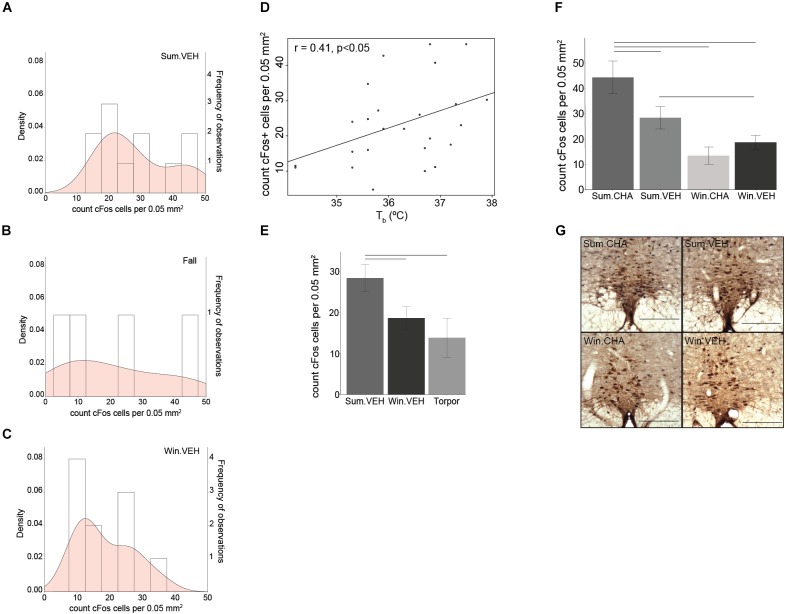
Thermoregulation is necessary to maintain energy homeostasis. The novel discovery of brown adipose tissue (BAT) in humans has increased research interests in better understanding BAT thermogenesis to restore energy balance in metabolic disorders. The hibernating Arctic ground squirrel (AGS) offers a novel approach to investigate BAT thermogenesis. AGS seasonally increase their BAT mass to increase the ability to generate heat during interbout arousals. The mechanisms promoting the seasonal changes in BAT thermogenesis are not well understood. BAT thermogenesis is regulated by the raphe pallidus (rPA) and by thyroid hormones produced by the hypothalamic-pituitary-thyroid (HPT) axis. Here, we investigate if the HPT axis and the rPA undergo seasonal changes to modulate BAT thermogenesis in hibernation. We used histological analysis and tandem mass spectrometry to assess activation of the HPT axis and immunohistochemistry to measure neuronal activation. We found an increase in HPT axis activation in fall and in response to pharmacologically induced torpor when adenosine A receptor agonist was administered in winter. By contrast, the rPA neuronal activation was lower in winter in response to pharmacologically induced torpor. Activation of the rPA was also lower in winter compared to the other seasons. Our results suggest that thermogenic capacity develops during fall as the HPT axis is activated to reach maximum capacity in winter seen by increased free thyroid hormones in response to cooling. However, thermogenesis is inhibited during torpor as sympathetic premotor neuronal activation is lower in winter, until arousal when inhibition of thermogenesis is relieved. These findings describe seasonal modulation of thermoregulation that conserves energy through attenuated sympathetic drive, but retains heat generating capacity through activation of the HPT axis.
体温调节对于维持能量平衡至关重要。人类棕色脂肪组织(BAT)的新发现激发了人们对更好地理解BAT产热以恢复代谢紊乱中的能量平衡的研究兴趣。冬眠的北极地松鼠(AGS)为研究BAT产热提供了一种新方法。AGS会季节性地增加其BAT质量,以增强在间歇性觉醒期间产生热量的能力。促进BAT产热季节性变化的机制尚不清楚。BAT产热受中缝苍白核(rPA)和下丘脑 - 垂体 - 甲状腺(HPT)轴产生的甲状腺激素调节。在此,我们研究HPT轴和rPA是否会发生季节性变化以调节冬眠期间的BAT产热。我们使用组织学分析和串联质谱法评估HPT轴的激活情况,并通过免疫组织化学法测量神经元激活情况。我们发现秋季HPT轴激活增加,并且在冬季给予腺苷A受体激动剂诱导药物性昏睡时,HPT轴也会被激活。相比之下,在冬季给予药物性昏睡时,rPA神经元激活较低。与其他季节相比,冬季rPA的激活也较低。我们的结果表明,随着HPT轴在秋季被激活,产热能力在秋季开始发展,到冬季达到最大产热能力,这表现为在寒冷刺激下游离甲状腺激素增加。然而,在昏睡期间产热受到抑制,因为冬季交感神经运动前神经元激活较低,直到觉醒时产热抑制才解除。这些发现描述了体温调节的季节性调节,即通过减弱交感神经驱动来保存能量,但通过激活HPT轴保留产热能力。