Department of Dermatology, Brigham and Women's Hospital, Boston MA, United States.
Harvard Medical School, Boston MA, United States.
Front Immunol. 2018 Dec 14;9:2857. doi: 10.3389/fimmu.2018.02857. eCollection 2018.
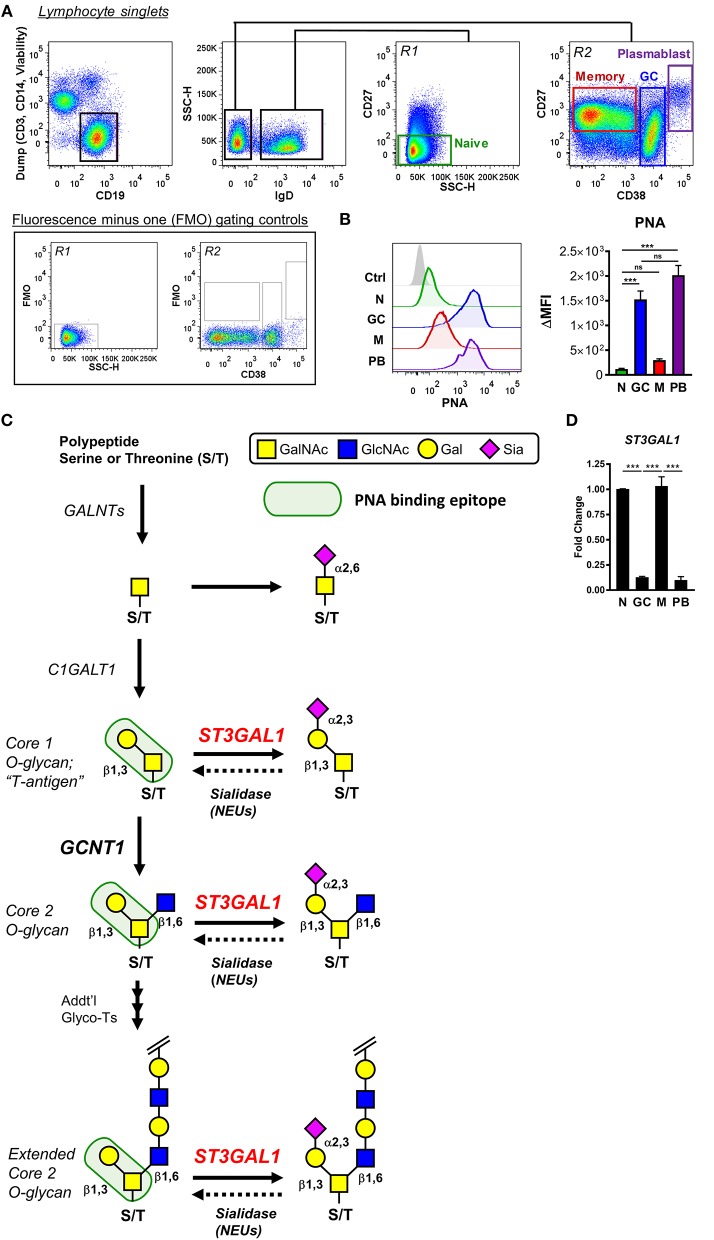
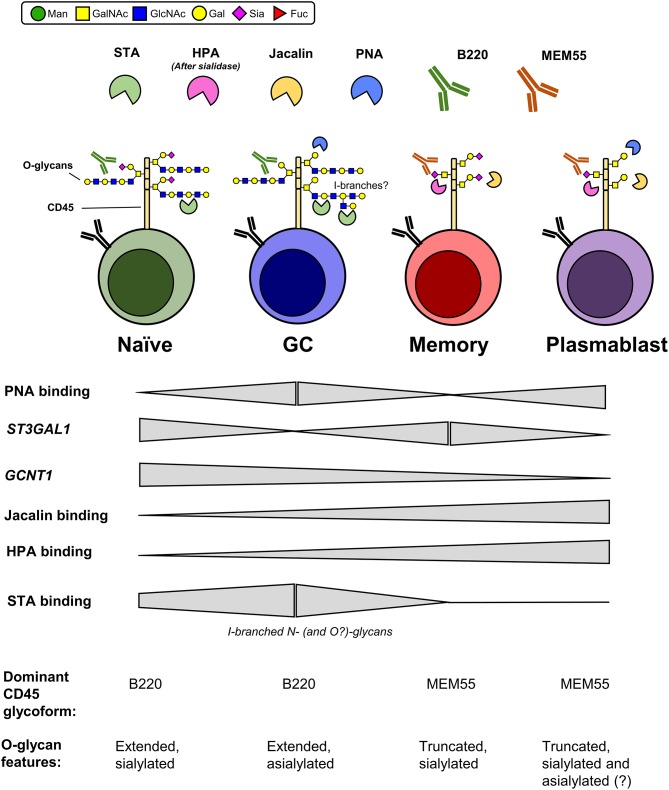
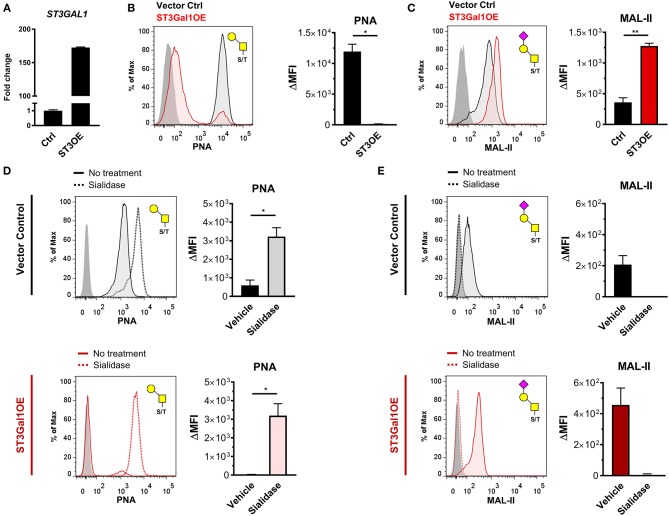
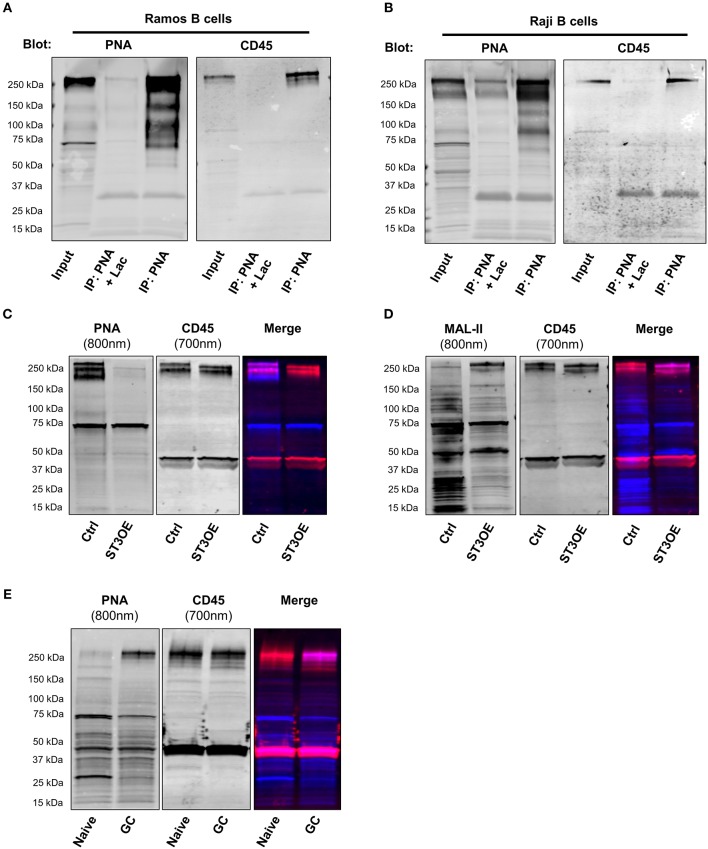
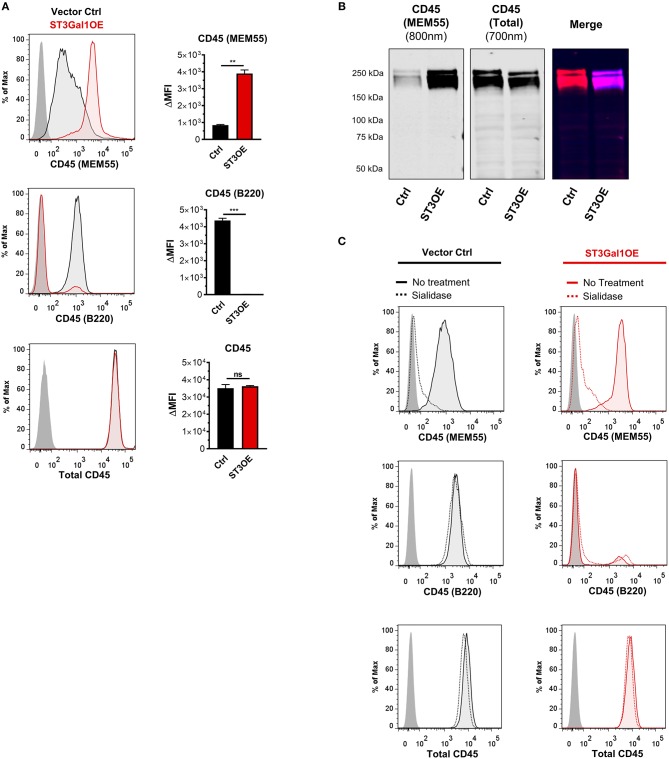
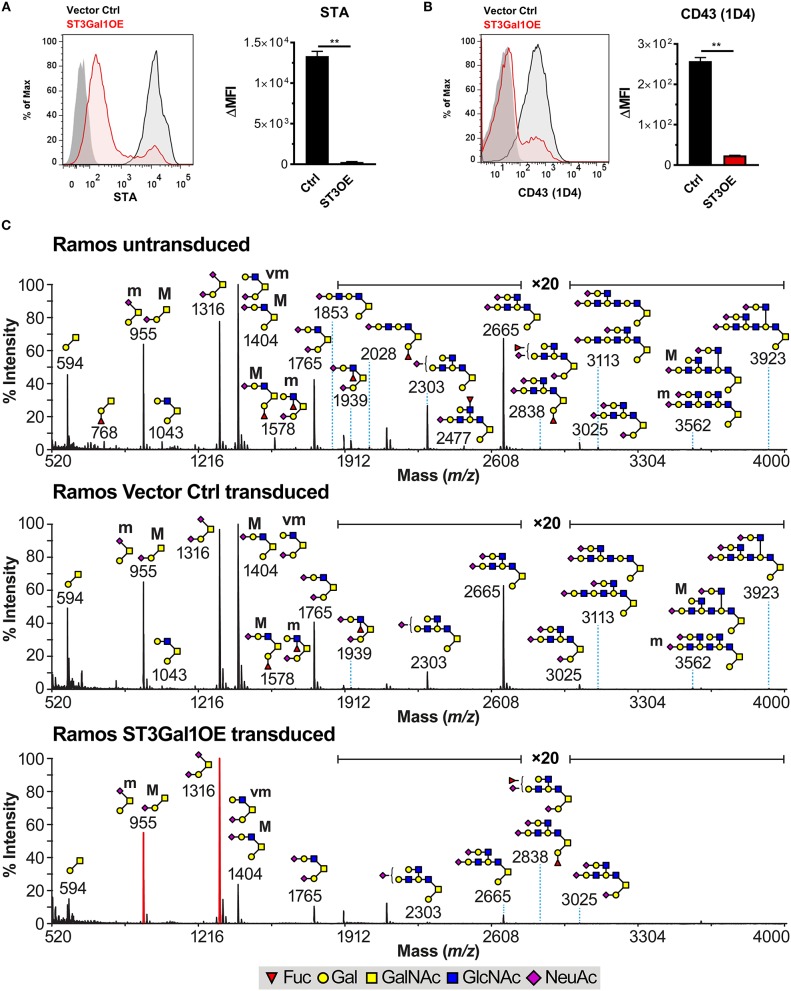
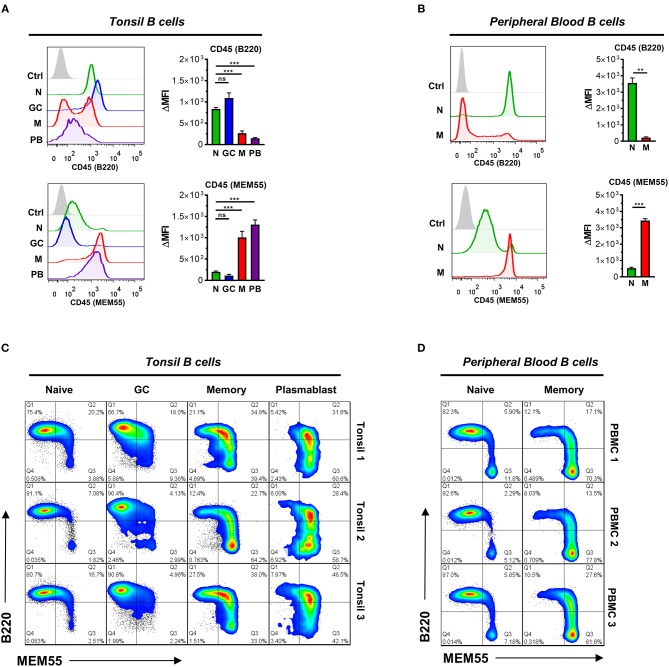
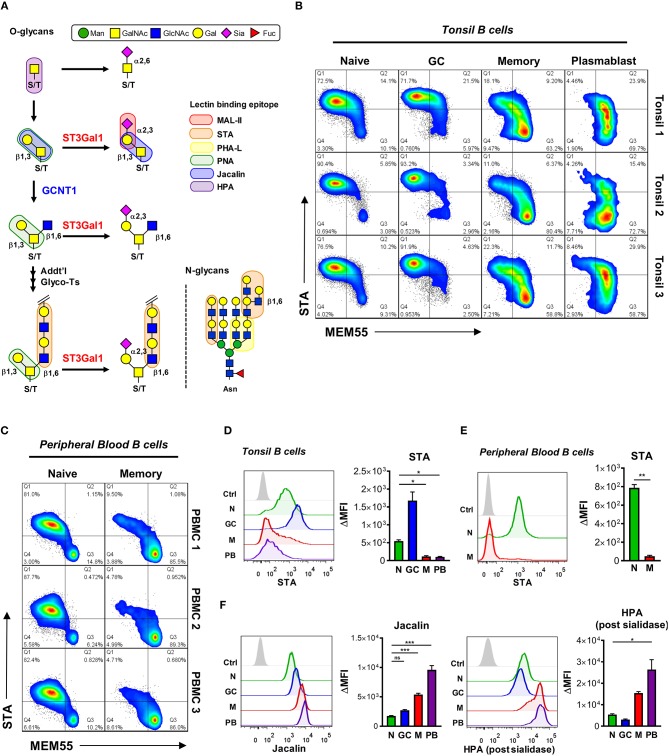
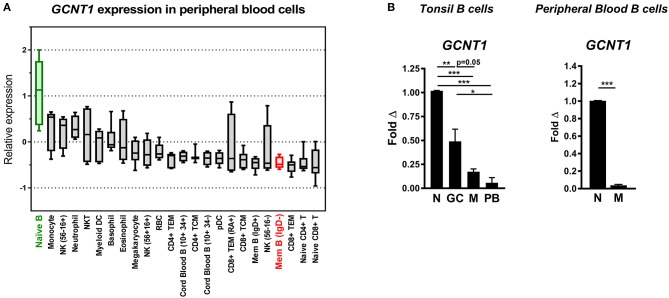
Germinal centers (GC) are microanatomical niches where B cells proliferate, undergo antibody affinity maturation, and differentiate to long-lived memory B cells and antibody-secreting plasma cells. For decades, GC B cells have been defined by their reactivity to the plant lectin peanut agglutinin (PNA), which binds serine/threonine (O-linked) glycans containing the asialylated disaccharide Gal-β1,3-GalNAc-Ser/Thr (also called T-antigen). In T cells, acquisition of PNA binding by activated T cells and thymocytes has been linked with altered tissue homing patterns, cell signaling, and survival. Yet, in GC B cells, the glycobiological basis and significance of PNA binding remains surprisingly unresolved. Here, we investigated the basis for PNA reactivity of GC B cells. We found that GC B cell binding to PNA is associated with downregulation of the α2,3 sialyltransferase, (ST3Gal1), and overexpression of ST3Gal1 was sufficient to reverse PNA binding in B cell lines. Moreover, we found that the primary scaffold for PNA-reactive O-glycans in B cells is the B cell receptor-associated receptor-type tyrosine phosphatase CD45, suggesting a role for altered O-glycosylation in antigen receptor signaling. Consistent with similar reports in T cells, ST3Gal1 overexpression in B cells induced drastic shortening in O-glycans, which we confirmed by both antibody staining and mass spectrometric O-glycomic analysis. Unexpectedly, ST3Gal1-induced changes in O-glycan length also correlated with altered binding of two glycosylation-sensitive CD45 antibodies, RA3-6B2 (more commonly called B220) and MEM55, which (in humans) have previously been reported to favor binding to naïve/GC subsets and memory/plasmablast subsets, respectively. Analysis of primary B cell binding to B220, MEM55, and several plant lectins suggested that B cell differentiation is accompanied by significant loss of O-glycan complexity, including loss of extended Core 2 O-glycans. To our surprise, decreased O-glycan length from naïve to post-GC fates best correlated not with ST3Gal1, but rather downregulation of the Core 2 branching enzyme GCNT1. Thus, our data suggest that O-glycan remodeling is a feature of B cell differentiation, dually regulated by ST3Gal1 and GCNT1, that ultimately results in expression of distinct O-glycosylation states/CD45 glycoforms at each stage of B cell differentiation.
生发中心(GC)是微小的解剖学龛位,其中 B 细胞增殖、经历抗体亲和力成熟,并分化为长寿记忆 B 细胞和分泌抗体的浆细胞。几十年来,GC B 细胞一直通过它们对植物凝集素花生凝集素(PNA)的反应性来定义,花生凝集素结合含有去唾液酸化二糖 Gal-β1,3-GalNAc-Ser/Thr(也称为 T 抗原)的丝氨酸/苏氨酸(O-连接)聚糖。在 T 细胞中,激活的 T 细胞和胸腺细胞获得 PNA 结合与改变的组织归巢模式、细胞信号转导和存活有关。然而,在 GC B 细胞中,PNA 结合的糖生物学基础和意义仍然令人惊讶地未得到解决。在这里,我们研究了 GC B 细胞中 PNA 反应性的基础。我们发现,GC B 细胞与 PNA 的结合与α2,3 唾液酸转移酶(ST3Gal1)的下调有关,ST3Gal1 的过表达足以在 B 细胞系中逆转 PNA 结合。此外,我们发现 PNA 反应性 O-聚糖的主要支架是 B 细胞受体相关的受体型酪氨酸磷酸酶 CD45,这表明抗原受体信号转导中改变的 O-糖基化起作用。与 T 细胞中的类似报告一致,B 细胞中 ST3Gal1 的过表达诱导 O-聚糖的急剧缩短,我们通过抗体染色和质谱 O-糖组学分析证实了这一点。出乎意料的是,ST3Gal1 诱导的 O-聚糖长度变化也与两种糖基化敏感的 CD45 抗体 RA3-6B2(通常称为 B220)和 MEM55 的结合改变相关,(在人类中)先前报道它们分别有利于与幼稚/GC 亚群和记忆/浆母细胞亚群结合。对原代 B 细胞与 B220、MEM55 和几种植物凝集素的结合分析表明,B 细胞分化伴随着 O-聚糖复杂性的显著丧失,包括失去延伸的核心 2 O-聚糖。令我们惊讶的是,从幼稚到 GC 后命运的 O-聚糖长度减少与 ST3Gal1 相关性最差,而是与核心 2 分支酶 GCNT1 的下调相关性最强。因此,我们的数据表明,O-聚糖重塑是 B 细胞分化的一个特征,由 ST3Gal1 和 GCNT1 双重调节,最终导致 B 细胞分化的每个阶段表达不同的 O-糖基化状态/CD45 糖型。