Department of Immunology, Graduate School of Medicine, Chiba University, Chiba, Japan.
Institue for Global Prominent Research, Chiba University, Chiba, Japan.
Front Immunol. 2018 Dec 12;9:2929. doi: 10.3389/fimmu.2018.02929. eCollection 2018.
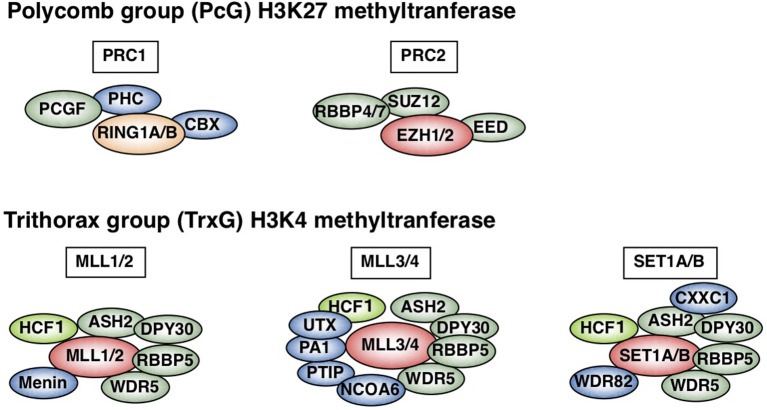
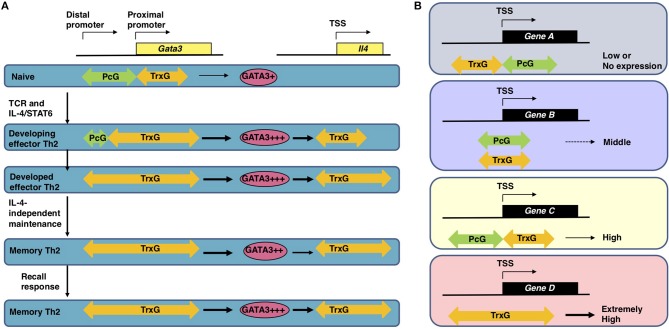
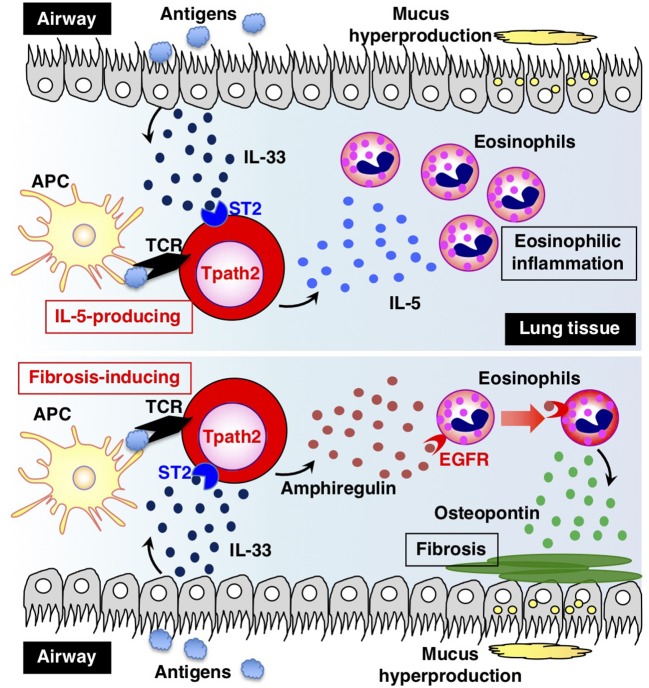
Antigen-primed T cells respond to restimulation much faster than naïve T cells and form the cellular basis of immunological memory. The formation of memory Th2 cells starts when naïve CD4 T cells are transformed into effector Th2 cells and is completed after antigen clearance and a long-term resting phase accompanied by epigenetic changes in the Th2 signature genes. Memory Th2 cells maintain their functions and acquired heterogeneity through epigenetic machinery, on which the recall-response of memory Th2 cells is also dependent. We provide an overview of the epigenetics in the whole Th2 cell cycle, mainly focusing on two different histone lysine methyltransferase complexes: the Polycomb and Trithorax groups. We finally discuss the pathophysiology and potential therapeutic strategies for the treatment of Th2-mediated inflammatory diseases in mice and humans.
抗原激活的 T 细胞比幼稚 T 细胞对再刺激的反应更快,并且构成了免疫记忆的细胞基础。记忆性 Th2 细胞的形成始于幼稚 CD4+T 细胞向效应性 Th2 细胞的转化,并且在抗原清除和伴随 Th2 特征基因的表观遗传变化的长期静止期之后完成。记忆性 Th2 细胞通过表观遗传机制维持其功能和获得的异质性,记忆性 Th2 细胞的回忆反应也依赖于该机制。我们提供了 Th2 细胞整个周期中的表观遗传学概述,主要集中在两个不同的组蛋白赖氨酸甲基转移酶复合物:Polycomb 和 Trithorax 组。最后,我们讨论了在小鼠和人类中治疗 Th2 介导的炎症性疾病的病理生理学和潜在治疗策略。