
估计赞比亚育龄妇女中预防母婴传播的艾滋病毒检测覆盖率及检测使用率。
Estimating levels of HIV testing coverage and use in prevention of mother-to-child transmission among women of reproductive age in Zambia.
作者信息
Muyunda Brian, Mee Paul, Todd Jim, Musonda Patrick, Michelo Charles
机构信息
1Department of Epidemiology & Biostatistics, The University of Zambia School of Public Health, Lusaka, Zambia.
Ministry of Health, University Teaching Hospital, P/Bag RW 1X, 10101 Lusaka, Zambia.
出版信息
Arch Public Health. 2018 Dec 29;76:80. doi: 10.1186/s13690-018-0325-x. eCollection 2018.
BACKGROUND
Mother to child transmission of HIV (MTCT) still remains a challenge affecting many countries. Globally, an estimated 150,000 children were newly infected with HIV in 2015, over 90% of them in Sub-Saharan Africa through MTCT. In Zambia approximately 500,000 babies are born and 40,000 acquire the infection vertically if there is no intervention annually. This study estimated the HIV testing coverage and associated factors among Zambian women of reproductive age 15-49 years.
METHODS
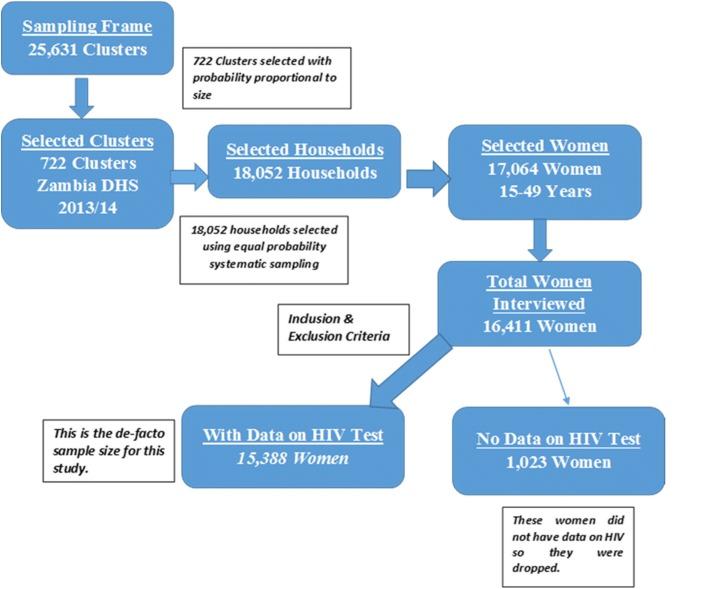
A cross-sectional study based on data extracted from the Zambia Demographics and Health Survey [Zambia Demographic and Health Survey. Central Statistical Office (CSO), Ministry of Health (MOH), Tropical Diseases Research Centre (TDRC), University of Zambia, and Macro International Inc. 2009. 2014]. Women aged 15-49 years, 15,388 who reported having ever tested for HIV or not comprised the de facto eligible sample. Extracted data comprised women's demographic characteristics; their full birth history and records of antenatal care for the most recent birth within a 5 year period preceding the survey. A weighted multiple logistic regression model was done to determine factors associated with the odds of HIV testing coverage among women of reproductive age.
RESULTS
Out of 15,388 women in the study, 12,413 (81%) reported ever tested for HIV. Of the 6461 women who attended antenatal care (ANC) 6139 (95%) reported ever tested for HIV. Additionally, 6139 (95%) out of 6461 of the women were given information on PMTCT during ANC sessions. Testing coverage was higher among women aged 20-24 years compared to women aged 15-19 years [AOR 2.1, 95% CI 1.14-3.84; = 0.017]. Women with higher socio-economic status had 6.6 times the odds of having ever tested compared to women with lower status [AOR 6.6, 95% CI 3.04-14.14; < 0.001].
CONCLUSIONS
In this study we have demonstrated that HIV testing coverage is higher among women of reproductive age. HIV testing among women attending ANC is also higher. Older women with higher socio-economic status are more likely to take up HIV testing compared to their young counterparts.
背景
艾滋病毒母婴传播(MTCT)仍是影响许多国家的一项挑战。全球范围内,2015年估计有15万儿童新感染艾滋病毒,其中90%以上是通过母婴传播在撒哈拉以南非洲感染的。在赞比亚,如果不进行干预,每年约有50万婴儿出生,4万婴儿会垂直感染艾滋病毒。本研究估计了赞比亚15至49岁育龄妇女的艾滋病毒检测覆盖率及相关因素。
方法
一项横断面研究,数据取自赞比亚人口与健康调查[赞比亚人口与健康调查。中央统计局(CSO)、卫生部(MOH)、热带病研究中心(TDRC)、赞比亚大学和Macro国际公司。2009年。2014年]。15至49岁、报告曾接受或未接受艾滋病毒检测的15388名妇女构成实际合格样本。提取的数据包括妇女的人口统计学特征;她们的完整生育史以及调查前5年内最近一次生育的产前护理记录。采用加权多元逻辑回归模型确定与育龄妇女艾滋病毒检测覆盖率几率相关的因素。
结果
在研究的15388名妇女中,12413名(81%)报告曾接受艾滋病毒检测。在6461名接受产前护理(ANC)的妇女中,6139名(95%)报告曾接受艾滋病毒检测。此外,在6461名妇女中,有6139名(95%)在产前护理期间获得了预防母婴传播的信息。与15至19岁的妇女相比,20至24岁的妇女检测覆盖率更高[AOR 2.1,95%CI 1.14 - 3.84;P = 0.017]。社会经济地位较高的妇女接受检测的几率是社会经济地位较低妇女的6.6倍[AOR 6.6,95%CI 3.04 - 14.14;P < 0.001]。
结论
在本研究中,我们证明育龄妇女的艾滋病毒检测覆盖率较高。接受产前护理的妇女中的艾滋病毒检测率也较高。与年轻女性相比,社会经济地位较高的老年女性更有可能接受艾滋病毒检测。
 Zotero 插件