1Department of Biology, Indiana University, Bloomington, IN 47405, USA.
2Department of Biological Sciences, University of the Sciences in Philadelphia, Philadelphia, PA 19104, USA.
Microbiology (Reading). 2019 Feb;165(2):146-162. doi: 10.1099/mic.0.000758. Epub 2019 Jan 8.
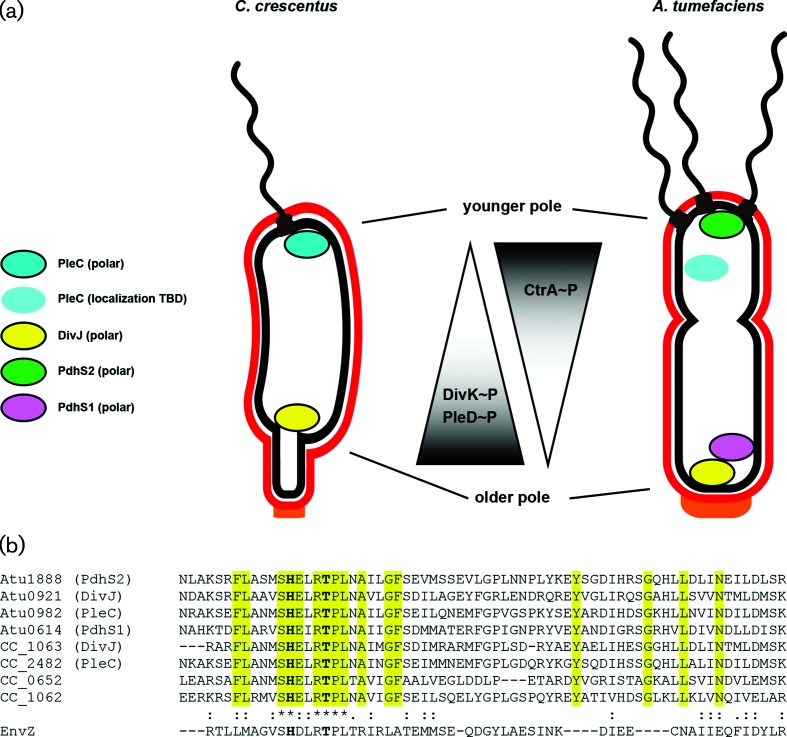
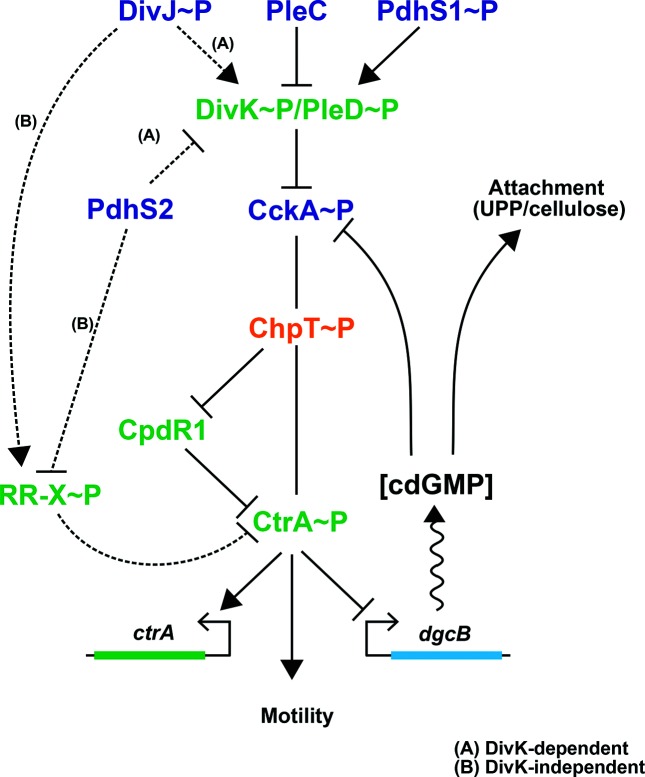
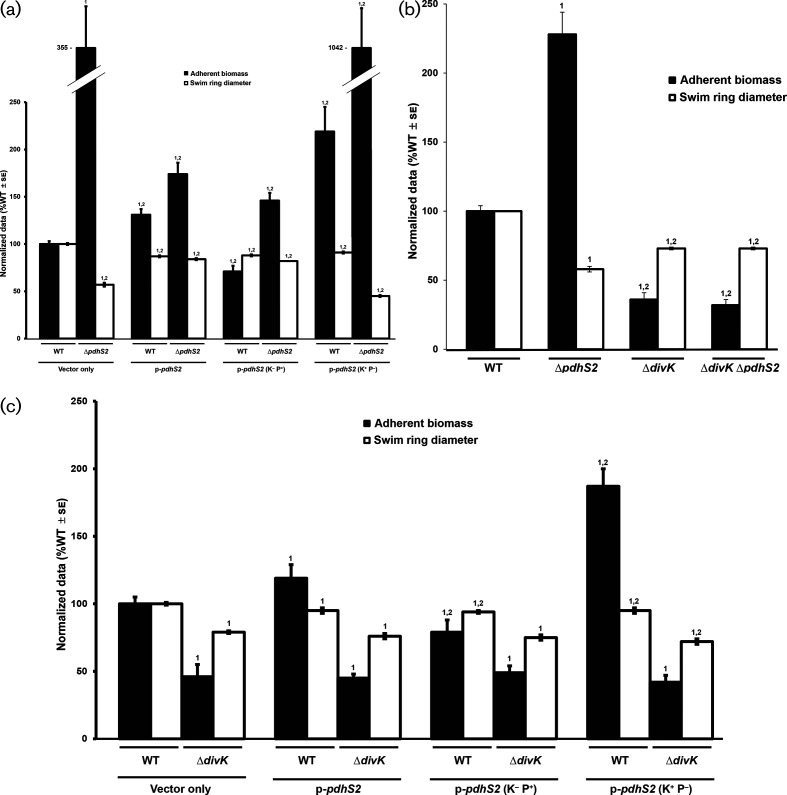
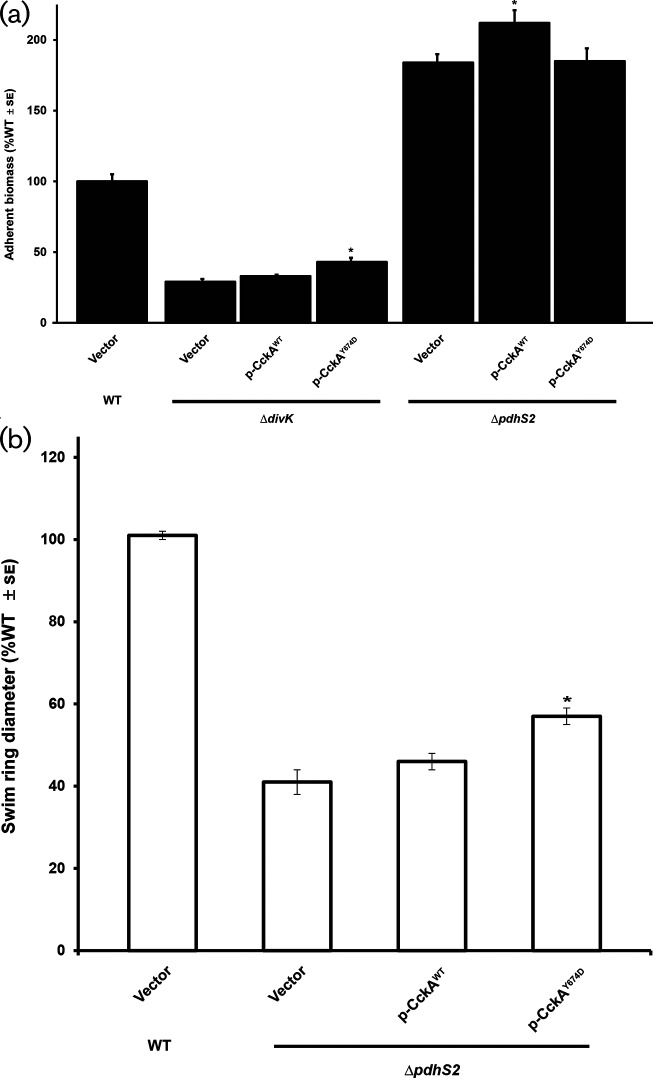
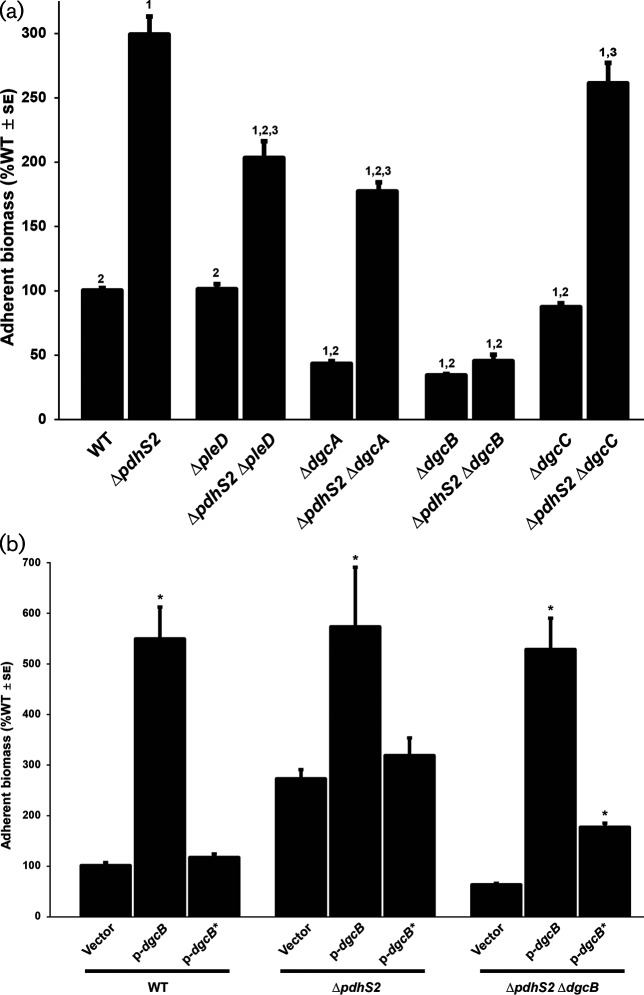
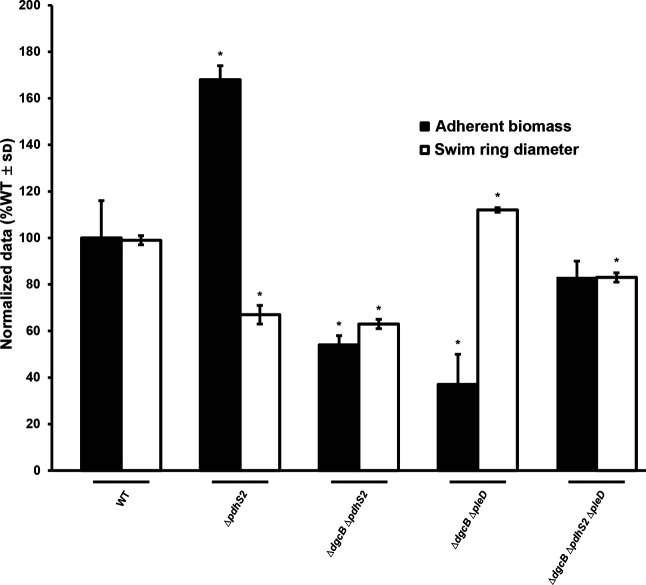
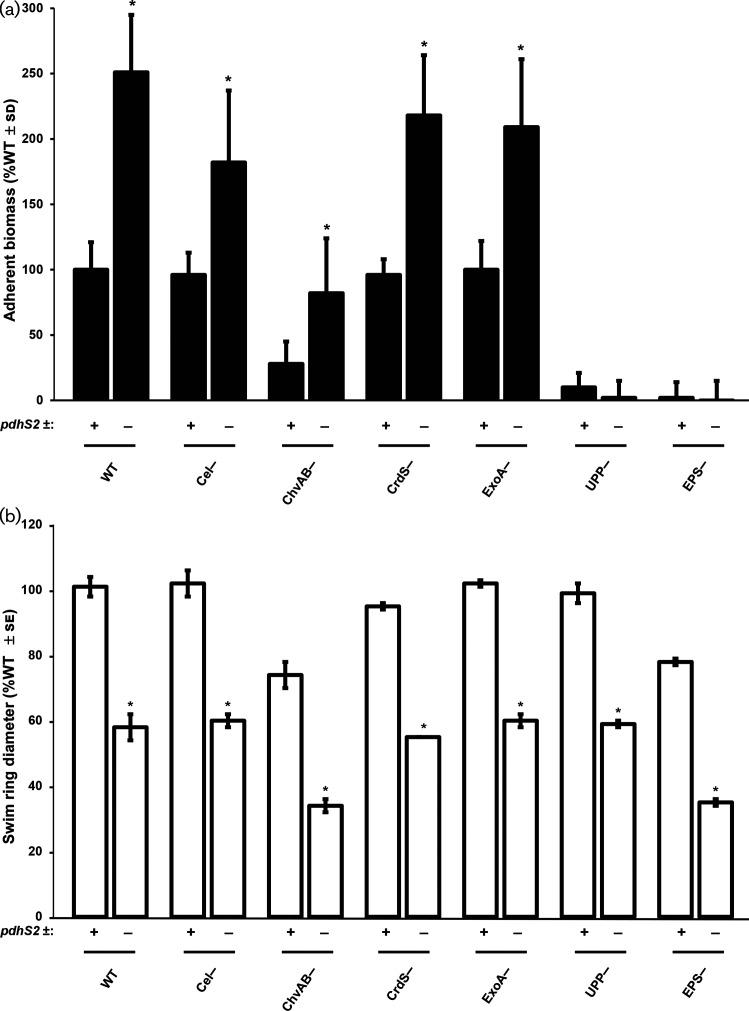
A core regulatory pathway that directs developmental transitions and cellular asymmetries in Agrobacterium tumefaciens involves two overlapping, integrated phosphorelays. One of these phosphorelays putatively includes four histidine sensor kinase homologues, DivJ, PleC, PdhS1 and PdhS2, and two response regulators, DivK and PleD. In several different alphaproteobacteria, this pathway influences a conserved downstream phosphorelay that ultimately controls the phosphorylation state of the CtrA master response regulator. The PdhS2 sensor kinase reciprocally regulates biofilm formation and swimming motility. In the current study, the mechanisms by which the A. tumefaciens sensor kinase PdhS2 directs this regulation are delineated. PdhS2 lacking a key residue implicated in phosphatase activity is markedly deficient in proper control of attachment and motility phenotypes, whereas a kinase-deficient PdhS2 mutant is only modestly affected. A genetic interaction between DivK and PdhS2 is revealed, unmasking one of several connections between PdhS2-dependent phenotypes and transcriptional control by CtrA. Epistasis experiments suggest that PdhS2 may function independently of the CckA sensor kinase, the cognate sensor kinase for CtrA, which is inhibited by DivK. Global expression analysis of the pdhS2 mutant reveals a restricted regulon, most likely functioning through CtrA to separately control motility and regulate the levels of the intracellular signal cyclic diguanylate monophosphate (cdGMP), thereby affecting the production of adhesive polysaccharides and attachment. We hypothesize that in A. tumefaciens the CtrA regulatory circuit has expanded to include additional inputs through the addition of PdhS-type sensor kinases, likely fine-tuning the response of this organism to the soil microenvironment.
一个核心调控途径,指导农杆菌的发育转变和细胞不对称性,涉及两个重叠的、整合的磷酸传递系统。其中一个磷酸传递系统推测包括四个组氨酸传感器激酶同源物 DivJ、PleC、PdhS1 和 PdhS2,以及两个响应调节剂 DivK 和 PleD。在几种不同的α-变形菌中,这条途径影响一个保守的下游磷酸传递系统,最终控制 CtrA 主响应调节剂的磷酸化状态。PdhS2 传感器激酶反式调节生物膜形成和游泳运动性。在本研究中,阐明了农杆菌传感器激酶 PdhS2 指导这种调节的机制。缺乏一个关键残基的 PdhS2 缺失磷酸酶活性,在适当控制附着和运动表型方面明显不足,而激酶缺陷型 PdhS2 突变体只有适度影响。揭示了 DivK 和 PdhS2 之间的遗传相互作用,揭示了 PdhS2 依赖性表型与 CtrA 转录控制之间的几个连接之一。上位性实验表明,PdhS2 可能独立于 CckA 传感器激酶(CtrA 的同源传感器激酶)发挥作用,CckA 传感器激酶受 DivK 抑制。pdhS2 突变体的全局表达分析揭示了一个受限的调控组,最有可能通过 CtrA 独立发挥作用,分别控制运动性和调节细胞内信号环二鸟苷酸单磷酸(cdGMP)的水平,从而影响粘性多糖的产生和附着。我们假设,在农杆菌中,CtrA 调控回路通过添加 PdhS 型传感器激酶而扩展到包括其他输入,可能通过微调该生物体对土壤微环境的反应来实现。