
流体动力学伏安法在天然酚类抗氧化剂清除超氧自由基研究中的有效及新颖应用
Effective and Novel Application of Hydrodynamic Voltammetry to the Study of Superoxide Radical Scavenging by Natural Phenolic Antioxidants.
作者信息
Belli Stuart, Rossi Miriam, Molasky Nora, Middleton Lauren, Caldwell Charles, Bartow-McKenney Casey, Duong Michelle, Chiu Jana, Gibbs Elizabeth, Caldwell Allison, Gahn Christopher, Caruso Francesco
机构信息
Department of Chemistry, Vassar College, Poughkeepsie, NY 12604, USA.
Computing & Information Services, Vassar College, Poughkeepsie, NY 12604, USA.
出版信息
Antioxidants (Basel). 2019 Jan 4;8(1):14. doi: 10.3390/antiox8010014.
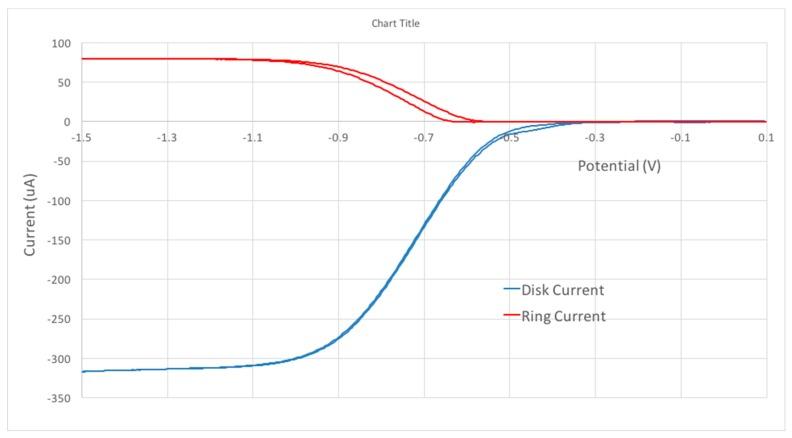
The reactions of antioxidants with superoxide radical were studied by cyclic voltammetry (CV)-and hydrodynamic voltammetry at a rotating ring-disk electrode (RRDE). In both methods, the superoxide is generated in solution from dissolved oxygen and then measured after being allowed to react with the antioxidant being studied. Both methods detected and measured the radical scavenging but the RRDE was able to give detailed insight into the antioxidant behavior. Three flavonoids, chrysin, quercetin and eriodictyol, were studied, their scavenging activity of superoxide was assessed and the molecular structure of each flavonoid was related to its scavenging capability. From our improved and novel RRDE method, we determine the ability of these 3 antioxidants to react with superoxide radical in a more quantitative manner than the classical CV. Density Functional Theory (DFT) and single crystal X-ray diffraction data provide structural information that assists in clarifying the scavenging molecular mechanism. Hydroxyls associated with the A ring, as found in chrysin, scavenge superoxide in a different manner than those found in the B ring of flavonoids, as those in quercetin and eriodictyol.
通过循环伏安法(CV)和旋转环盘电极(RRDE)上的流体动力学伏安法研究了抗氧化剂与超氧自由基的反应。在这两种方法中,超氧自由基由溶解氧在溶液中产生,然后在与所研究的抗氧化剂反应后进行测量。两种方法都能检测和测量自由基清除情况,但RRDE能够更深入地洞察抗氧化剂的行为。研究了三种黄酮类化合物,白杨素、槲皮素和圣草酚,评估了它们对超氧自由基的清除活性,并将每种黄酮类化合物的分子结构与其清除能力相关联。通过我们改进的新型RRDE方法,我们比传统的CV方法更定量地确定了这三种抗氧化剂与超氧自由基反应的能力。密度泛函理论(DFT)和单晶X射线衍射数据提供了有助于阐明清除分子机制的结构信息。如在白杨素中发现的与A环相关的羟基,清除超氧自由基的方式与在黄酮类化合物B环中发现的羟基不同,如在槲皮素和圣草酚中的羟基。




 Zotero 插件