Baumann Stefan, Chandra Leonard, Skarga Elizaveta, Renker Matthias, Borggrefe Martin, Akin Ibrahim, Lossnitzer Dirk
First Department of Medicine-Cardiology, University Medical Center Mannheim, Mannheim, Germany and DZHK (German Center for Cardiovascular Research), partner site Heidelberg/Mannheim, Mannheim 68167, Baden-Württemberg, Germany.
Department of Cardiology, Kerckhoff-Klinik GmbH, Bad Nauheim 61231, Hesse, Germany.
World J Cardiol. 2018 Dec 26;10(12):267-277. doi: 10.4330/wjc.v10.i12.267.
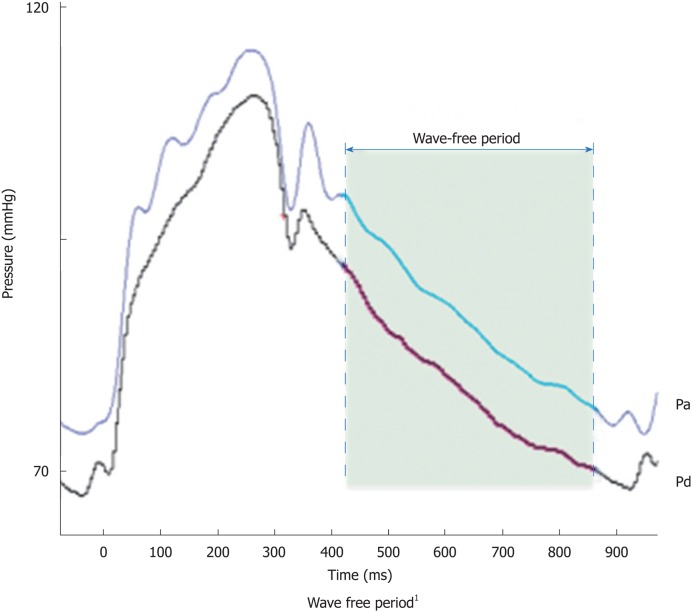
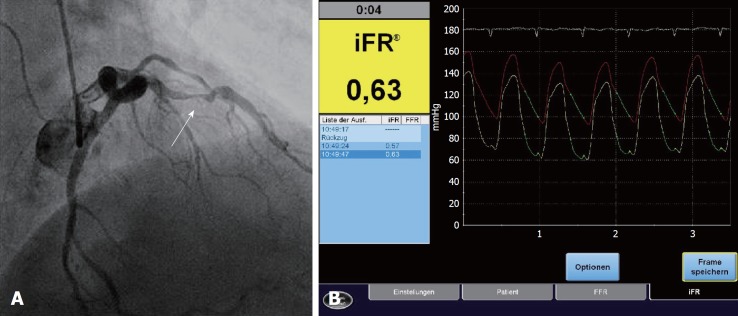
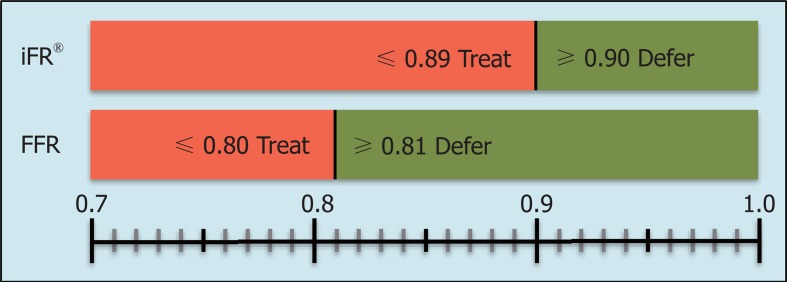
Coronary angiography is considered to be the gold standard in the morphological evaluation of coronary artery stenosis. The morphological assessment of the severity of a coronary lesion is very subjective. Thus, the invasive fractional flow reserve (FFR) measurement represents the current standard for estimation of the hemodynamic significance of coronary artery stenosis. The FFR-guided revascularization strategy was initially classified as a Class-IA-recommendation in the 2014 European Society of Cardiology/European Association for Cardio-Thoracic Surgery guidelines on myocardial revascularization. Both the Deferral Performance of Percutaneous Coronary Intervention of Functionally Non-Significant Coronary Stenosis and Flow Reserve Angiography for Multivessel Evaluation studies showed no treatment advantage for hemodynamically insignificant stenoses. With the help of FFR (and targeted interventions), clinical results could be improved; however, the use in clinical practice is still limited due to the need of adenosine administration and a significant prolongation of the length of the procedure. Instantaneous wave-free ratio (iFR) is a new innovative approach for the determination of the hemodynamic significance of coronary stenosis, which can be obtained at rest without the use of vasodilators. Regarding the periprocedural complications as well as prognosis, iFR showed non-inferiority to FFR in the SWEDEHEART and DEFINE-FLAIR trials. Furthermore, iFR, enhanced by iFR-pullback, provides the possibility to display the iFR-change over the course of the vessel to create a hemodynamic map.
冠状动脉造影被认为是评估冠状动脉狭窄形态学的金标准。对冠状动脉病变严重程度的形态学评估非常主观。因此,有创血流储备分数(FFR)测量代表了目前评估冠状动脉狭窄血流动力学意义的标准。FFR指导的血运重建策略在2014年欧洲心脏病学会/欧洲心胸外科学会关于心肌血运重建的指南中最初被归类为IA类推荐。“推迟对功能上无意义的冠状动脉狭窄进行经皮冠状动脉介入治疗”和“多支血管评估的血流储备血管造影”研究均表明,对血流动力学无意义的狭窄进行治疗没有优势。借助FFR(和靶向干预),临床结果可以得到改善;然而,由于需要给予腺苷且手术时间显著延长,其在临床实践中的应用仍然有限。瞬时无波比值(iFR)是一种用于确定冠状动脉狭窄血流动力学意义的新的创新方法,无需使用血管扩张剂即可在静息状态下获得。在瑞典心脏注册研究(SWEDEHEART)和DEFINE-FLAIR试验中,就围手术期并发症以及预后而言,iFR显示出不劣于FFR。此外,通过iFR回撤增强的iFR能够显示血管全程的iFR变化,从而创建血流动力学图谱。