Wang Yeying, Hai Bing, Ai Li, Cao Yu, Li Ran, Li Hui, Li Yongxia
Department of Respiratory Medicine, The Second Affiliated Hospital of Kunming Medical University, Kunming, Yunnan 650101, People's Republic of China.
Department of Epidemiology and Biostatistics, School of Public Health, Kunming Medical University, Kunming, Yunnan 650500, People's Republic of China.
Iran J Basic Med Sci. 2018 Dec;21(12):1238-1244. doi: 10.22038/ijbms.2018.31716.7714.
Obstructive sleep apnea (OSA) is confirmed to cause lesions in multiple organs, especially in the lung tissue. Tempol is an antioxidant that has been reported to restrain inflammation and oxidative stress, with its role in OSA-induced lung injury being unclear. This study aimed to investigate the beneficial effect of tempol on chronic intermittent hypoxia (IH)-induced lung injury.
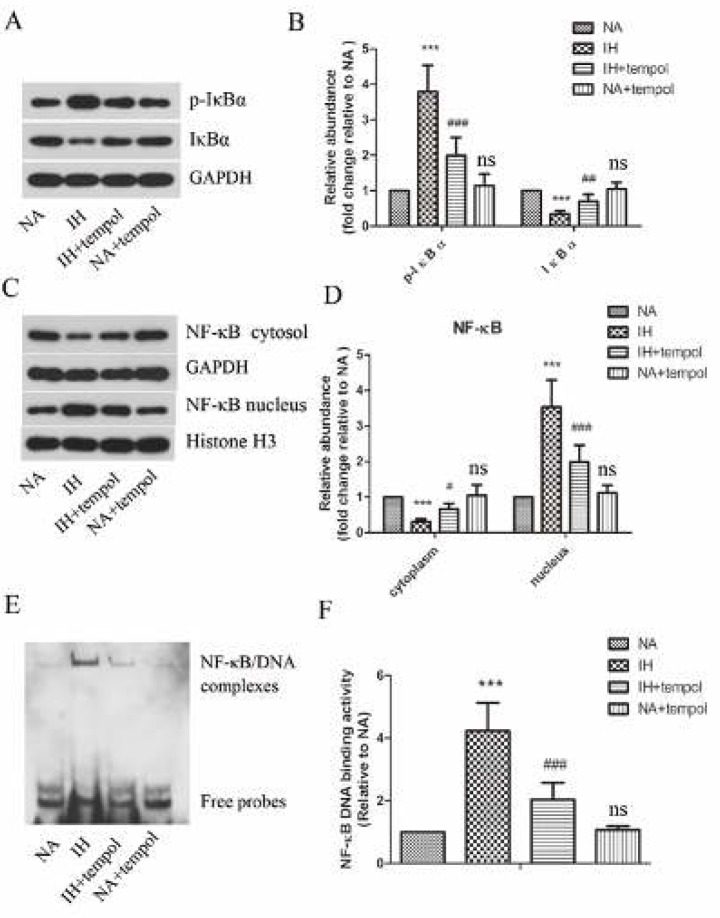
A rat model of OSA was established by IH. There were four groups: normal air (NA), IH, IH+tempol, NA+tempol. Inflammatory response was evaluated by TNF-α, IL-1β, and IL-6 levels. Oxidative stress was detected by MDA and GSH levels, and SOD activity. The protein levels were assessed by Western blot. DNA binding activity of NF-κB or Nrf2 was determined by electrophoretic mobility shift assay.
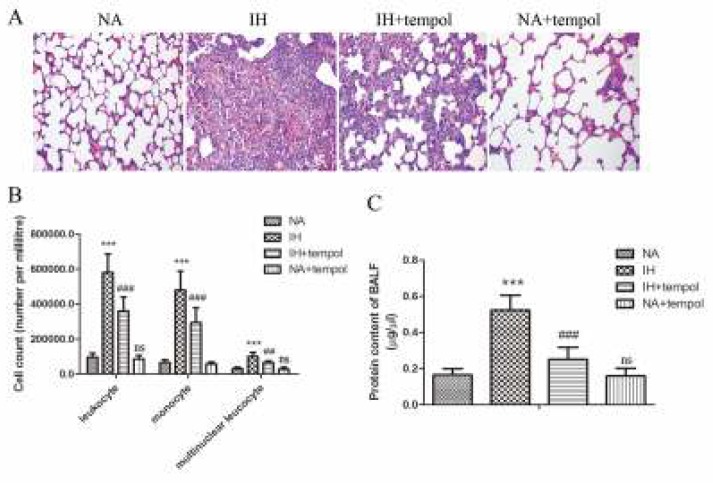
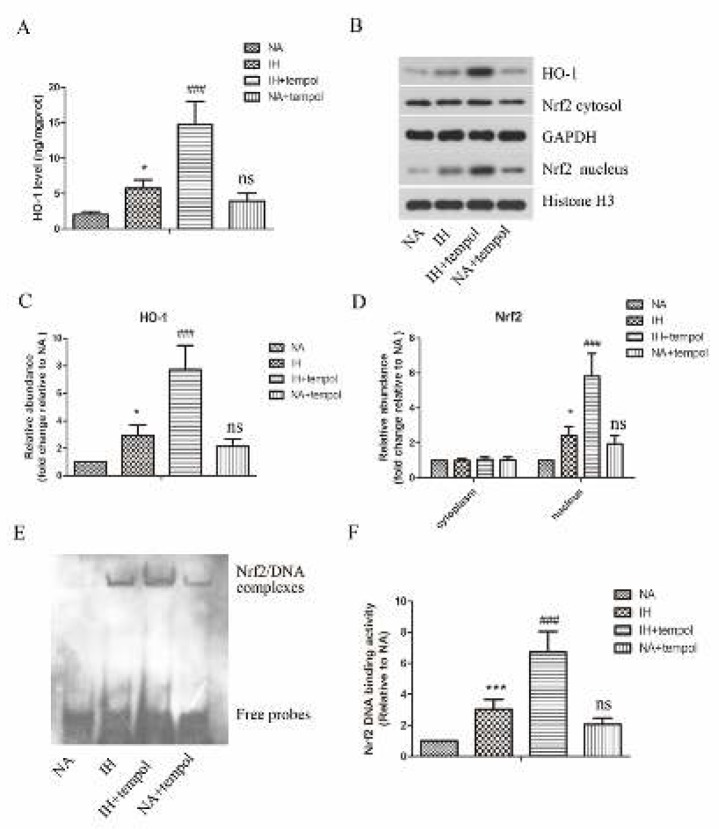
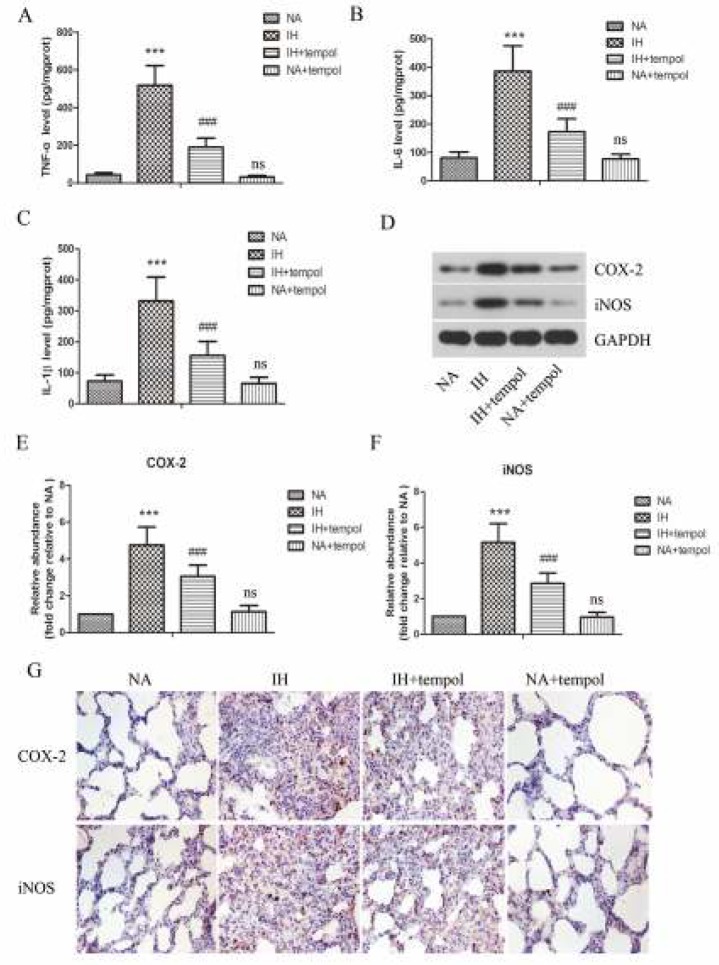
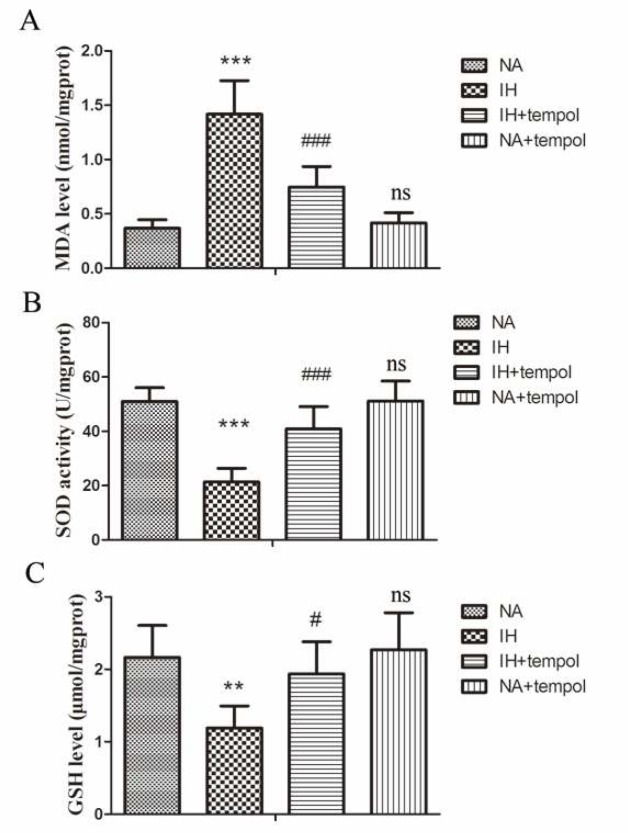
According to the results, tempol administration alleviated pathological changes of the lung tissue, decreased leukocyte count and protein content (0.001) in bronchoalveolar lavage fluid (BALF). Inflammation response in lung tissue induced by IH was suppressed by tempol as evidenced by decreased levels of TNF-α, IL-1β, and IL-6 (0.001) and protein levels of COX-2 and iNOS (0.001). Moreover, tempol inhibited oxidative stress in lung tissue by down-regulating the MDA level (0.001) and enhancing SOD activity (0.001) and the GSH level (0.05). In addition, tempol repressed inflammation response via inactivation of the NF-κB pathway. Furthermore, the results suggested that tempol repressed oxidative stress by activating the Nrf2/HO-1 pathway.
Our findings suggest that tempol effectively relieves OSA-induced lung injury.
阻塞性睡眠呼吸暂停(OSA)已被证实会导致多个器官发生病变,尤其是肺组织。Tempol是一种抗氧化剂,据报道它能抑制炎症和氧化应激,但其在OSA诱导的肺损伤中的作用尚不清楚。本研究旨在探讨Tempol对慢性间歇性低氧(IH)诱导的肺损伤的有益作用。
通过IH建立OSA大鼠模型。分为四组:正常空气(NA)组、IH组、IH + Tempol组、NA + Tempol组。通过TNF-α、IL-1β和IL-6水平评估炎症反应。通过丙二醛(MDA)和谷胱甘肽(GSH)水平以及超氧化物歧化酶(SOD)活性检测氧化应激。通过蛋白质印迹法评估蛋白质水平。通过电泳迁移率变动分析确定核因子κB(NF-κB)或核相关因子2(Nrf2)的DNA结合活性。
结果显示,给予Tempol可减轻肺组织的病理变化,降低支气管肺泡灌洗液(BALF)中的白细胞计数和蛋白质含量(P < 0.001)。Tempol抑制了IH诱导的肺组织炎症反应,TNF-α、IL-1β和IL-6水平降低(P < 0.001)以及环氧化酶-2(COX-2)和诱导型一氧化氮合酶(iNOS)的蛋白质水平降低(P < 0.001)证明了这一点。此外,Tempol通过下调MDA水平(P < 0.001)、增强SOD活性(P < 0.001)和GSH水平(P < 0.05)抑制肺组织中的氧化应激。此外,Tempol通过使NF-κB通路失活来抑制炎症反应。此外,结果表明Tempol通过激活Nrf2/血红素加氧酶-1(HO-1)通路来抑制氧化应激。
我们的研究结果表明,Tempol可有效减轻OSA诱导的肺损伤。