Yeganeh-Hajahmadi Mahboobeh, Najafipour Hamid, Farzaneh Farzaneh, Esmaeili-Mahani Saeed, Joukar Siyavash
Physiolgy Research Center, Institute of Neuropharmacology and Department of Physiology and Pharmacology, Kerman University of Medical Sciences, Kerman, Iran.
Cardiovascular Research Center, Institute of Basic and Clinical Physiology Sciences and Department of Physiology and Pharmacology, Kerman University of Medical Sciences, Kerman, Iran.
Iran J Basic Med Sci. 2018 Dec;21(12):1305-1315. doi: 10.22038/IJBMS.2018.31361.7555.
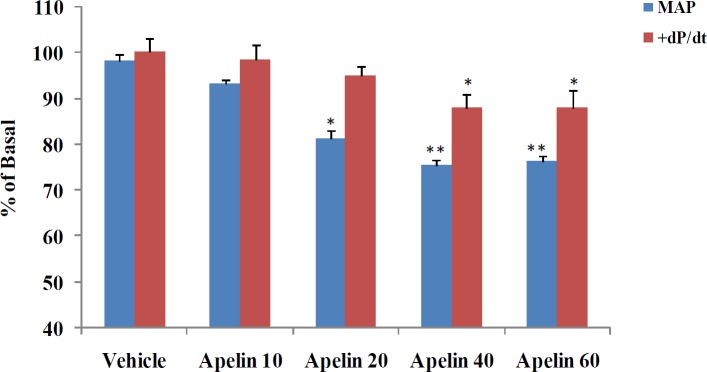
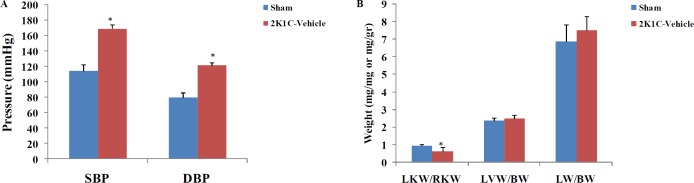
Apelin/APJ system plays an important role in the regulation of myocardial contractility (MC) and blood pressure. Opioid receptors (OPRs) are also important cardiovascular regulators and exert many of their effects through modulating the function of other systems. This study analyzed the interaction between APJ and kappa OPRs (KOR) in cardiac responsiveness to apelin in acute reno-vascular hypertension (2K1C).
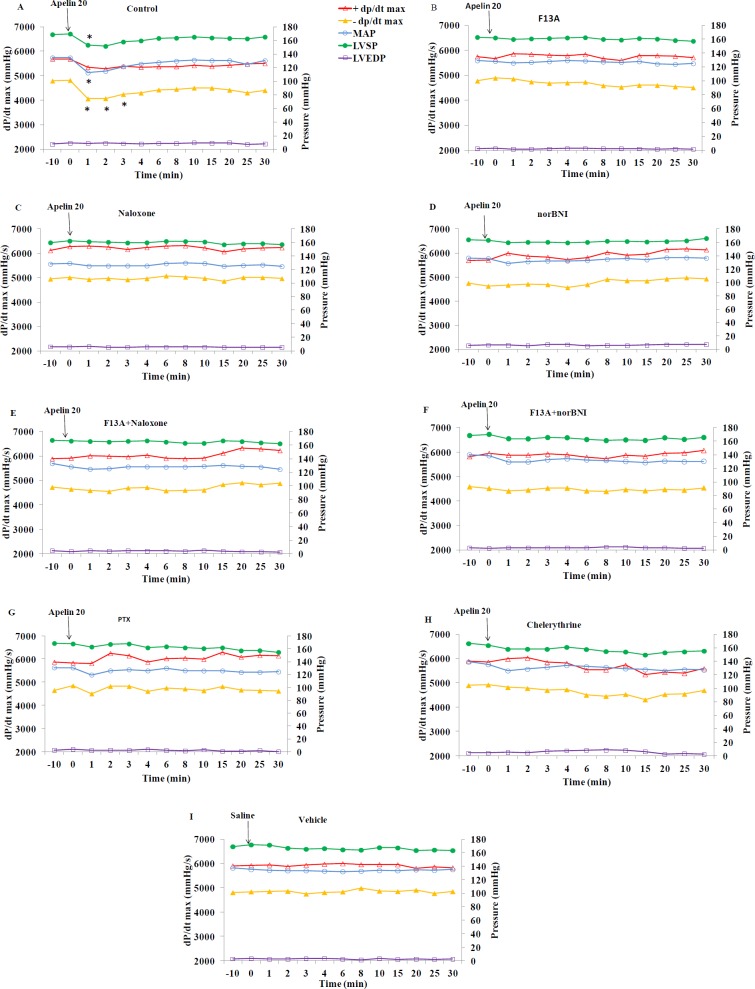
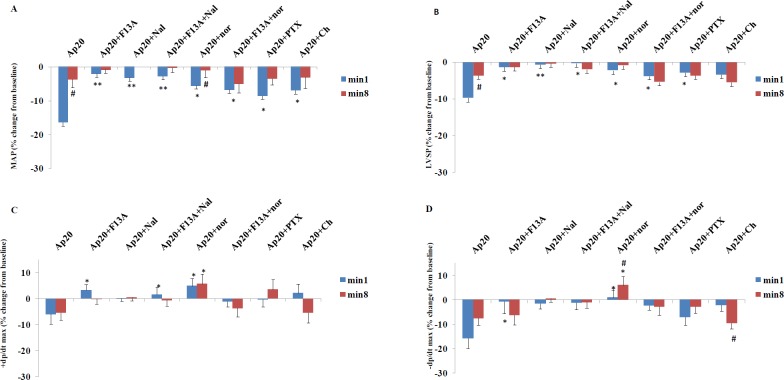
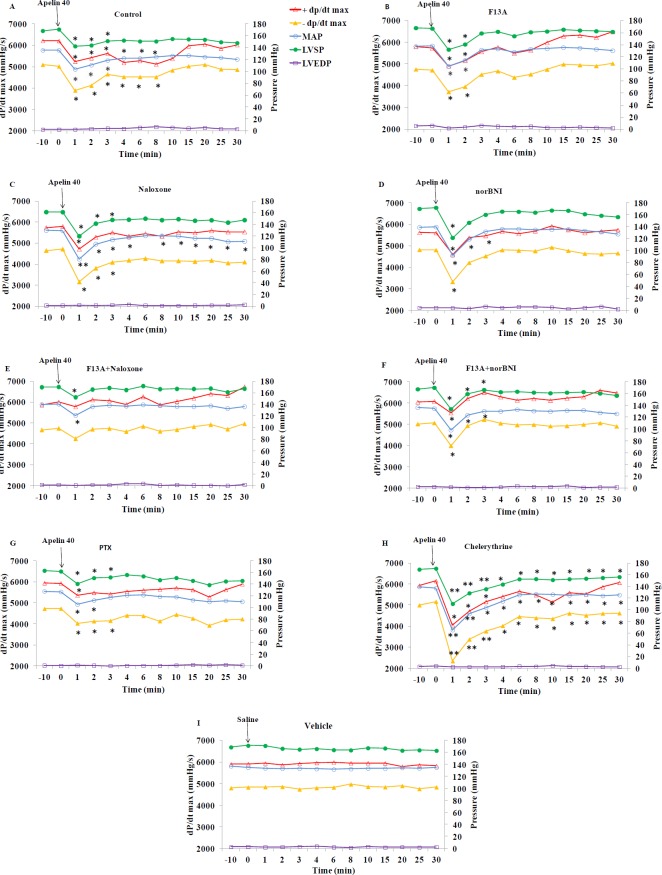
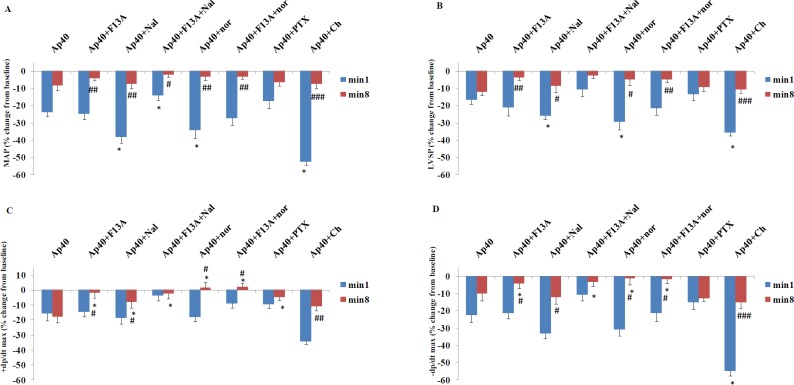
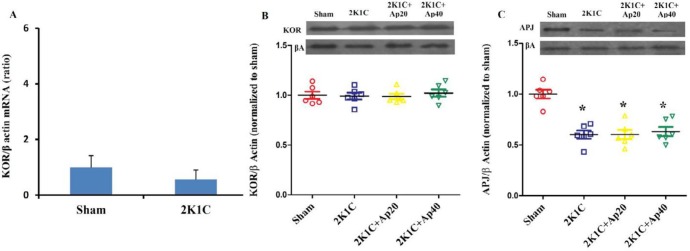
MC studies were carried out on 2K1C rats. F13A (APJ blocker), Naloxone (OPR inhibitor), nor-Binaltorphiminedihydrochloride (nor-BNI; kappa OPR inhibitor), PTX (Gi path inhibitor) and chelerytrine (protein kinase C; PKC inhibitor) were administered prior to apelin 20 and 40 μg/kg. The phosphorylation of extracellular signal-regulated kinases (ERK1/2) (PERK) was also assessed. Dimerization of APJ and KOR was evaluated by immunoprecipitation.
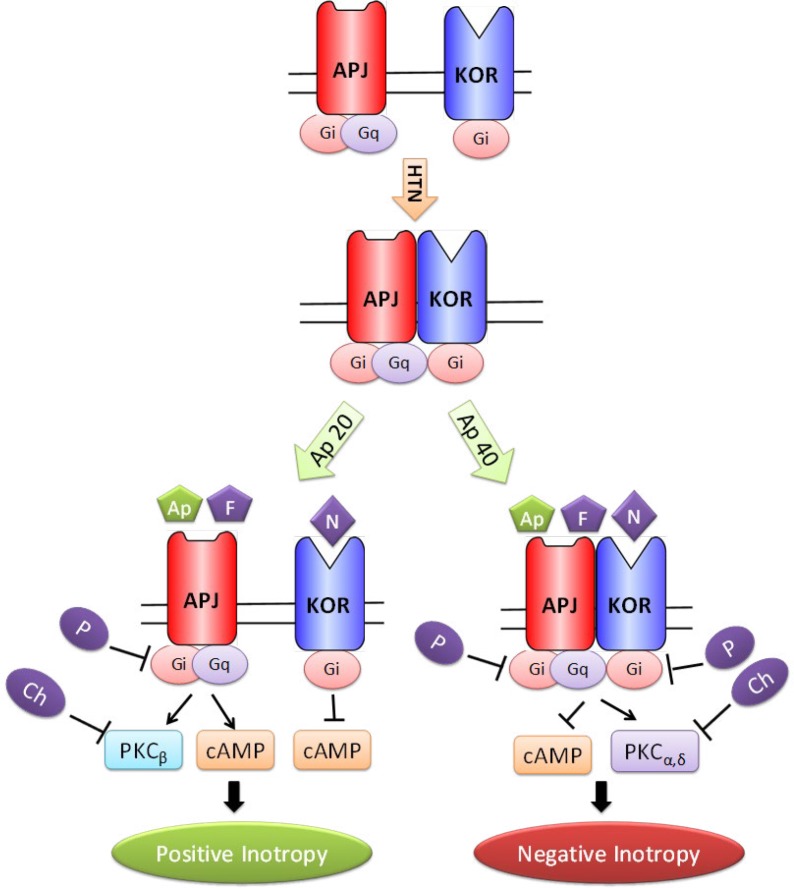
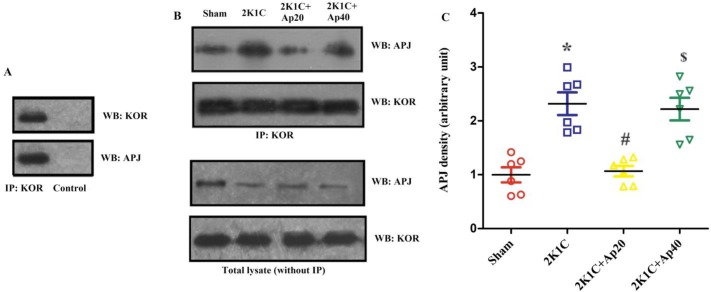
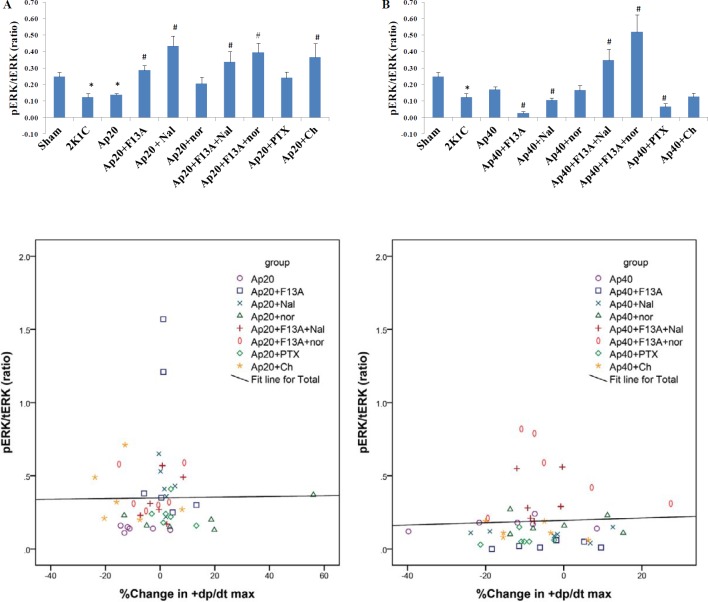
Both doses of apelin reduced blood pressure. Apelin 40 exerted a negative inotropic effect, which was inhibited by nor-BNI, but apelin 20 showed a positive inotropic effect, which was resistant to this inhibition. Hypertension increased heterodimerization of the APJ and KOR and this was reduced by apelin 20. F13A, naloxone and PTX significantly reduced PERK in apelin 40 group, but F13A, naloxone, and chelerytrine significantly increased PERK in the apelin 20 group.
The lowering effect of apelin 40 on MC and its non-effectiveness on APJ/KOR dimerization, while augmenting the contractility and reducing the dimerization by apelin 20 implies the APJ/KOR-related effects of apelin on the MC under acute reno-vascular hypertension. This may have potential clinical applications as apelin has been introduced as a potential therapeutic agent in heart failure and opioids are being currently used in the treatment of myocardial infarction.
阿片肽/APJ系统在心肌收缩力(MC)和血压调节中起重要作用。阿片受体(OPRs)也是重要的心血管调节因子,并且通过调节其他系统的功能发挥多种作用。本研究分析了急性肾血管性高血压(2K1C)模型中心脏对阿片肽反应性方面APJ与κ阿片受体(KOR)之间的相互作用。
对2K1C大鼠进行MC研究。在给予20和40μg/kg阿片肽之前,分别给予F13A(APJ阻断剂)、纳洛酮(OPR抑制剂)、盐酸去甲二氢吗啡酮(nor-BNI;κ阿片受体抑制剂)、百日咳毒素(PTX;Gi通路抑制剂)和白屈菜红碱(蛋白激酶C;PKC抑制剂)。还评估了细胞外信号调节激酶(ERK1/2)(PERK)的磷酸化。通过免疫沉淀评估APJ和KOR的二聚化。
两种剂量的阿片肽均降低血压。40μg/kg阿片肽产生负性肌力作用,该作用被nor-BNI抑制,但20μg/kg阿片肽表现出正性肌力作用,对此抑制具有抗性。高血压增加了APJ和KOR的异二聚化,而20μg/kg阿片肽可使其降低。F13A、纳洛酮和PTX显著降低40μg/kg阿片肽组的PERK,但F13A、纳洛酮和白屈菜红碱显著增加20μg/kg阿片肽组的PERK。
40μg/kg阿片肽对MC的降低作用及其对APJ/KOR二聚化无影响,而20μg/kg阿片肽增强收缩力并减少二聚化,这表明在急性肾血管性高血压情况下阿片肽对MC具有与APJ/KOR相关的作用。这可能具有潜在的临床应用价值,因为阿片肽已被作为心力衰竭的潜在治疗药物引入,而阿片类药物目前正用于治疗心肌梗死。