Berlin David A, Manoach Seth, Oromendia Clara, Heerdt Paul M
Division of Pulmonary and Critical Care Medicine, Weill Cornell Medicine, 1300 York Avenue, New York, NY, 10065, USA.
Division of Biostatistics and Epidemiology, Weill Cornell Medicine, 1300 York Avenue, New York, NY, 10065, USA.
Intensive Care Med Exp. 2019 Jan 9;7(1):6. doi: 10.1186/s40635-018-0217-y.
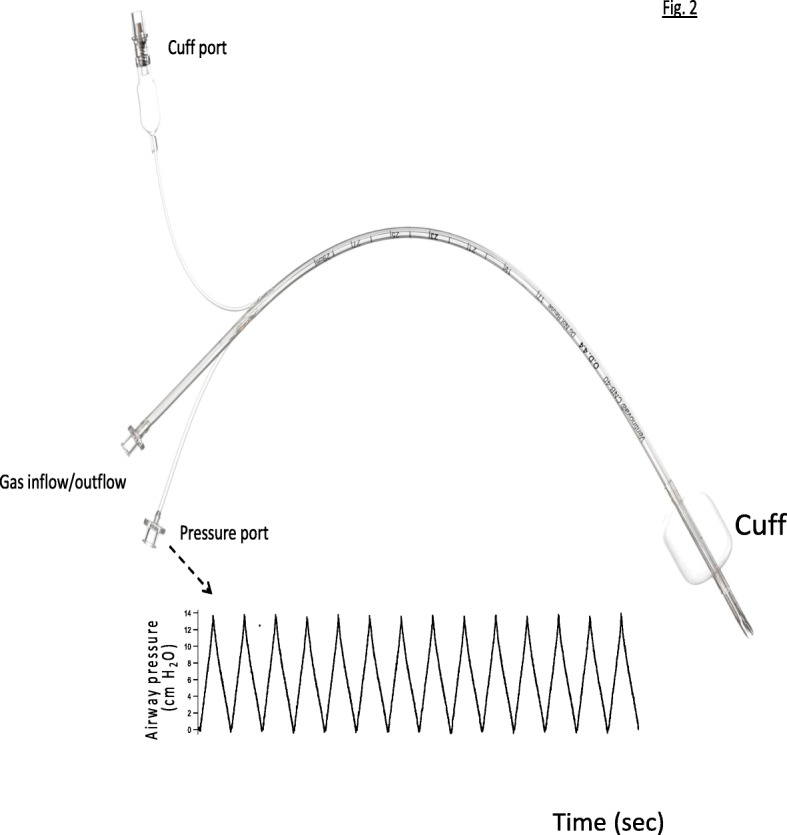
Positive pressure ventilation can decrease venous return and cardiac output. It is not known if expiratory ventilation assistance (EVA) through a small endotracheal tube can improve venous return and cardiac output.
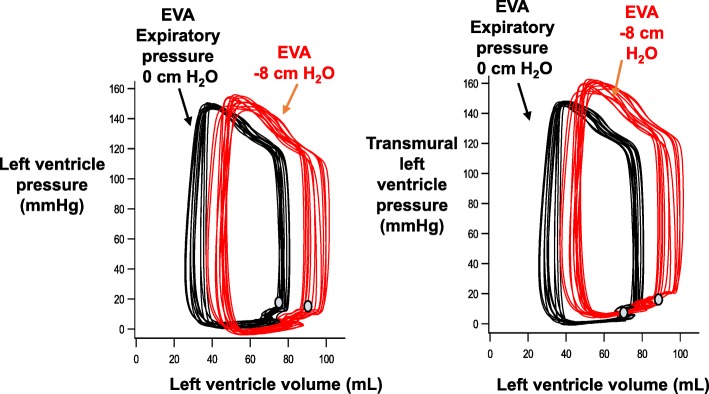
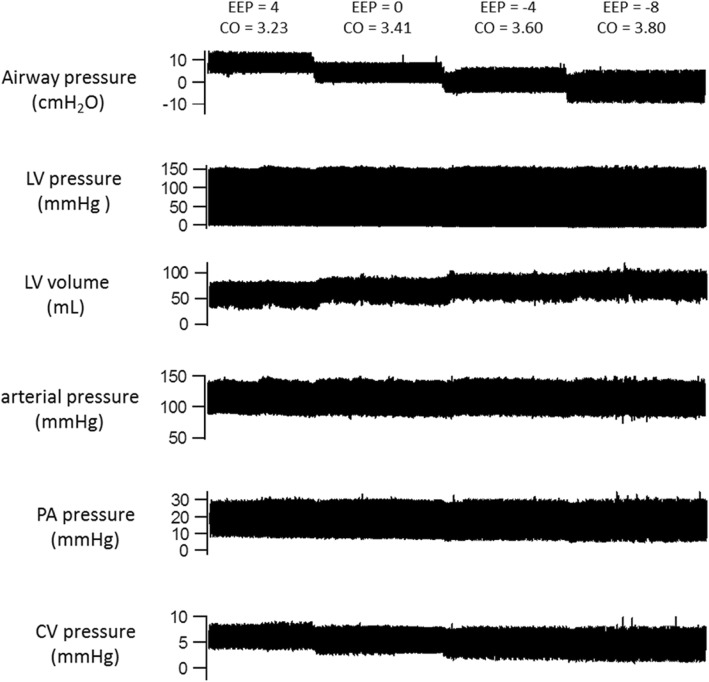
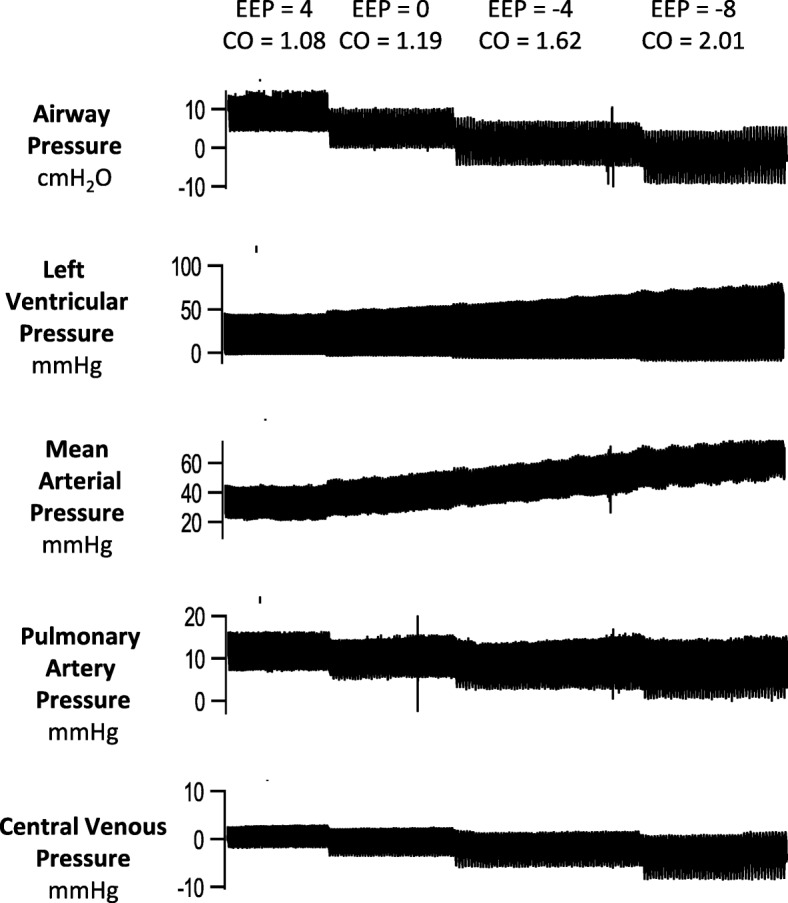
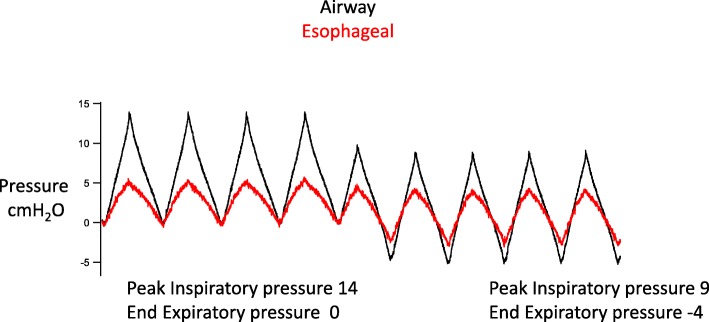
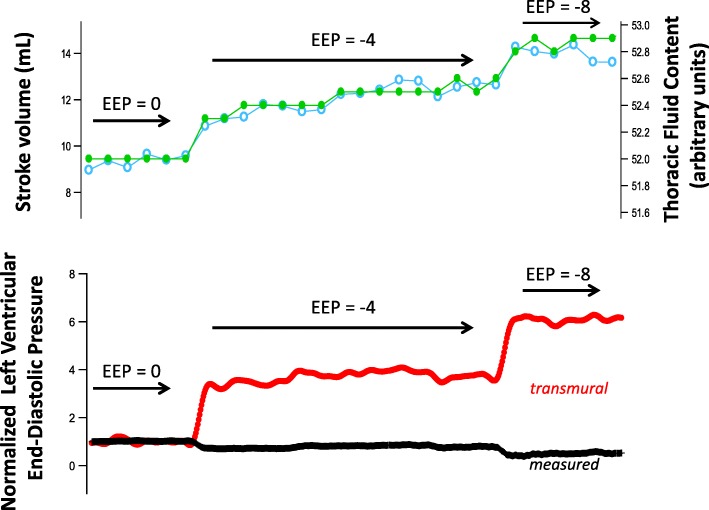
In a porcine model, switching from conventional positive pressure ventilation to (EVA) with - 8 cmH0 expiratory pressure increased the venous return and cardiac output. The stroke volume increased by 27% when the subjects were switched from conventional ventilation to EVA [53.8 ± 7.7 (SD) vs. 68.1 ± 7.7 ml, p = 0.003]. After hemorrhage, subjects treated with EVA had higher median cardiac output, higher mean systemic arterial pressure, and lower central venous pressure at 40 and 60 min when compared with subjects treated with conventional ventilation with PEEP 0 cmH0. The median cardiac output was 41% higher in the EVA group than the control group at 60 min [2.70 vs. 1.59 L/min, p = 0.029].
EVA through a small endotracheal tube increased venous return, cardiac output, and mean arterial pressure compared with conventional positive pressure ventilation. The effects were most significant during hypovolemia from hemorrhage. EVA provided less effective ventilation than conventional positive pressure ventilation.
正压通气可降低静脉回流和心输出量。目前尚不清楚通过小口径气管内导管进行呼气通气辅助(EVA)是否能改善静脉回流和心输出量。
在猪模型中,从传统正压通气转换为呼气压力为 -8 cmH₂O 的 EVA 可增加静脉回流和心输出量。当受试者从传统通气转换为 EVA 时,每搏输出量增加了 27%[53.8±7.7(标准差)对 68.1±7.7 ml,p = 0.003]。出血后,与接受 0 cmH₂O 呼气末正压(PEEP)的传统通气治疗的受试者相比,接受 EVA 治疗的受试者在 40 分钟和 60 分钟时的中位心输出量更高、平均体动脉压更高且中心静脉压更低。在 60 分钟时,EVA 组的中位心输出量比对照组高 41%[2.70 对 1.59 L/分钟,p = 0.029]。
与传统正压通气相比,通过小口径气管内导管进行的 EVA 可增加静脉回流、心输出量和平均动脉压。在出血导致的低血容量期间,这些作用最为显著。EVA 提供的通气效果不如传统正压通气。