Department of Pharmacology, Jiangsu Key Laboratory of New Drug Research and Clinical Pharmacy, Xuzhou Medical University, Xuzhou, Jiangsu 221004, P.R. China.
Department of Anesthesiology, Guanyun County People's Hospital, Lianyungang, Jiangsu 222200, P.R. China.
Mol Med Rep. 2019 Mar;19(3):1694-1704. doi: 10.3892/mmr.2019.9806. Epub 2019 Jan 2.
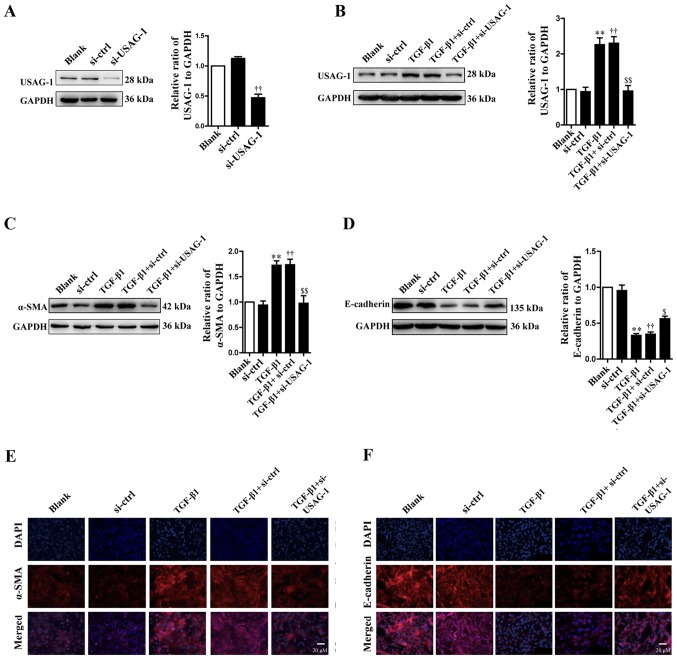
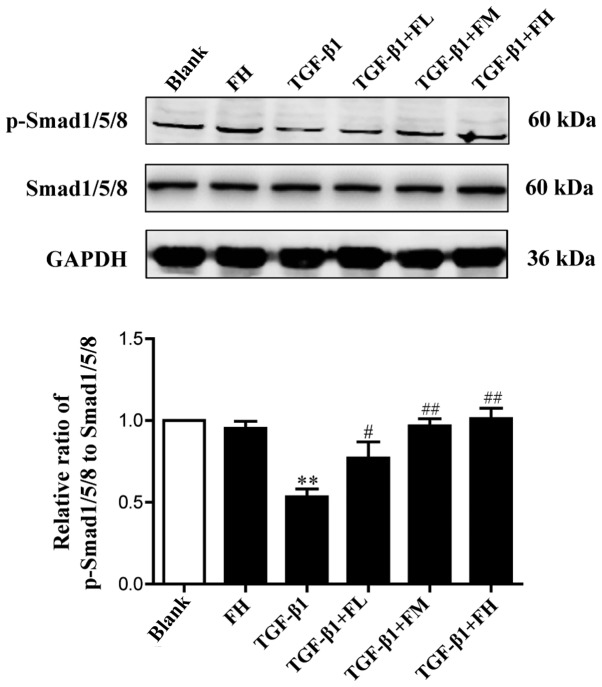
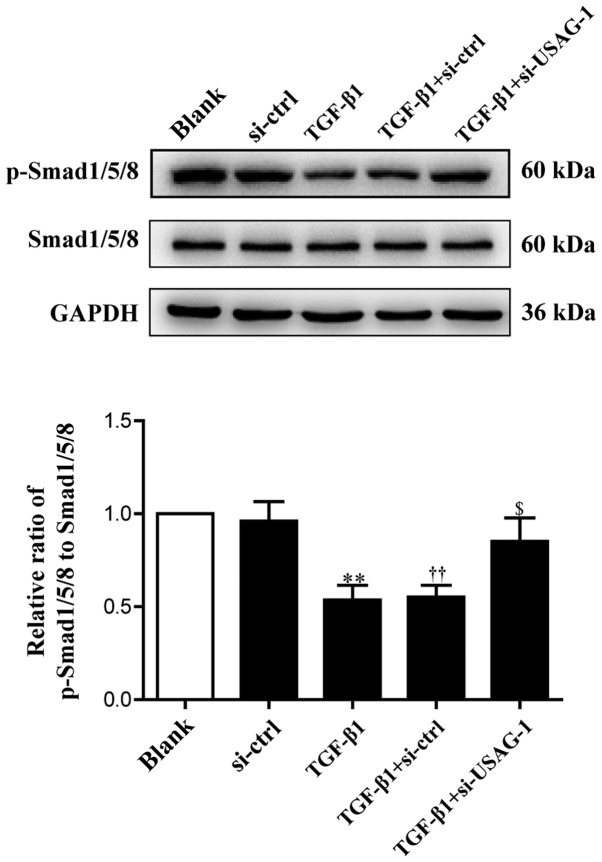
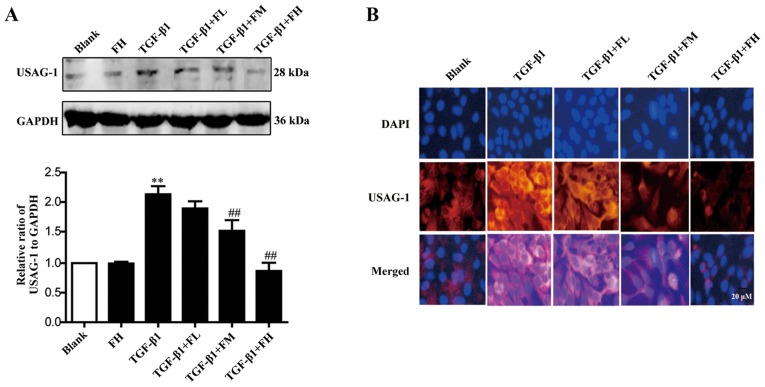
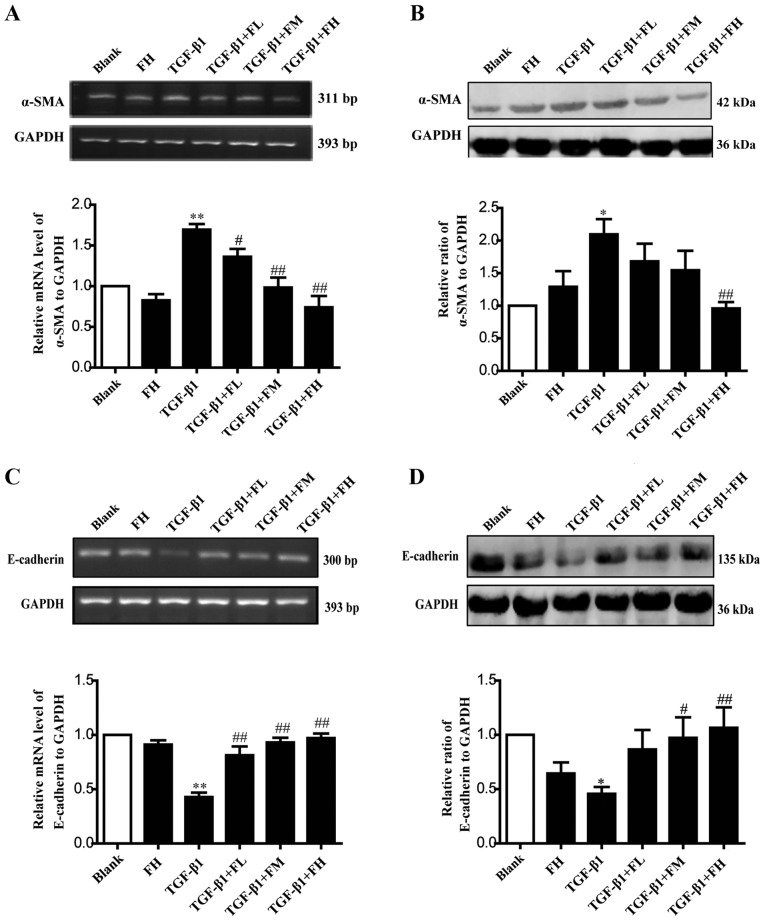
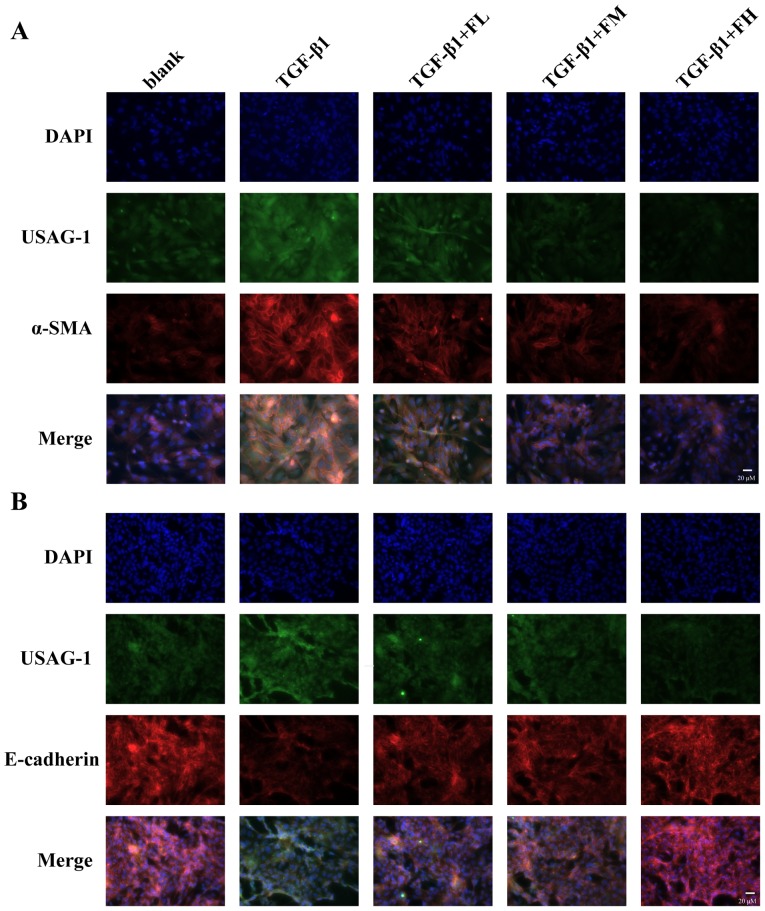
Our previous study demonstrated that febuxostat, a xanthine oxidase inhibitor, can alleviate kidney dysfunction and ameliorate renal tubulointerstitial fibrosis in a rat unilateral ureteral obstruction (UUO) model; however, the underlying mechanisms remain unknown. Increasing evidence has revealed that epithelial‑mesenchymal transition (EMT) is one of the key mechanisms mediating the progression of renal tubulointerstitial fibrosis in chronic kidney disease (CKD). Uterine sensitization‑associated gene‑1 (USAG‑1), a kidney‑specific bone morphogenetic protein antagonist, is involved in the development of numerous types of CKDs. The present study aimed to investigate the role of febuxostat in the process of EMT in Madin‑Darby canine kidney (MDCK) cells in vitro. Western blotting, reverse transcription‑semiquantitative polymerase chain reaction analysis and immunofluorescence staining were used to evaluate the expression levels of bone morphogenetic protein 7, USAG‑1, α‑smooth muscle actin (α‑SMA) and E‑cadherin, respectively. The results demonstrated that the expression of USAG‑1 and α‑SMA increased, and that of E‑cadherin decreased significantly in MDCK cells following treatment with transforming growth factor‑β1 (TGF‑β1). The application of small interfering RNA‑USAG‑1 potently inhibited TGF‑β1‑induced EMT. Subsequently, the effects of febuxostat on TGF‑β1‑induced EMT was investigated. The results demonstrated that febuxostat downregulated the expression of USAG‑1, and reversed TGF‑β1‑induced EMT in MDCK cells. Furthermore, pretreatment with febuxostat significantly restored the decreased expression levels of phosphorylated Smad1/5/8 induced by TGF‑β1 in MDCK cells. The results of the present study suggested that USAG‑1 may be involved in the EMT process of MDCK cells induced by TGF‑β1, and febuxostat inhibited EMT by activating the Smad1/5/8 signaling pathway via downregulating the expression of USAG‑1 in MDCK cells.
我们之前的研究表明,黄嘌呤氧化酶抑制剂非布司他可减轻单侧输尿管梗阻(UUO)模型大鼠的肾功能障碍并改善肾小管间质纤维化;然而,其潜在机制尚不清楚。越来越多的证据表明,上皮-间充质转化(EMT)是介导慢性肾脏病(CKD)肾小管间质纤维化进展的关键机制之一。尿敏基因-1(USAG-1)是一种肾脏特异性骨形态发生蛋白拮抗剂,参与多种类型 CKD 的发生。本研究旨在探讨非布司他在体外 Madin-Darby 犬肾(MDCK)细胞 EMT 过程中的作用。Western blot 法、逆转录-半定量聚合酶链反应分析和免疫荧光染色分别用于评估骨形态发生蛋白 7、USAG-1、α-平滑肌肌动蛋白(α-SMA)和 E-钙黏蛋白的表达水平。结果表明,转化生长因子-β1(TGF-β1)处理后 MDCK 细胞中 USAG-1 和 α-SMA 的表达增加,E-钙黏蛋白的表达明显减少。USAG-1 小干扰 RNA 的应用可有效抑制 TGF-β1 诱导的 EMT。随后,研究了非布司他对 TGF-β1 诱导的 EMT 的影响。结果表明,非布司他下调了 USAG-1 的表达,并逆转了 MDCK 细胞中 TGF-β1 诱导的 EMT。此外,非布司他预处理可显著恢复 TGF-β1 诱导的 MDCK 细胞中磷酸化 Smad1/5/8 的表达水平降低。本研究结果表明,USAG-1 可能参与 TGF-β1 诱导的 MDCK 细胞 EMT 过程,非布司他通过下调 MDCK 细胞中 USAG-1 的表达,激活 Smad1/5/8 信号通路抑制 EMT。