Juneau Biosciences, LLC, Salt Lake City, UT, USA.
3rd Department of Obstetrics and Gynecology, Aristotle University of Thessaloniki, Thessaloniki 541 24, Greece.
Mol Med Rep. 2019 Mar;19(3):1716-1720. doi: 10.3892/mmr.2019.9818. Epub 2019 Jan 3.
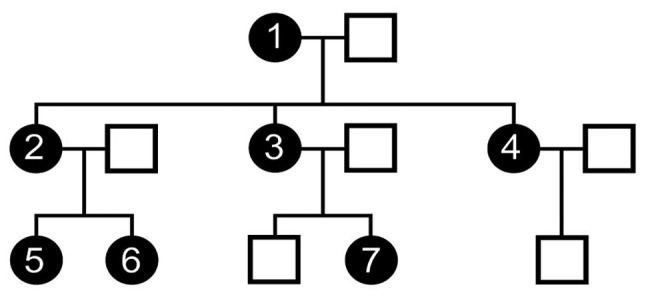
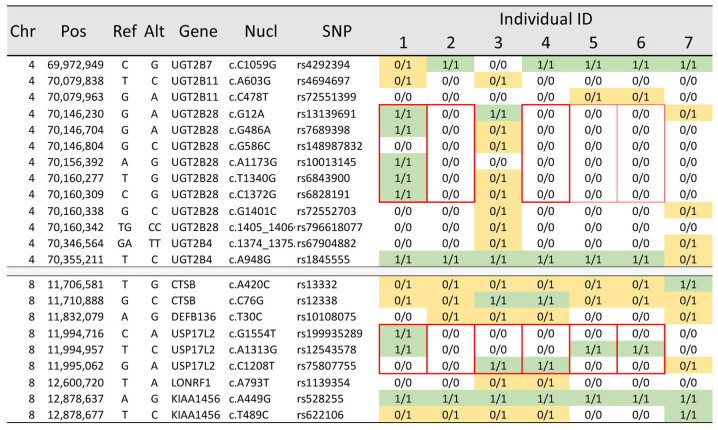
Endometriosis is an enigmatic condition with an unknown etiology and a poorly understood pathogenesis. It is considered to appear from the interplay of many genetic and environmental factors, affecting up to 10% of women and represents a major cause of pain and infertility. The familial association of endometriosis, as demonstrated through monozygotic twin and family studies suggests a genetic contribution to the disease, with further case‑control and genome‑wide association studies (GWAS) detecting various endometriosis risk factors. In a recent study, we described a unique, three‑generation family of Cretan origin (Greece) with 7 females with surgically confirmed endometriosis (grandmother, 3 daughters and 3 granddaughters). All the affected members of this family displayed a variety of clinical manifestations and complications. In the present study, to further analyze the genetic variants conferring the risk of developing endometriosis, whole exome sequencing (WES) was performed, using the AmpliSeq technology on the Ion Proton platform. An initial analysis of 64 variants that were detected across the 14 genes previously confirmed to be associated with endometriosis, did not identify any deleterious exonic variants in these genes. However, further analysis revealed 2 hemizygous deletions in the grandmother that segregate in several of her affected offspring. The first deletion was found in the UGT2B28 locus, spanning 7 informative sequence variants across at least 14 kb. The second deletion, located in USP17L2, spans 3 informative variants across at least 2 kb. On the whole, the findings of the presents study implicate 2 additional genes in the pathogenesis of endometriosis, apart from those already identified by GWAS.
子宫内膜异位症是一种病因不明且发病机制尚不清楚的神秘疾病。它被认为是由许多遗传和环境因素相互作用引起的,影响多达 10%的女性,是疼痛和不孕的主要原因。通过单卵双胞胎和家族研究证明子宫内膜异位症的家族关联性表明该疾病与遗传有关,进一步的病例对照和全基因组关联研究(GWAS)检测到各种子宫内膜异位症的风险因素。在最近的一项研究中,我们描述了一个来自克里特岛(希腊)的独特的三代家族,其中有 7 名女性患有经手术证实的子宫内膜异位症(祖母、3 个女儿和 3 个孙女)。这个家族的所有受影响成员都表现出各种临床表现和并发症。在本研究中,为了进一步分析导致子宫内膜异位症发生的遗传变异,我们使用 Ion Proton 平台上的 AmpliSeq 技术对整个外显子组进行测序(WES)。对之前确定与子宫内膜异位症相关的 14 个基因中检测到的 64 个变体进行的初步分析未在这些基因中发现任何有害的外显子变体。然而,进一步的分析显示,祖母存在 2 种半合性缺失,这些缺失在她的多个受影响的后代中发生了遗传。第一个缺失发生在 UGT2B28 基因座,跨越至少 14kb 的 7 个有信息的序列变体。第二个缺失位于 USP17L2 基因座,跨越至少 2kb 的 3 个有信息的变体。总的来说,本研究的结果表明,除了已经通过 GWAS 确定的基因外,还有另外 2 个基因参与了子宫内膜异位症的发病机制。