Rivera-Herrera Ana Lucia, Rouleau Michèle, Singbo Mahukpe Narcisse Ulrich, Cuppens Tania, Prunier Julien, Droit Arnaud, Simonyan David, Guillemette Chantal
Faculty of Pharmacy, Université Laval, Québec, QC, G1V 0A6, Canada.
Université Laval Cancer Research Center, Québec, QC, G1R 3S3, Canada.
Biol Sex Differ. 2025 Apr 22;16(1):26. doi: 10.1186/s13293-025-00708-5.
Two of the most frequently deleted genes in the human genome are the UDP-glycosyltransferases UGT2B17 and UGT2B28. They encode metabolic enzymes of the glucuronidation pathway that plays a pivotal role in the maintenance of cellular homeostasis for a variety of small molecule metabolites. These deletions may impact health, yet their effects remain poorly understood. We evaluated the impact of UGT deficiency on the plasma metabolome and examined the association between altered metabolites and health outcomes.
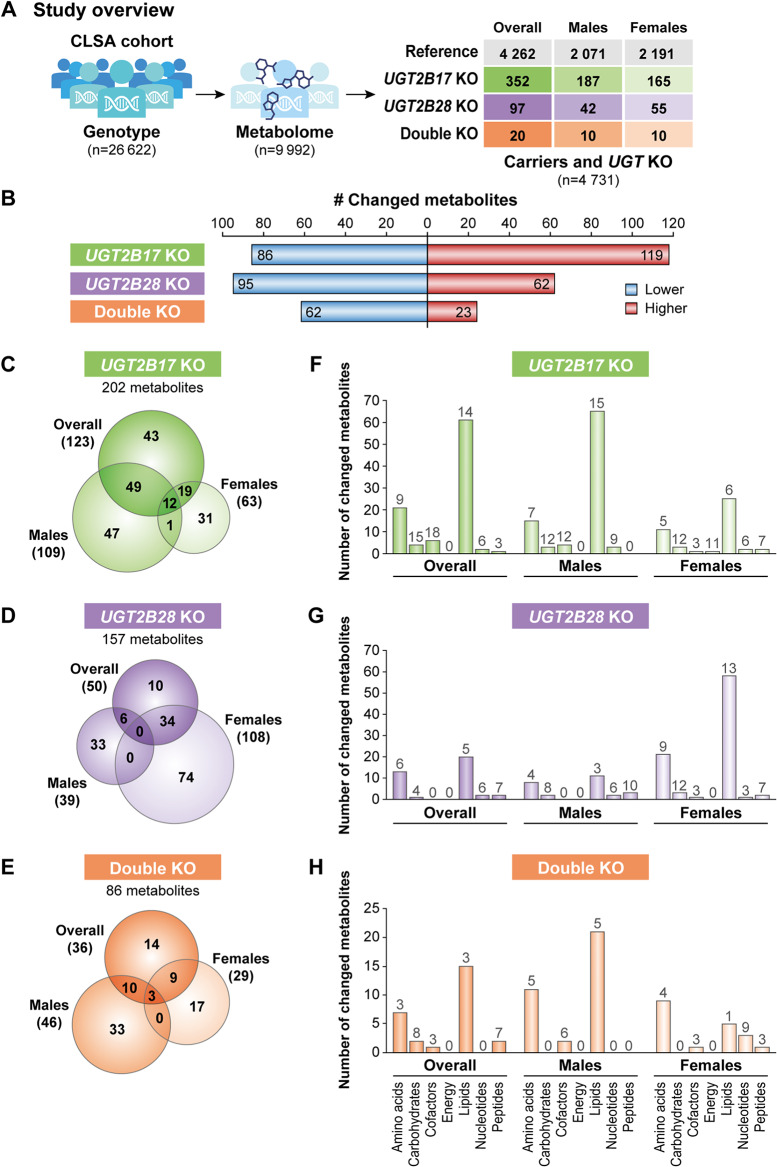
The metabolomic profiles of 4262 proficient gene carriers were compared with those of 352 UGT2B17-deficient, 97 UGT2B28-deficient, and 20 double-gene-deficient individuals from the Canadian Longitudinal Study on Aging. Significant metabolites found in these comparisons were analyzed for their associations with common diseases.
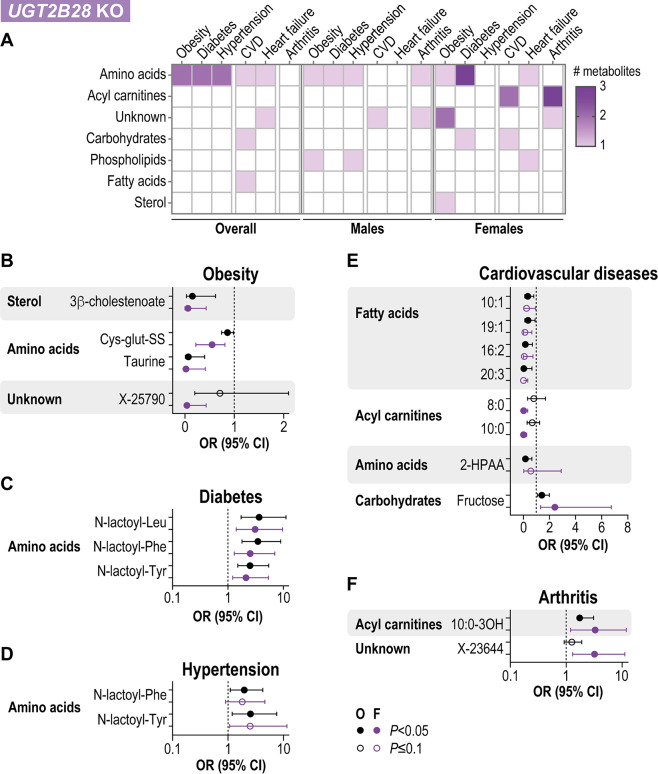
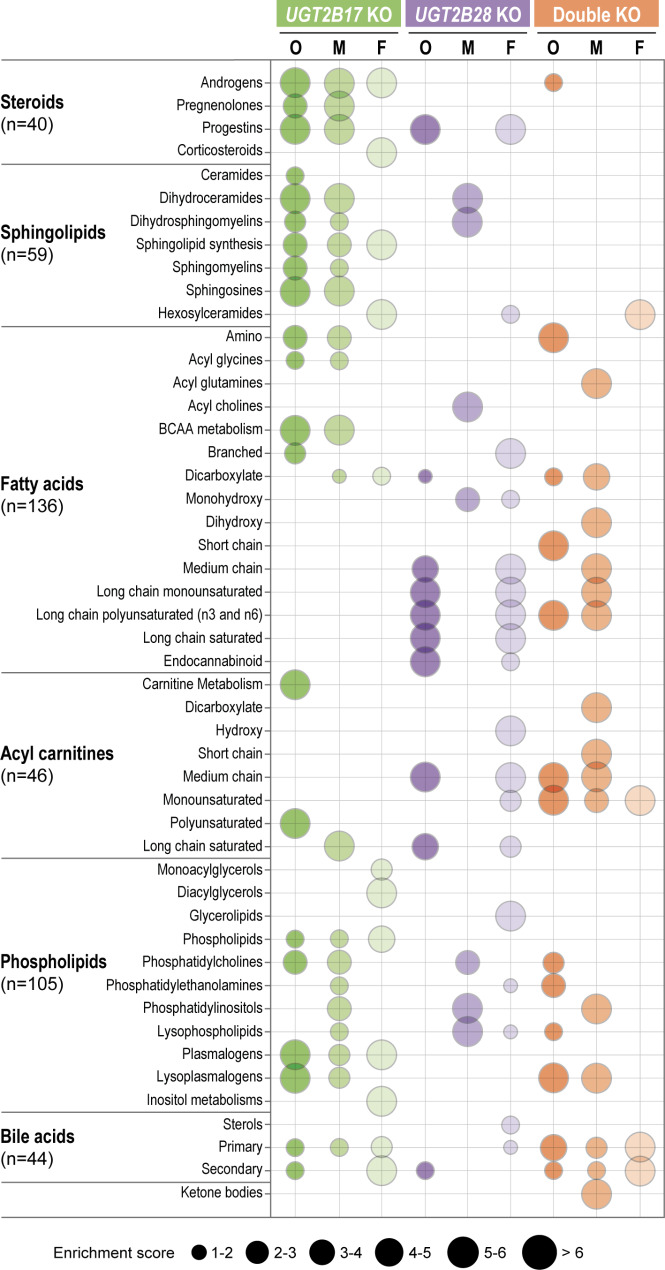
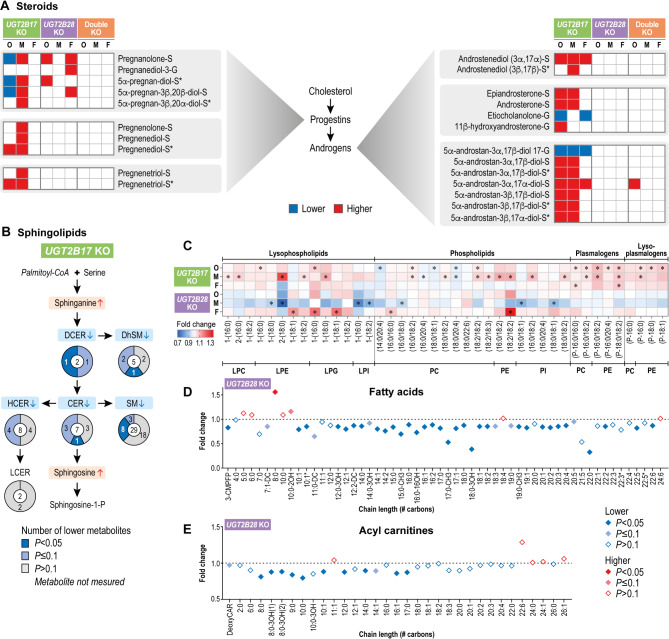
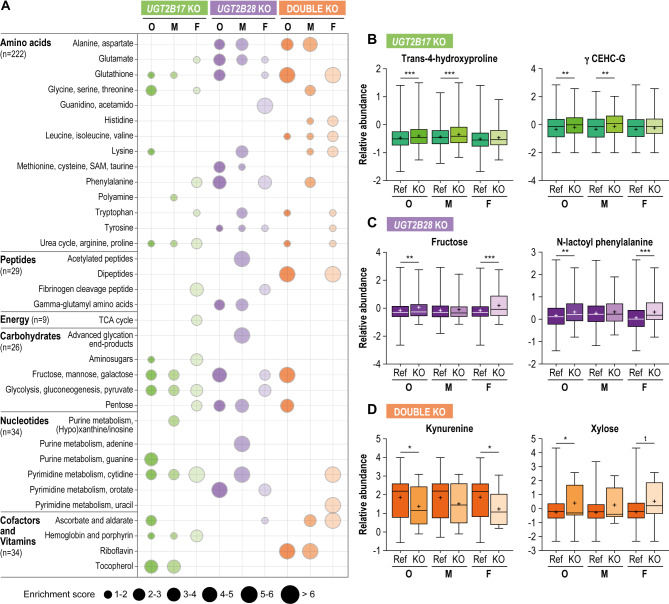
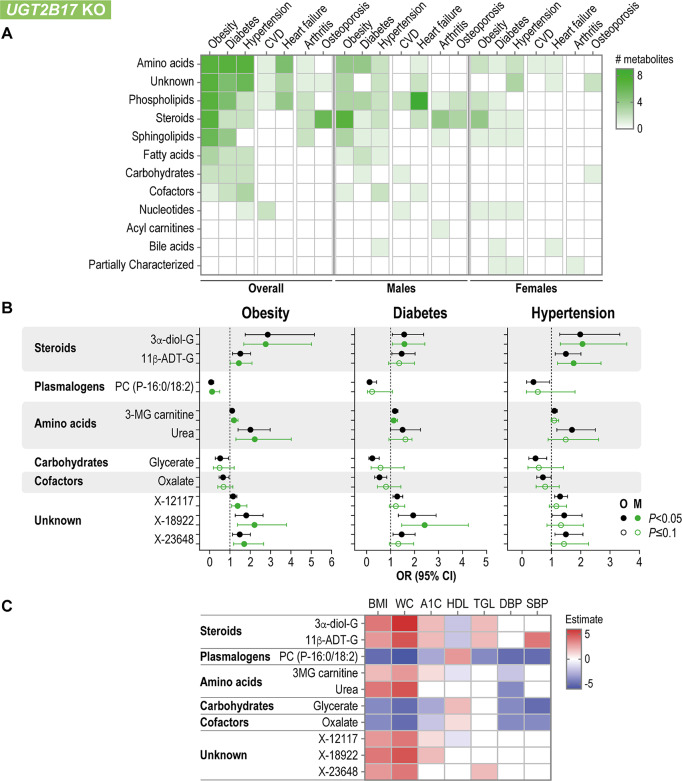
The unexpectedly broad molecular divergence found in UGT-deficient metabolomes, which affected > 10% of metabolites, implies their significant influence across various metabolite classes-particularly lipids and amino acids - extending beyond their known substrates. The metabolic profiles of UGT2B17-deficient men and UGT2B28-deficient women were most impacted, with UGT2B17 deficiency affecting various metabolites linked to metabolic diseases, arthritis, and osteoporosis. Metabolites impacted by a UGT2B28 deficiency such as amino acids, were linked to metabolic disorders in women.
The findings significantly advance our understanding of the metabolic landscape associated with these frequently deleted genes in the human genome, which may influence susceptibility to various diseases in a sex-specific manner, laying the groundwork for determining their pathological mechanisms and impact on human health.
人类基因组中最常被删除的两个基因是尿苷二磷酸葡萄糖基转移酶UGT2B17和UGT2B28。它们编码葡萄糖醛酸化途径的代谢酶,该途径在维持多种小分子代谢物的细胞内稳态中起关键作用。这些基因缺失可能会影响健康,但其影响仍知之甚少。我们评估了UGT缺乏对血浆代谢组的影响,并研究了代谢物改变与健康结果之间的关联。
将来自加拿大衰老纵向研究的4262名基因功能正常的携带者的代谢组学谱与352名UGT2B17缺乏者、97名UGT2B28缺乏者和20名双基因缺乏者的代谢组学谱进行比较。分析这些比较中发现的显著代谢物与常见疾病的关联。
在UGT缺乏的代谢组中发现了出乎意料的广泛分子差异,影响了超过10%的代谢物,这意味着它们对各种代谢物类别(特别是脂质和氨基酸)有显著影响,其影响范围超出了已知底物。UGT2B17缺乏的男性和UGT2B28缺乏的女性的代谢谱受影响最大,UGT2B17缺乏影响与代谢疾病、关节炎和骨质疏松症相关的各种代谢物。受UGT2B28缺乏影响的代谢物(如氨基酸)与女性的代谢紊乱有关。
这些发现显著推进了我们对与人类基因组中这些频繁缺失基因相关的代谢格局的理解,这些基因可能以性别特异性方式影响对各种疾病的易感性,为确定其病理机制及其对人类健康的影响奠定了基础。