Division of Respiratory Medicine, Department of Internal Medicine, Kobe University Graduate School of Medicine, 7-5-1 Kusunoki-cho, Chuo-ku, Kobe, 650-0017, Japan.
Division of Molecular Biology, Department of Biochemistry and Molecular and Biology, Kobe University Graduate School of Medicine, 7-5-1 Kusunoki-cho, Chuo-ku, Kobe, 650-0017, Japan.
Respir Res. 2019 Jan 11;20(1):9. doi: 10.1186/s12931-019-0975-4.
We have shown that phospholipase Cε (PLCε), an effector of Ras and Rap1 small GTPases, plays pivotal roles in inflammation and inflammation-associated carcinogenesis by augmenting proinflammatory cytokine production from epithelial cells of various organs. The purpose of this study is to analyze its role in neutrophilic alveolar inflammation accompanying acute lung injury (ALI), focusing on that in alveolar epithelial cells (AECs), which are known to make a major contribution to the pathogenesis of ALI.
We examine the effect of the PLCε genotypes on the development of ALI induced by intratracheal administration of lipopolysaccharide (LPS) to PLCε wild-type (PLCε) and knockout (PLCε) mice. Pathogenesis of ALI is analyzed by histological examination of lung inflammation and measurements of the levels of various cytokines, in particular neutrophil-attracting chemokines such as Cxcl5, by quantitative reverse transcription-polymerase chain reaction and immunostaining. Primary cultures of AECs, established from PLCε and PLCε mice, are used to analyze the roles of PLCε, protein kinase D (PKD) and nuclear factor-κB (NF-κB) in augmentation of LPS-induced Cxcl5 expression.
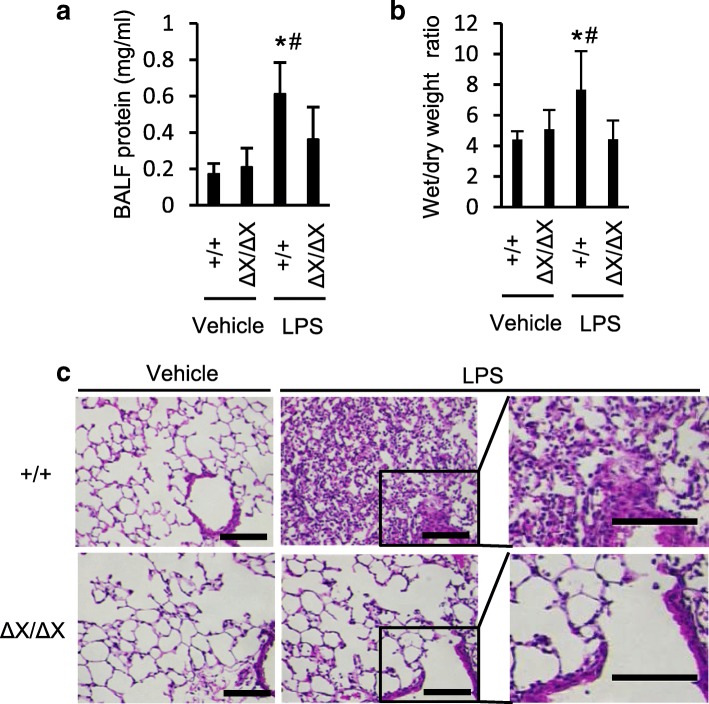
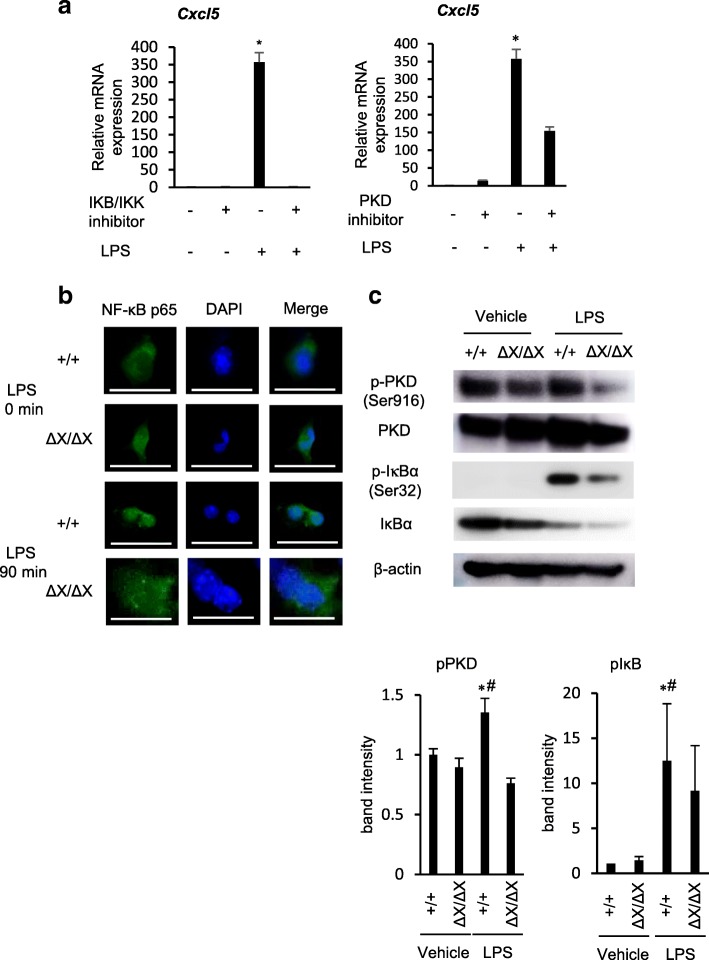
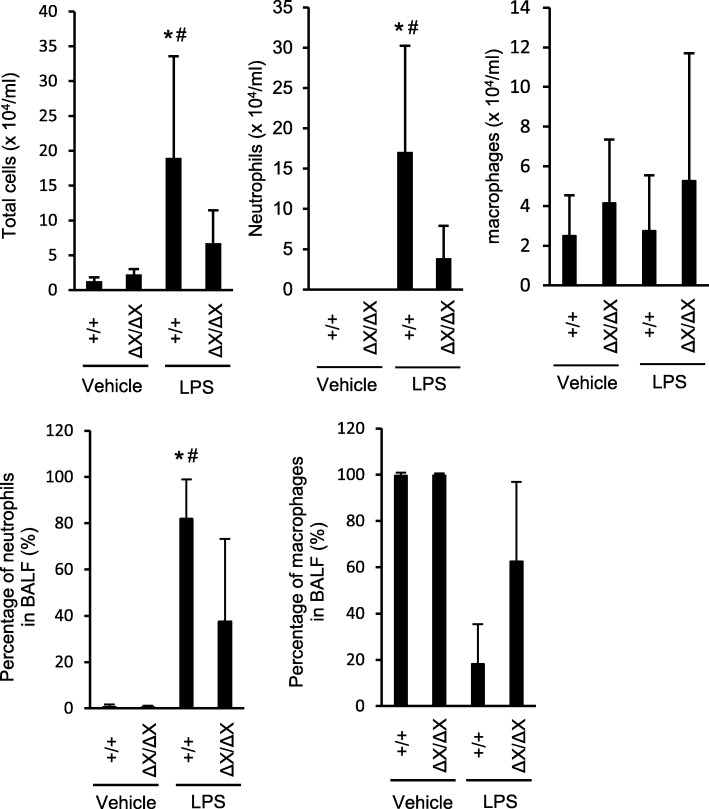
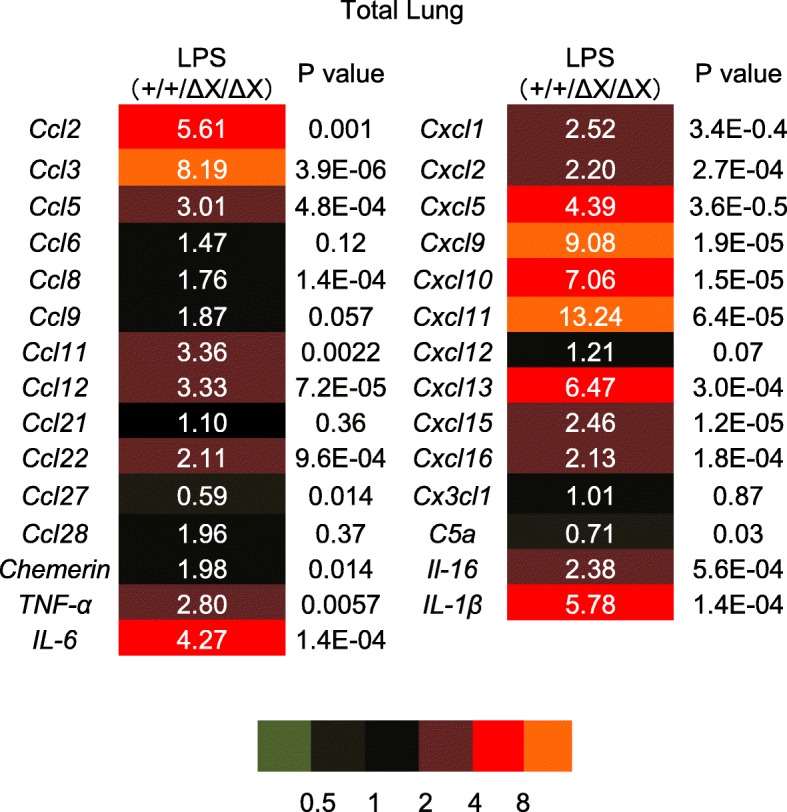
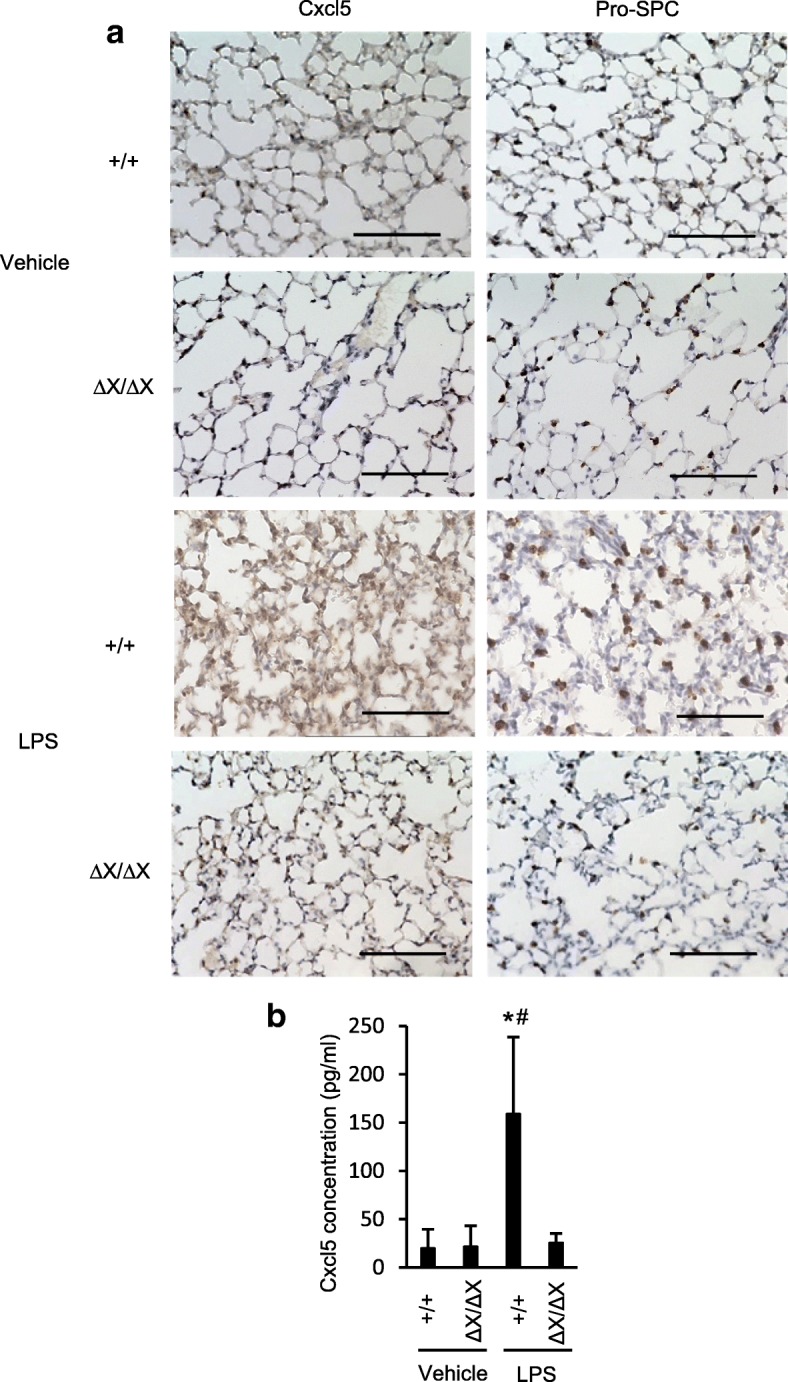
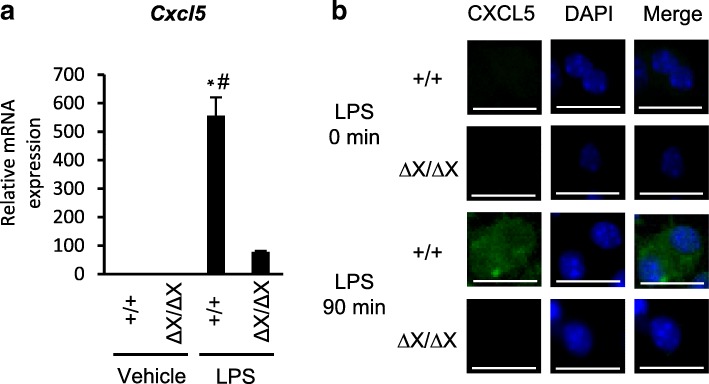
Compared to PLCε mice, PLCε mice exhibit marked alleviation of lung inflammation as shown by great reduction in lung wet/dry weight ratios, accumulation of inflammatory cells in the alveolar space and thickening of alveolar walls as well as the number of neutrophils and the protein concentration in bronchoalveolar lavage fluid. Also, LPS-induced expression of the CXC family of chemokines, in particular Cxcl5, is substantially diminished in the total lung and AECs of PLCε mice. Moreover, LPS-induced Cxcl5 expression in primary cultured AECs is markedly suppressed on the PLCε background (p < 0.05 versus PLCε AECs), which is accompanied by the reduction in phosphorylation of inhibitor κB (IκB), PKD and nuclear translocation of NF-κB p65. Also, it is suppressed by the treatment with inhibitors of PKD and IκB kinase, suggesting the involvement of the PLCε-PKD-IκB-NF-κB pathway.
PLCε-mediated augmentation of the production of the CXC family of chemokines, in particular Cxcl5, in AECs plays a crucial role in neutrophilic alveolar inflammation accompanying ALI, suggesting that PLCε may be a potential molecular target for the treatment of acute respiratory distress syndrome.
我们已经证明,PLCε(Ras 和 Rap1 小 GTPase 的效应物)通过增强各种器官上皮细胞产生促炎细胞因子,在炎症和炎症相关的致癌作用中发挥关键作用。本研究的目的是分析其在伴有急性肺损伤(ALI)的中性粒细胞性肺泡炎症中的作用,重点是在肺泡上皮细胞(AEC)中,已知其对 ALI 的发病机制有重大贡献。
我们检查了 PLCε 基因型对气管内给予脂多糖(LPS)诱导的 PLCε 野生型(PLCε)和敲除(PLCε)小鼠 ALI 发展的影响。通过对肺炎症的组织学检查和通过定量逆转录聚合酶链反应和免疫染色测量各种细胞因子(特别是中性粒细胞吸引趋化因子如 Cxcl5)的水平来分析 ALI 的发病机制。从 PLCε 和 PLCε 小鼠中建立的原代 AEC 培养物用于分析 PLCε、蛋白激酶 D(PKD)和核因子-κB(NF-κB)在增强 LPS 诱导的 Cxcl5 表达中的作用。
与 PLCε 小鼠相比,PLCε 小鼠的肺炎症明显减轻,肺湿/干重比、肺泡空间中炎症细胞的积累以及肺泡壁增厚以及中性粒细胞的数量和支气管肺泡灌洗液中的蛋白浓度均显著降低。此外,LPS 诱导的 CXCL 家族趋化因子,特别是 Cxcl5 的表达在 PLCε 小鼠的整个肺和 AEC 中明显减少。此外,在 PLCε 背景下(与 PLCε AEC 相比,p<0.05),原代培养的 AEC 中 LPS 诱导的 Cxcl5 表达明显受到抑制,同时 IκB 抑制物(IκB)、PKD 的磷酸化和 NF-κB p65 的核转位减少。此外,PKD 和 IκB 激酶抑制剂的处理也抑制了它,表明涉及 PLCε-PKD-IκB-NF-κB 途径。
AEC 中 PLCε 介导的 CXCL 家族趋化因子,特别是 Cxcl5 的产生增加,在伴有 ALI 的中性粒细胞性肺泡炎症中发挥关键作用,表明 PLCε 可能是急性呼吸窘迫综合征治疗的潜在分子靶点。