• 文献检索
  • 文档翻译
  • 深度研究
  • 学术资讯
  • Suppr Zotero 插件Zotero 插件
  • 邀请有礼
  • 套餐&价格
  • 历史记录
应用&插件
Suppr Zotero 插件Zotero 插件浏览器插件Mac 客户端Windows 客户端微信小程序
定价
高级版会员购买积分包购买API积分包
服务
文献检索文档翻译深度研究API 文档MCP 服务
关于我们
关于 Suppr公司介绍联系我们用户协议隐私条款
关注我们

Suppr 超能文献

核心技术专利:CN118964589B侵权必究
粤ICP备2023148730 号-1Suppr @ 2026

文献检索

告别复杂PubMed语法,用中文像聊天一样搜索,搜遍4000万医学文献。AI智能推荐,让科研检索更轻松。

立即免费搜索

文件翻译

保留排版,准确专业,支持PDF/Word/PPT等文件格式,支持 12+语言互译。

免费翻译文档

深度研究

AI帮你快速写综述,25分钟生成高质量综述,智能提取关键信息,辅助科研写作。

立即免费体验

初级和二级保健中光化性角化病的医疗利用和管理:补充数据库分析。

Healthcare utilization and management of actinic keratosis in primary and secondary care: a complementary database analysis.

机构信息

Department of Dermatology, Erasmus University Medical Centre, Rotterdam, the Netherlands.

Department of Research, Netherlands Comprehensive Cancer Organization (IKNL), Utrecht, the Netherlands.

出版信息

Br J Dermatol. 2019 Sep;181(3):544-553. doi: 10.1111/bjd.17632. Epub 2019 Apr 19.

DOI:10.1111/bjd.17632
PMID:30636037
原文链接:https://pmc.ncbi.nlm.nih.gov/articles/PMC6850060/
Abstract

BACKGROUND

The high prevalence of actinic keratosis (AK) requires the optimal use of healthcare resources.

OBJECTIVES

To gain insight in to the healthcare utilization of people with AK in a population-based cohort, and the management of AK in a primary and secondary care setting.

METHODS

A retrospective cohort study using three complementary data sources was conducted to describe the use of care, diagnosis, treatment and follow-up of patients with AK in the Netherlands. Data sources consisted of a population-based cohort study (Rotterdam Study), routine general practitioner (GP) records (Integrated Primary Care Information) and nationwide claims data (DRG Information System).

RESULTS

In the population-based cohort (Rotterdam Study), 69% (918 of 1322) of participants diagnosed with AK during a skin-screening visit had no previous AK-related visit in their GP record. This proportion was 50% for participants with extensive AK (i.e. ≥ 10 AKs; n = 270). Cryotherapy was the most used AK treatment by both GPs (78%) and dermatologists (41-56%). Topical agents were the second most used treatment by dermatologists (13-21%) but were rarely applied in primary care (2%). During the first AK-related GP visit, 31% (171 of 554) were referred to a dermatologist, and the likelihood of being referred was comparable between low- and high-risk patients, which is inconsistent with the Dutch general practitioner guidelines for 'suspicious skin lesions' from 2017. Annually, 40 000 new claims representing 13% of all dermatology claims were labelled as cutaneous premalignancy. Extensive follow-up rates (56%) in secondary care were registered, while only 18% received a claim for a subsequent cutaneous malignancy in 5 years.

CONCLUSIONS

AK management seems to diverge from guidelines in both primary and secondary care. Underutilization of field treatments, inappropriate treatments and high referral rates without proper risk stratification in primary care, combined with extensive follow-up in secondary care result in the inefficient use of healthcare resources and overburdening in secondary care. Efforts directed to better risk differentiation and guideline adherence may prove useful in increasing the efficiency in AK management. What's already known about this topic? The prevalence of actinic keratosis (AK) is high and, in particular, multiple AKs are a strong skin cancer predictor. The high prevalence of AK requires optimal use of healthcare resources. Nevertheless, (population based) AK healthcare utilization and management data are very rare. What does this study add? Although AK-related care already consumes substantial resources, about 70% of the AK population has never received care. Primary care AK management demonstrated underutilization of topical therapies and high referral rates without proper risk stratification, while in secondary care the extensive follow-up schedules were applied. This inefficient use of healthcare resources highlights the need for better harmonization and risk stratification to increase the efficiency of AK care.

摘要

背景

光化性角化病(AK)的高患病率要求优化医疗资源的使用。

目的

深入了解基于人群的队列中 AK 患者的医疗保健利用情况,以及初级和二级保健机构中 AK 的管理情况。

方法

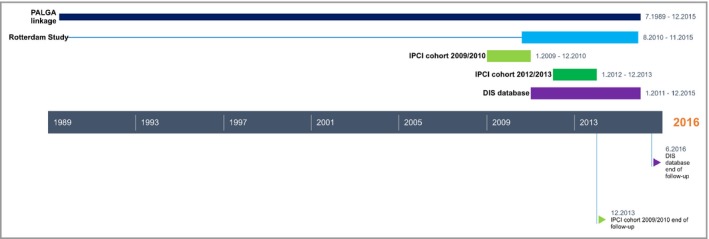
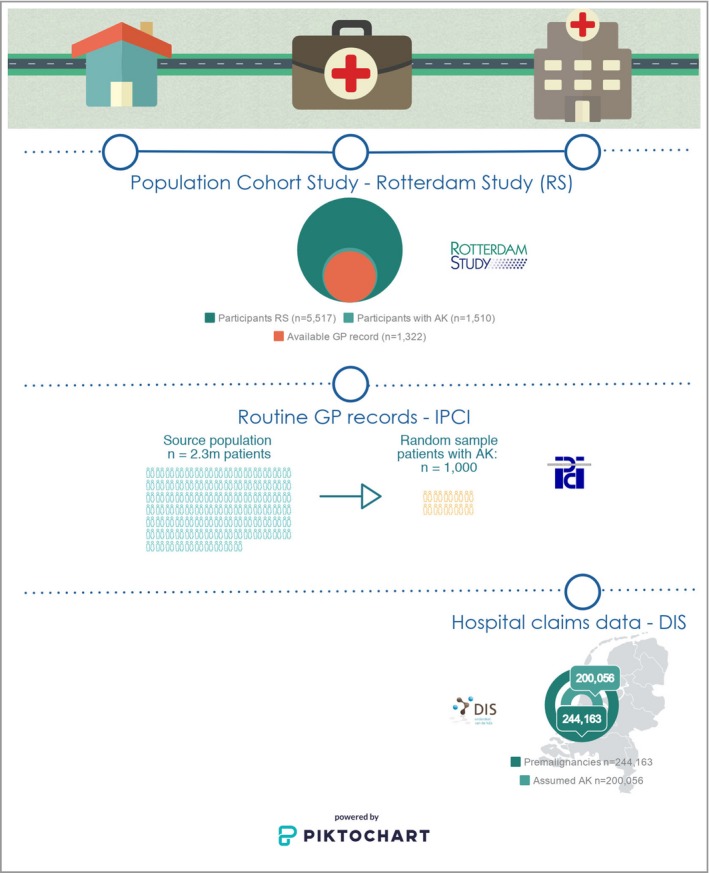
使用三种互补数据源进行回顾性队列研究,以描述荷兰 AK 患者的护理、诊断、治疗和随访使用情况。数据源包括基于人群的队列研究(鹿特丹研究)、常规全科医生记录(综合初级保健信息)和全国索赔数据(DRG 信息系统)。

结果

在基于人群的队列(鹿特丹研究)中,在皮肤筛查就诊期间被诊断患有 AK 的 69%(1322 名参与者中的 918 名)在全科医生记录中没有之前的 AK 相关就诊。对于广泛 AK(即≥10 个 AK;n=270)的参与者,这一比例为 50%。冷冻疗法是全科医生(78%)和皮肤科医生(41-56%)最常使用的 AK 治疗方法。局部药物是皮肤科医生第二常用的治疗方法(13-21%),但在初级保健中很少应用(2%)。在首次 AK 相关的全科医生就诊中,31%(554 名参与者中的 171 名)被转介给皮肤科医生,低风险和高风险患者被转介的可能性相似,这与 2017 年荷兰全科医生关于“可疑皮肤病变”的指南不一致。每年,有 40,000 份新的索赔代表所有皮肤科索赔的 13%被标记为皮肤前恶性肿瘤。在二级保健中记录了广泛的随访率(56%),而在 5 年内只有 18%的患者因随后的皮肤恶性肿瘤获得了索赔。

结论

初级保健和二级保健中的 AK 管理似乎与指南不符。在初级保健中,场治疗利用不足、治疗不当以及转诊率高而没有适当的风险分层,再加上二级保健中的广泛随访,导致医疗资源利用效率低下和二级保健负担过重。针对更好的风险分层和指南依从性的努力可能有助于提高 AK 管理的效率。

关于这个话题已经知道些什么?光化性角化病(AK)的患病率很高,特别是多发性 AK 是皮肤癌的一个强烈预测指标。AK 的高患病率要求优化医疗资源的使用。然而,(基于人群的)AK 医疗保健利用和管理数据非常罕见。这项研究增加了什么新内容?尽管 AK 相关的护理已经消耗了大量的资源,但大约 70%的 AK 患者从未接受过护理。初级保健中的 AK 管理表现出对局部治疗的利用不足和转诊率高,而没有适当的风险分层,而在二级保健中则采用了广泛的随访计划。这种医疗资源利用效率低下突出表明需要更好的协调和风险分层,以提高 AK 护理的效率。
https://cdn.ncbi.nlm.nih.gov/pmc/blobs/5ca4/6850060/1f8dd1927e85/BJD-181-544-g002.jpg
https://cdn.ncbi.nlm.nih.gov/pmc/blobs/5ca4/6850060/d611c2ae2daa/BJD-181-544-g001.jpg
https://cdn.ncbi.nlm.nih.gov/pmc/blobs/5ca4/6850060/1f8dd1927e85/BJD-181-544-g002.jpg
https://cdn.ncbi.nlm.nih.gov/pmc/blobs/5ca4/6850060/d611c2ae2daa/BJD-181-544-g001.jpg
https://cdn.ncbi.nlm.nih.gov/pmc/blobs/5ca4/6850060/1f8dd1927e85/BJD-181-544-g002.jpg

相似文献

1
Healthcare utilization and management of actinic keratosis in primary and secondary care: a complementary database analysis.初级和二级保健中光化性角化病的医疗利用和管理:补充数据库分析。
Br J Dermatol. 2019 Sep;181(3):544-553. doi: 10.1111/bjd.17632. Epub 2019 Apr 19.
2
Insight into the management of actinic keratosis: a qualitative interview study among general practitioners and dermatologists.光化性角化病管理的洞察:全科医生和皮肤科医生的定性访谈研究。
Br J Dermatol. 2019 Jul;181(1):96-104. doi: 10.1111/bjd.17818. Epub 2019 Mar 15.
3
Needs and challenges among general practitioners in the management of actinic keratosis: a qualitative study.皮肤科医生在光化性角化病管理中的需求和挑战:一项定性研究。
BMC Prim Care. 2023 Dec 2;24(1):260. doi: 10.1186/s12875-023-02202-6.
4
Physicians' opinions and clinical practice patterns for actinic keratosis management in Italy.意大利医生对光化性角化病管理的意见和临床实践模式。
G Ital Dermatol Venereol. 2014 Apr;149(2):185-92.
5
Actinic keratosis: a cross-sectional study of disease characteristics and treatment patterns in Danish dermatology clinics.光化性角化病:丹麦皮肤科诊所疾病特征与治疗模式的横断面研究
Int J Dermatol. 2016 Mar;55(3):309-16. doi: 10.1111/ijd.12874. Epub 2015 Aug 14.
6
Interprofessional Pulmocheck care pathway: An innovative approach to managing pediatric asthma care in the Netherlands.跨专业肺部检查护理路径:荷兰管理儿童哮喘护理的创新方法。
J Asthma. 2018 Jul;55(7):779-784. doi: 10.1080/02770903.2017.1363893. Epub 2017 Oct 13.
7
Evaluation of Resource Utilization and Treatment Patterns in Patients with Actinic Keratosis in the United States.美国光化性角化病患者资源利用及治疗模式的评估
Value Health. 2016 Mar-Apr;19(2):239-48. doi: 10.1016/j.jval.2015.11.014. Epub 2016 Jan 13.
8
Variation in the Cost of Managing Actinic Keratosis.光化性角化病治疗成本的差异。
JAMA Dermatol. 2017 Apr 1;153(4):264-269. doi: 10.1001/jamadermatol.2016.4733.
9
General practitioners' adherence to work-up and referral recommendations in fertility care.全科医生在生育护理中对检查和转诊建议的遵循情况。
Hum Reprod. 2017 Jun 1;32(6):1249-1257. doi: 10.1093/humrep/dex060.
10
Using theory to improve low back pain care in Australian Aboriginal primary care: a mixed method single cohort pilot study.运用理论改善澳大利亚原住民初级保健中的腰痛护理:一项混合方法单队列试点研究。
BMC Fam Pract. 2016 Apr 12;17:44. doi: 10.1186/s12875-016-0441-z.

引用本文的文献

1
Digitally Enhanced Methods for the Diagnosis and Monitoring of Treatment Responses in Actinic Keratoses: A New Avenue in Personalized Skin Care.光化性角化病诊断及治疗反应监测的数字增强方法:个性化皮肤护理的新途径
Cancers (Basel). 2024 Jan 23;16(3):484. doi: 10.3390/cancers16030484.
2
Needs and challenges among general practitioners in the management of actinic keratosis: a qualitative study.皮肤科医生在光化性角化病管理中的需求和挑战:一项定性研究。
BMC Prim Care. 2023 Dec 2;24(1):260. doi: 10.1186/s12875-023-02202-6.
3
Innovation in Actinic Keratosis Assessment: Artificial Intelligence-Based Approach to LC-OCT PRO Score Evaluation.

本文引用的文献

1
Gatekeeping and patterns of outpatient care post healthcare reform.医疗改革后门诊医疗把关和模式。
Am J Manag Care. 2018 Oct 1;24(10):e312-e318.
2
Shared decision making between patient and GP about referrals from primary care: Does gatekeeping make a difference?医患共同决策在初级保健转诊中的应用:守门人制度有影响吗?
PLoS One. 2018 Jun 11;13(6):e0198729. doi: 10.1371/journal.pone.0198729. eCollection 2018.
3
The Rotterdam Study: 2018 update on objectives, design and main results.鹿特丹研究:2018年目标、设计与主要结果的最新情况
光化性角化病评估中的创新:基于人工智能的LC-OCT PRO评分评估方法。
Cancers (Basel). 2023 Sep 7;15(18):4457. doi: 10.3390/cancers15184457.
4
Measuring the quality of skin cancer management in primary care: A scoping review.测量初级保健中皮肤癌管理的质量:范围综述。
Australas J Dermatol. 2023 May;64(2):177-193. doi: 10.1111/ajd.14023. Epub 2023 Mar 24.
5
Validation of actinic keratosis diagnosis and treatment codes among veterans living with HIV.验证 HIV 感染者中光化性角化病的诊断和治疗编码。
Pharmacoepidemiol Drug Saf. 2022 Sep;31(9):998-1002. doi: 10.1002/pds.5430. Epub 2022 Mar 28.
6
A Review of Existing Therapies for Actinic Keratosis: Current Status and Future Directions.光化性角化病现有疗法综述:现状与未来方向。
Am J Clin Dermatol. 2022 May;23(3):339-352. doi: 10.1007/s40257-022-00674-3. Epub 2022 Feb 19.
7
Environmental effects of stratospheric ozone depletion, UV radiation and interactions with climate change: UNEP Environmental Effects Assessment Panel, update 2019.平流层臭氧消耗、紫外线辐射及其与气候变化的相互影响:环境署环境影响评估小组,2019 年最新报告。
Photochem Photobiol Sci. 2020 May 20;19(5):542-584. doi: 10.1039/d0pp90011g.
8
Insight into the management of actinic keratosis: a qualitative interview study among general practitioners and dermatologists.光化性角化病管理的洞察:全科医生和皮肤科医生的定性访谈研究。
Br J Dermatol. 2019 Jul;181(1):96-104. doi: 10.1111/bjd.17818. Epub 2019 Mar 15.
Eur J Epidemiol. 2017 Sep;32(9):807-850. doi: 10.1007/s10654-017-0321-4. Epub 2017 Oct 24.
4
Comparison of the Treatment Guidelines for Actinic Keratosis: A Critical Appraisal and Review.光化性角化病治疗指南比较:批判性评估与综述
J Cutan Med Surg. 2017 Sep/Oct;21(5):408-417. doi: 10.1177/1203475417708166. Epub 2017 May 16.
5
Variation in the Cost of Managing Actinic Keratosis.光化性角化病治疗成本的差异。
JAMA Dermatol. 2017 Apr 1;153(4):264-269. doi: 10.1001/jamadermatol.2016.4733.
6
British Association of Dermatologists' guidelines for the care of patients with actinic keratosis 2017.英国皮肤科医师协会2017年光化性角化病患者护理指南。
Br J Dermatol. 2017 Jan;176(1):20-43. doi: 10.1111/bjd.15107.
7
Dermatological content of U.K. undergraduate curricula: where are we now?英国本科课程中的皮肤病学内容:我们目前处于什么状况?
Br J Dermatol. 2017 Mar;176(3):836. doi: 10.1111/bjd.15206. Epub 2017 Jan 16.
8
Rethinking primary care's gatekeeper role.重新审视初级保健的守门人角色。
BMJ. 2016 Sep 23;354:i4803. doi: 10.1136/bmj.i4803.
9
Current perspective on actinic keratosis: a review.光化性角化病的现状:综述。
Br J Dermatol. 2017 Aug;177(2):350-358. doi: 10.1111/bjd.14852. Epub 2016 Aug 8.
10
Barriers and Strategies in Guideline Implementation-A Scoping Review.指南实施中的障碍与策略——一项范围综述
Healthcare (Basel). 2016 Jun 29;4(3):36. doi: 10.3390/healthcare4030036.