State Key Laboratory of Oncology in South China and Collaborative Innovation Center for Cancer Medicine, Sun Yat-sen University Cancer Center, Guangzhou, China.
Department of Breast Surgery, National Cancer Center/Cancer Hospital, Chinese Academy of Medical Sciences and Peking Union Medical College, Beijing, China.
Mol Cancer. 2019 Jan 12;18(1):9. doi: 10.1186/s12943-019-0940-3.
Breast cancer is one of the most common malignancies and the major cause of cancer-related death in women. Although the importance of PIWI-interacting RNAs (piRNAs) in cancer has been increasingly recognized, few studies have been explored the functional mechanism of piRNAs in breast cancer development and progression.
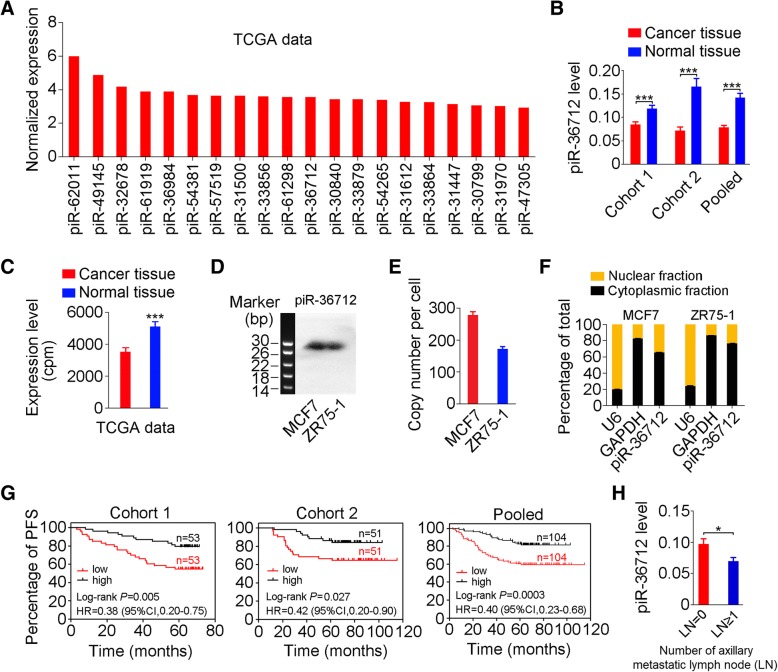
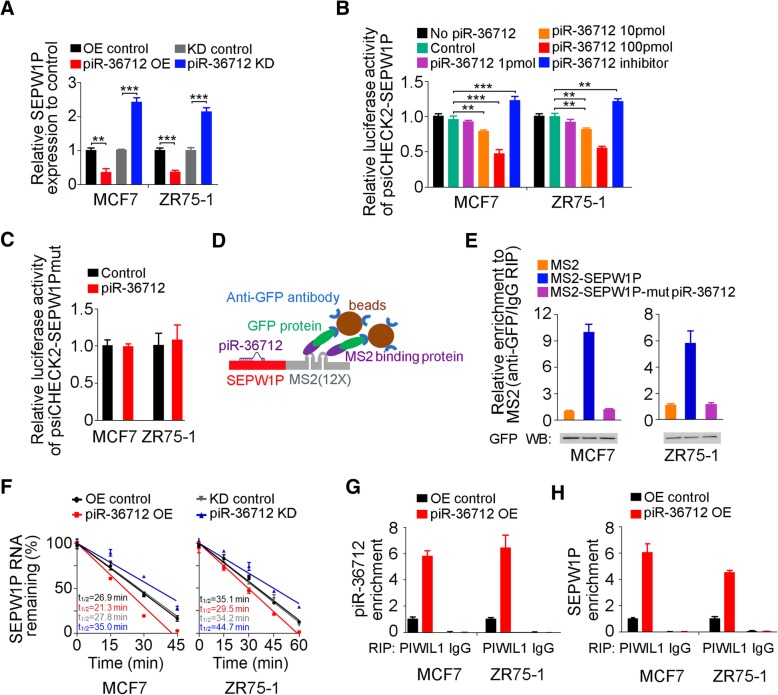
We examined the top 20 highly expressed piRNAs based on the analysis of TCGA breast cancer data in two patient cohorts to test the roles of piRNAs in breast cancer. The effects of piRNA-36,712 on the malignant phenotypes and chemosensitivity of breast cancer cells were detected in vitro and in vivo. MS2-RIP and reporter gene assays were conducted to identify the interaction and regulation among piRNA-36,712, miRNAs and SEPW1P. Kaplan-Meier estimate with log-rank test was used to compare patient survival by different piRNA-36,712 expression levels.
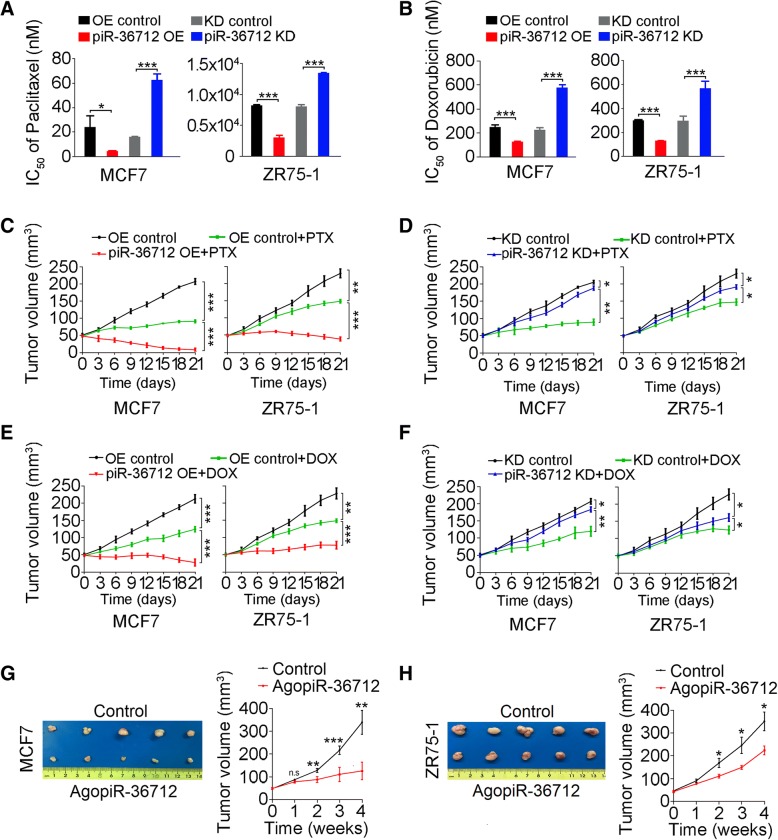
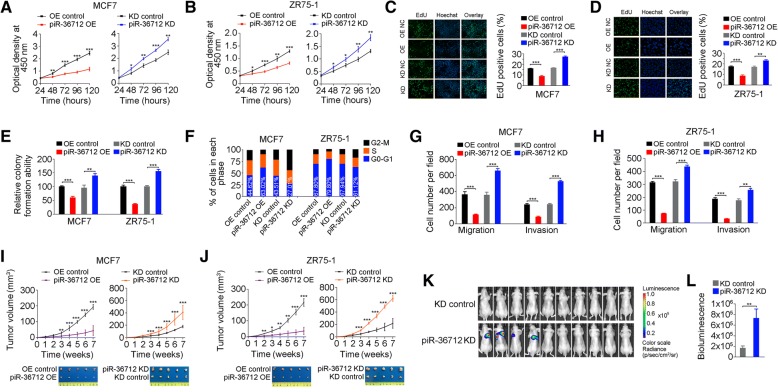
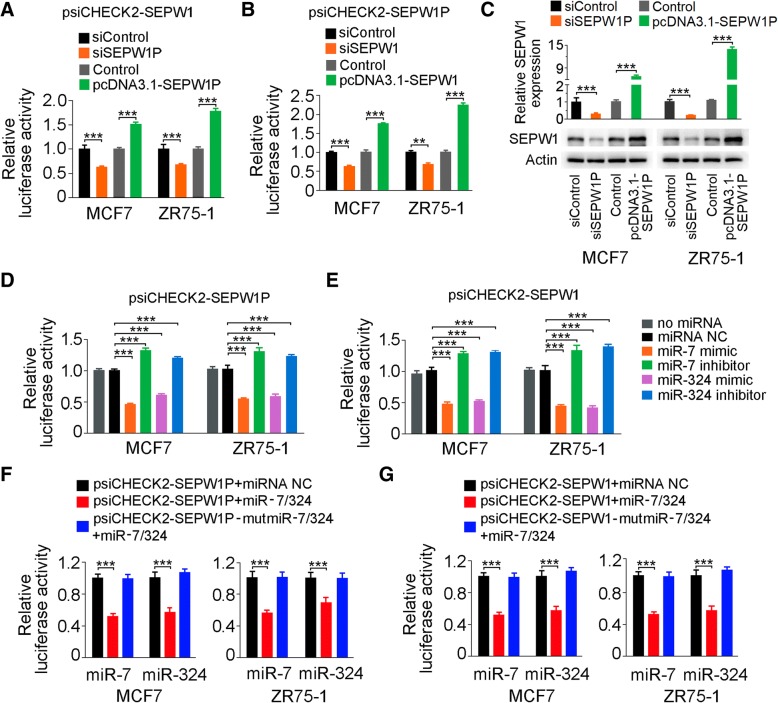
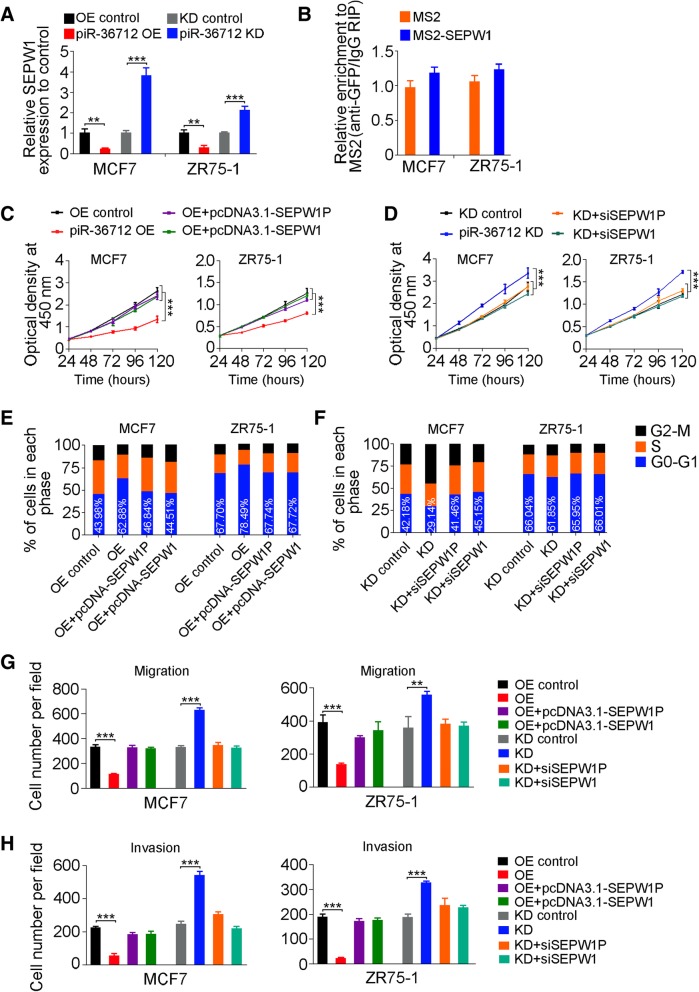
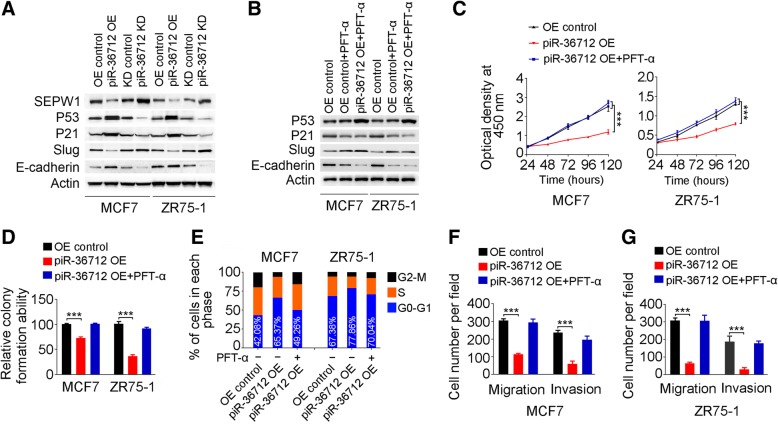
We found piRNA-36,712 level was significantly lower in breast cancer than in normal breast tissues and low level was correlated with poor clinical outcome in patients. Functional studies demonstrated that piRNA-36,712 interacts with RNAs produced by SEPW1P, a retroprocessed pseudogene of SEPW1, and subsequently inhibits SEPW1 expression through competition of SEPW1 mRNA with SEPW1P RNA for microRNA-7 and microRNA-324. We also found that higher SEPW1 expression due to downregulation of piRNA-36,712 in breast cancer may suppress P53, leading to the upregulated Slug but decreased P21 and E-cadherin levels, thus promoting cancer cell proliferation, invasion and migration. Furthermore, we found that piRNA-36,712 had synergistic anticancer effects with the paclitaxel and doxorubicin, two chemotherapeutic agents for breast cancer.
These findings suggest that piRNA-36,712 is a novel tumor suppressor and may serve as a potential predictor for the prognosis of breast cancer patients.
乳腺癌是最常见的恶性肿瘤之一,也是女性癌症相关死亡的主要原因。尽管 PIWI 相互作用 RNA(piRNAs)在癌症中的重要性已得到越来越多的认识,但很少有研究探讨 piRNAs 在乳腺癌发展和进展中的功能机制。
我们根据 TCGA 乳腺癌数据的分析,在两个患者队列中检查了前 20 个高表达的 piRNAs,以检验 piRNAs 在乳腺癌中的作用。在体外和体内检测 piRNA-36,712 对乳腺癌细胞恶性表型和化疗敏感性的影响。进行 MS2-RIP 和报告基因检测,以鉴定 piRNA-36,712、miRNAs 和 SEPW1P 之间的相互作用和调节。采用 Kaplan-Meier 估计和对数秩检验比较不同 piRNA-36,712 表达水平的患者生存情况。
我们发现 piRNA-36,712 水平在乳腺癌中明显低于正常乳腺组织,低水平与患者的不良临床结局相关。功能研究表明,piRNA-36,712 与 SEPW1P 产生的 RNA 相互作用,SEPW1P 是 SEPW1 的反录假基因,随后通过 SEPW1mRNA 与 SEPW1P RNA 竞争 microRNA-7 和 microRNA-324 来抑制 SEPW1 的表达。我们还发现,由于乳腺癌中 piRNA-36,712 的下调导致 SEPW1 表达升高,可能抑制 P53,导致 Slug 上调但 P21 和 E-钙黏蛋白水平降低,从而促进癌细胞增殖、侵袭和迁移。此外,我们发现 piRNA-36,712 与紫杉醇和多柔比星这两种乳腺癌化疗药物具有协同抗癌作用。
这些发现表明 piRNA-36,712 是一种新型的肿瘤抑制因子,可作为乳腺癌患者预后的潜在预测因子。