Department of Oncology, UCL Cancer Institute, University College London, London, UK.
Department of Pathology, UCL Cancer Institute, University College London, London, UK.
Br J Cancer. 2019 Feb;120(3):294-300. doi: 10.1038/s41416-018-0367-4. Epub 2019 Jan 14.
Bone metastases are associated with a worse outcome in patients with neuroendocrine tumours (NETs). Tumour overexpression of C-X-C chemokine receptor 4 (CXCR4) appears predictive of skeletal involvement. We investigated the role of circulating tumour cells (CTCs) and CXCR4 expression on CTCs as potential predictors of skeleton invasion.
Blood from patients with metastatic bronchial, midgut or pancreatic NET (pNET) was analysed by CellSearch. CXCR4 immunohistochemistry was performed on matched formalin-fixed paraffin-embedded (FFPE) samples.
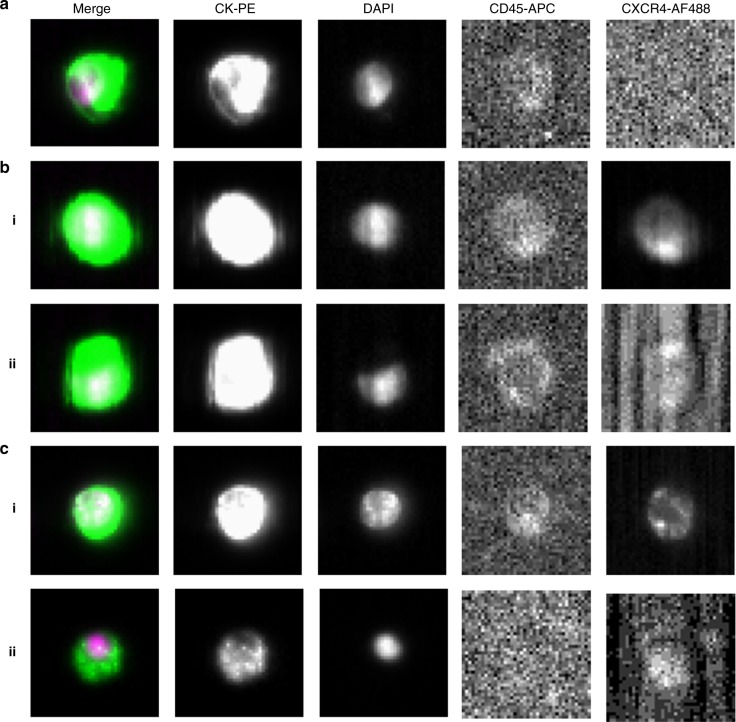
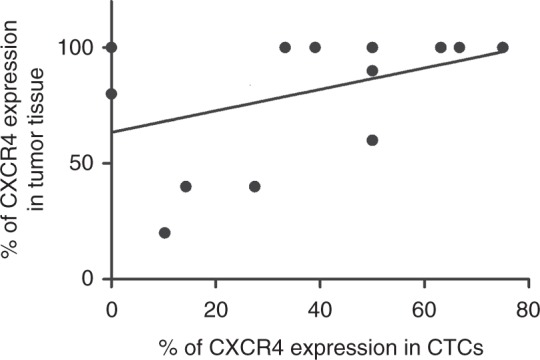
Two hundred and fifty-four patients were recruited with 121 midgut and 119 pNETs, of which 51 and 36% had detectable CTCs, respectively. Bone metastases were reported in 30% of midgut and 23% of pNET patients and were significantly associated with CTC presence (p = 0.003 and p < 0.0001). In a subgroup of 40 patients, 85% patients with CTCs had CTCs positive for CXCR4 expression. The proportion of CXCR4-positive CTCs in patients with bone metastases was 56% compared to 35% in those without (p = 0.18) it. Staining for CXCR4 on matched FFPE tissue showed a trend towards a correlation with CXCR4 expression on CTCs (p = 0.08).
CTC presence is associated with bone metastases in NETs. CXCR4 may be involved in CTC osteotropism and present a therapeutic target to reduce skeletal morbidity.
骨转移与神经内分泌肿瘤(NET)患者的预后较差相关。肿瘤过度表达 C-X-C 趋化因子受体 4(CXCR4)似乎预示着骨骼受累。我们研究了循环肿瘤细胞(CTC)的作用和 CTC 上的 CXCR4 表达作为骨骼侵犯的潜在预测因子。
通过 CellSearch 分析转移性支气管、中肠或胰腺 NET(pNET)患者的血液。对匹配的福尔马林固定石蜡包埋(FFPE)样本进行 CXCR4 免疫组织化学染色。
共招募了 254 名患者,其中 121 名患有中肠 NET,119 名患有 pNET,分别有 51%和 36%的患者可检测到 CTC。30%的中肠和 23%的 pNET 患者报告有骨转移,且与 CTC 存在显著相关(p=0.003 和 p<0.0001)。在 40 名患者的亚组中,85%的 CTC 阳性患者的 CTC 表达 CXCR4。有骨转移的患者中 CXCR4 阳性 CTC 的比例为 56%,而无骨转移的患者为 35%(p=0.18)。对匹配的 FFPE 组织进行 CXCR4 染色显示与 CTC 上的 CXCR4 表达呈趋势相关(p=0.08)。
CTC 的存在与 NET 中的骨转移相关。CXCR4 可能参与 CTC 的成骨趋向性,并提供减少骨骼发病率的治疗靶点。