Teschke Rolf
Department of Internal Medicine II, Division of Gastroenterology and Hepatology, Klinikum Hanau, Hanau, Academic Teaching Hospital of the Medical Faculty, Goethe University Frankfurt/Main, Frankfurt/Main, Germany.
J Clin Transl Hepatol. 2018 Dec 28;6(4):350-361. doi: 10.14218/JCTH.2018.00040. Epub 2018 Nov 16.
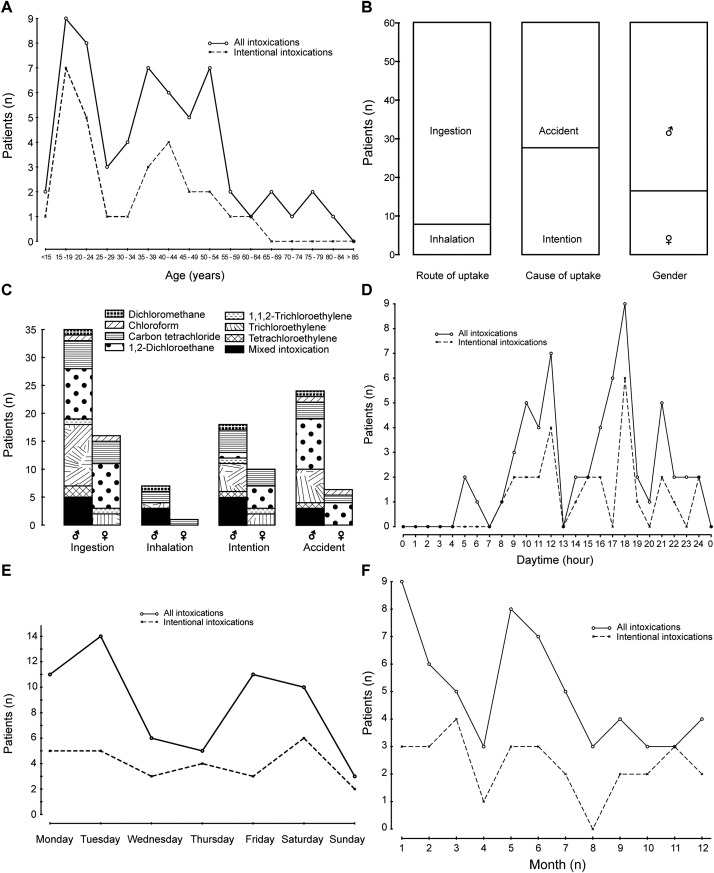
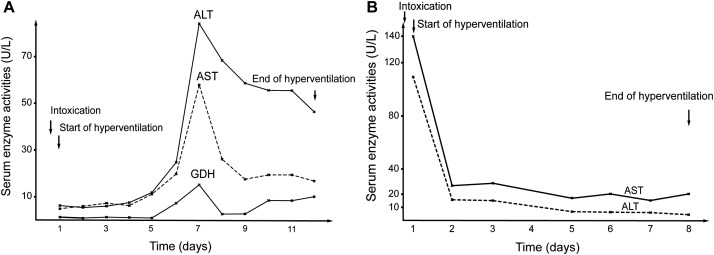
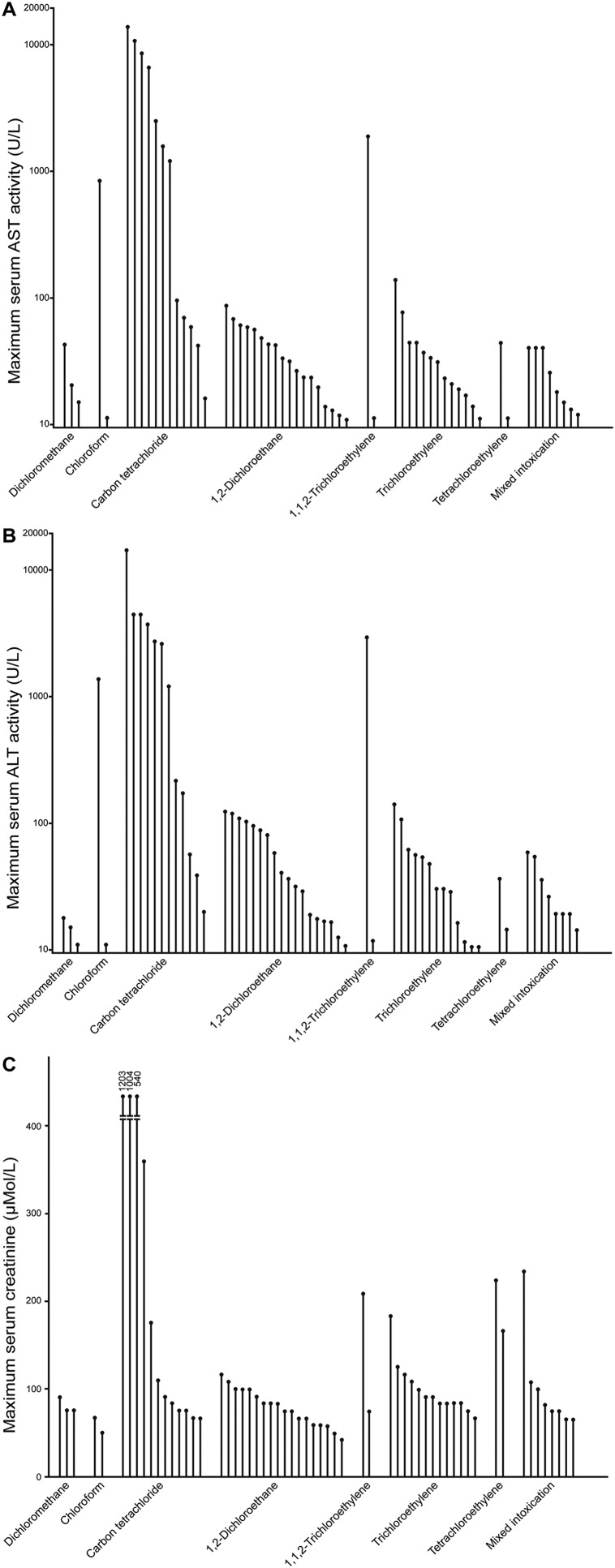
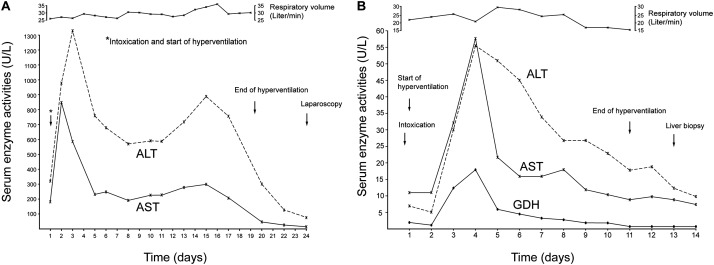
Intoxications by aliphatic halogenated hydrocarbons (AHH), used as effective solvents, are rare and may cause life-threatening liver injury. Patients with acute intoxications by AHH received an innovative treatment. Analyzed were data of 60 patients intoxicated by AHH, such as dichloromethane ( = 3), chloroform ( = 2), carbon tetrachloride ( = 12), 1,2-dichloroethane ( = 18), 1,1,2-trichloroethane ( = 2), trichloroethylene ( = 2), tetrachloroethylene ( = 13) or mixed AHH chemicals ( = 8), who received a new treatment consisting of CO-induced hyperventilation to accelerate toxin removal via the lungs. Added to the inspiration air at a flow rate of 2-3 Liter min, CO increased the respiratory volume up to 25-30 Liter min, ensuring forced AHH exhalation. This CO-induced hyperventilation therapy was commonly well tolerated by the 60 patients and lasted for 106.0±10.5 hours. In most cases, initially increased liver test results of aminotransferases normalized quickly under the therapy, and liver histology obtained at completion of the therapy revealed, in the majority of patients, normal findings or fatty changes, and rarely severe single cell necrosis but no confluent liver cell necrosis. Despite therapy, clinical outcome was unfavorable for 4/60 patients (6.7%) of the study cohort, due to single or combined risk factors. These included late initiation of the CO-induced hyperventilation therapy, intentional intoxication, uptake of high amounts of AHH, concomitant ingestion of overdosed drugs, consumption of high amounts of alcohol, and history of alcohol abuse. For intoxications by AHH, effective therapy approaches including forced hyperventilation to increase toxin removal via the lungs are available and require prompt initiation.
作为有效溶剂的脂肪族卤代烃(AHH)中毒较为罕见,但可能导致危及生命的肝损伤。急性AHH中毒患者接受了一种创新治疗。分析了60例AHH中毒患者的数据,如二氯甲烷(=3例)、氯仿(=2例)、四氯化碳(=12例)、1,2 - 二氯乙烷(=18例)、1,1,2 - 三氯乙烷(=2例)、三氯乙烯(=2例)、四氯乙烯(=13例)或混合AHH化学品(=8例),这些患者接受了一种新的治疗方法,即通过一氧化碳诱导的过度通气来加速毒素经肺排出。一氧化碳以2 - 3升/分钟的流速添加到吸入空气中,使呼吸量增加至25 - 30升/分钟,确保AHH被强制呼出。60例患者对这种一氧化碳诱导的过度通气疗法普遍耐受性良好,持续时间为106.0±10.5小时。在大多数情况下,治疗初期升高的转氨酶肝检测结果在治疗过程中迅速恢复正常,治疗结束时获得的肝脏组织学检查显示,大多数患者为正常表现或脂肪变性,很少有严重的单细胞坏死,但没有融合性肝细胞坏死。尽管进行了治疗,但由于单一或综合危险因素,该研究队列中的4/60例患者(6.7%)临床结局不佳。这些因素包括一氧化碳诱导的过度通气疗法启动较晚、故意中毒、大量摄入AHH、同时过量服用药物、大量饮酒以及有酗酒史。对于AHH中毒,包括通过强制过度通气增加毒素经肺排出的有效治疗方法是可行的,且需要及时启动。