Department of Molecular Carcinogenesis, Chiba Cancer Center Research Institute, Chiba, Japan.
Division of Pathological Biochemistry, School of Life Science, Tottori University, Yonago, Japan.
Cancer Sci. 2019 Mar;110(3):858-866. doi: 10.1111/cas.13938. Epub 2019 Feb 3.
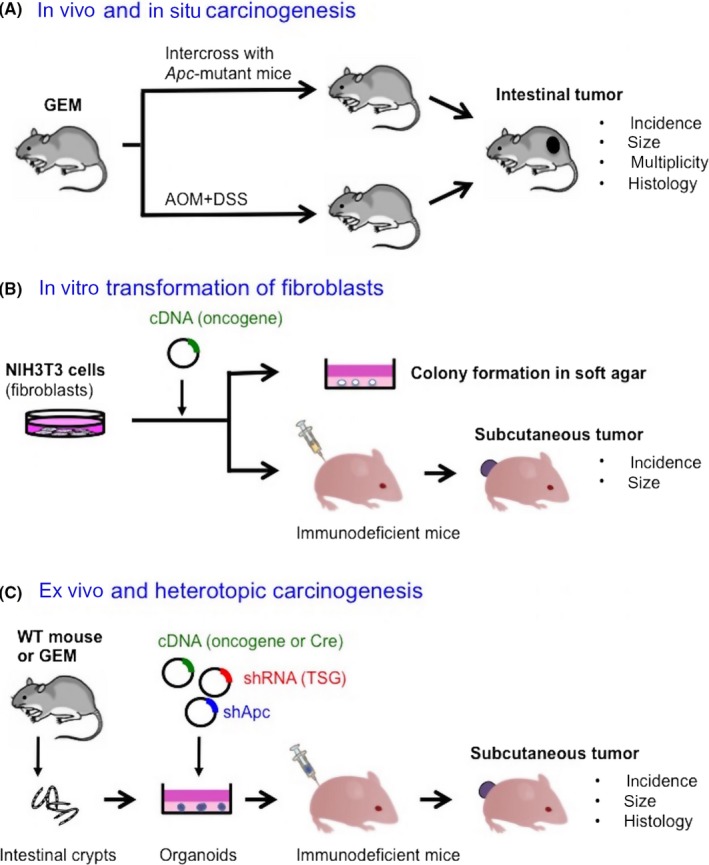
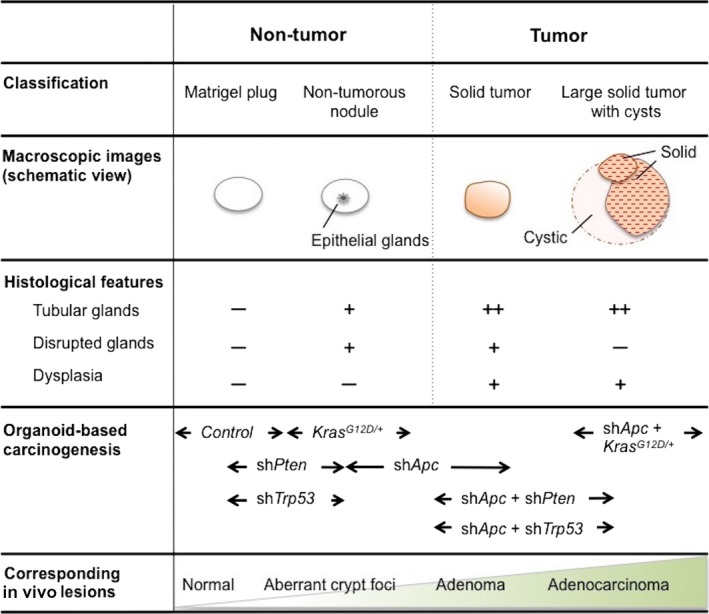
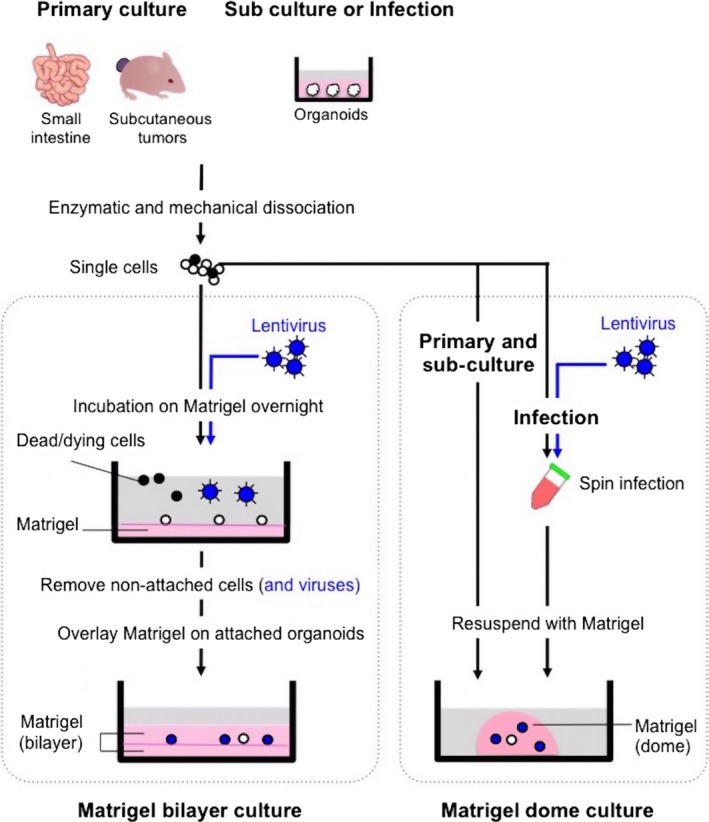
Inactivation of the Adenomatous polyposis coli (APC) gene is an initiating and the most relevant event in most sporadic cases of colorectal cancer, providing a rationale for using Apc-mutant mice as the disease model. Whereas carcinogenesis has been observed only at the organism level, the recent development of the organoid culture technique has enabled long-term propagation of intestinal stem cells in a physiological setting, raising the possibility that organoids could serve as an alternative platform for modeling colon carcinogenesis. Indeed, it is demonstrated in the present study that lentivirus-based RNAi-mediated knockdown of Apc in intestinal organoids gave rise to subcutaneous tumors upon inoculation in immunodeficient mice. Reconstitution of common genetic aberrations in organoids resulted in development of various lesions, ranging from aberrant crypt foci to full-blown cancer, recapitulating multi-step colorectal tumorigenesis. Due to its simplicity and utility, similar organoid-based approaches have been applied to both murine and human cells in many investigations, to gain mechanistic insight into tumorigenesis, to validate putative tumor suppressor genes or oncogenes, and to establish preclinical models for drug discovery. In this review article, we provide a multifaceted overview of these types of approaches that will likely accelerate and advance research on colon cancer.
腺瘤性结肠息肉病(APC)基因失活是大多数散发性结直肠癌中最早且最相关的事件,这为使用 APC 突变小鼠作为疾病模型提供了依据。虽然致癌作用仅在机体水平上观察到,但最近器官培养技术的发展使得肠干细胞能够在生理环境中长期增殖,这增加了器官可能作为结直肠癌变模型的替代平台的可能性。事实上,本研究表明,基于慢病毒的 RNAi 介导的 APC 敲低可导致接种免疫缺陷小鼠后皮下肿瘤的形成。在器官中重建常见的遗传异常会导致各种病变的发生,从异常隐窝灶到完全癌变,再现了结直肠多步骤肿瘤发生。由于其简单性和实用性,类似的基于器官的方法已在许多研究中应用于鼠类和人类细胞,以深入了解肿瘤发生的机制,验证潜在的肿瘤抑制基因或癌基因,并建立药物发现的临床前模型。在这篇综述文章中,我们提供了这些方法的多方面概述,这可能会加速和推进结直肠癌的研究。