McKinnon Lyle R, Achilles Sharon L, Bradshaw Catriona S, Burgener Adam, Crucitti Tania, Fredricks David N, Jaspan Heather B, Kaul Rupert, Kaushic Charu, Klatt Nichole, Kwon Douglas S, Marrazzo Jeanne M, Masson Lindi, McClelland R Scott, Ravel Jacques, van de Wijgert Janneke H H M, Vodstrcil Lenka A, Tachedjian Gilda
1 Department of Medical Microbiology and Infectious Diseases, University of Manitoba, Winnipeg, Canada.
2 Centre for the AIDS Programme of Research in South Africa, Durban, South Africa.
AIDS Res Hum Retroviruses. 2019 Mar;35(3):219-228. doi: 10.1089/AID.2018.0304.
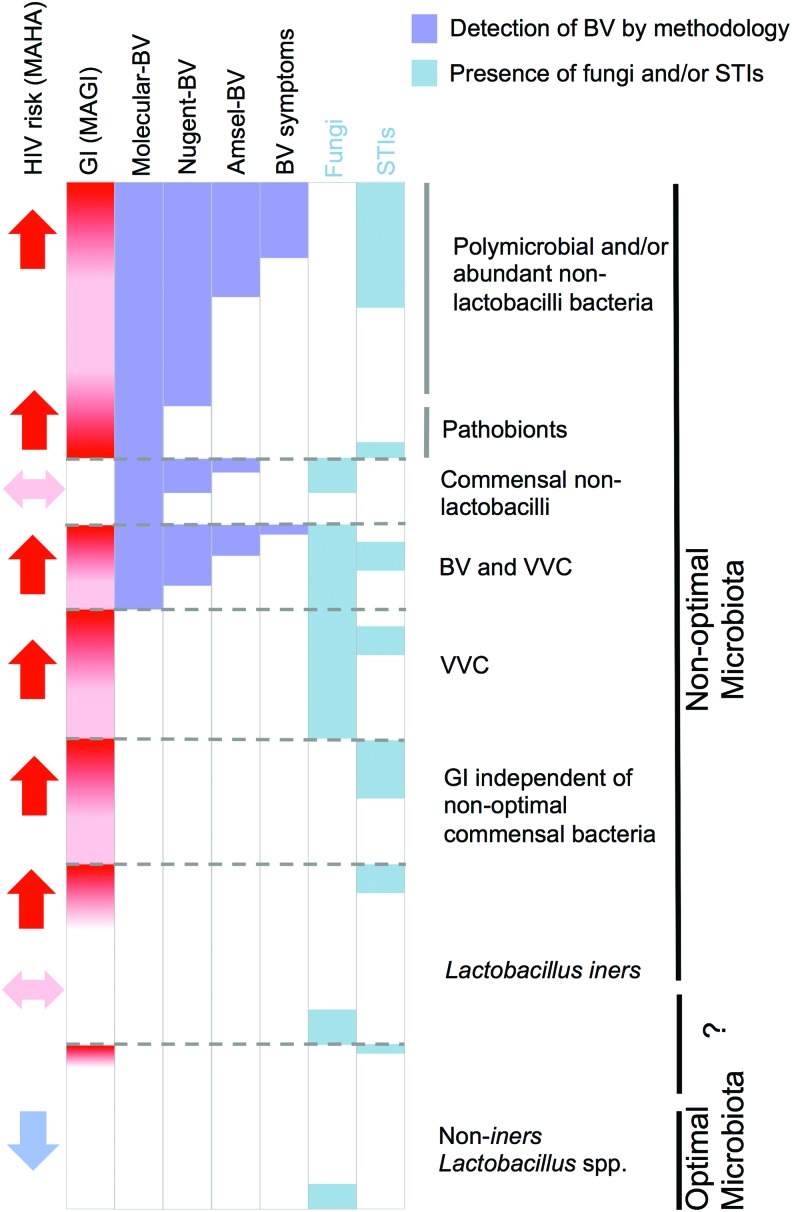
Bacterial vaginosis (BV) is a common yet poorly understood vaginal condition that has become a major focus of HIV transmission and immunology research. Varied terminologies are used by clinicians and researchers to describe microbial communities that reside in the female reproductive tract (FRT), which is driven, in part, by microbial genetic and metabolic complexity, evolving diagnostic and molecular techniques, and multidisciplinary perspectives of clinicians, epidemiologists, microbiologists, and immunologists who all appreciate the scientific importance of understanding mechanisms that underlie BV. This Perspectives article aims to clarify the varied terms used to describe the cervicovaginal microbiota and its "nonoptimal" state, under the overarching term of BV. The ultimate goal is to move toward language standardization in future literature that facilitates a better understanding of the impact of BV on FRT immunology and risk of sexually transmitted infections, including HIV.
细菌性阴道病(BV)是一种常见但了解甚少的阴道疾病,已成为HIV传播和免疫学研究的主要焦点。临床医生和研究人员使用各种术语来描述女性生殖道(FRT)中的微生物群落,部分原因是微生物的遗传和代谢复杂性、不断发展的诊断和分子技术,以及临床医生、流行病学家、微生物学家和免疫学家的多学科观点,他们都认识到理解BV潜在机制的科学重要性。这篇观点文章旨在澄清在BV这一总体术语下,用于描述宫颈阴道微生物群及其“非最佳”状态的各种术语。最终目标是在未来的文献中实现语言标准化,以便更好地理解BV对FRT免疫学的影响以及包括HIV在内的性传播感染的风险。