Institute for Tropical Medicine, University of Tübingen, Tübingen, Germany; Laboratory of Human Molecular Genetics, Department of Genetics, Universidade Federal do Paraná, Curitiba, Brazil.
Institute for Tropical Medicine, University of Tübingen, Tübingen, Germany; Institute of Biomedicine and Pharmacy, Vietnam Military Medical University, Hanoi, Viet Nam.
EBioMedicine. 2019 Feb;40:614-625. doi: 10.1016/j.ebiom.2018.12.055. Epub 2019 Jan 10.
Transcriptomic research of blood cell lineages supports the understanding of distinct features of the immunopathology in human malaria.
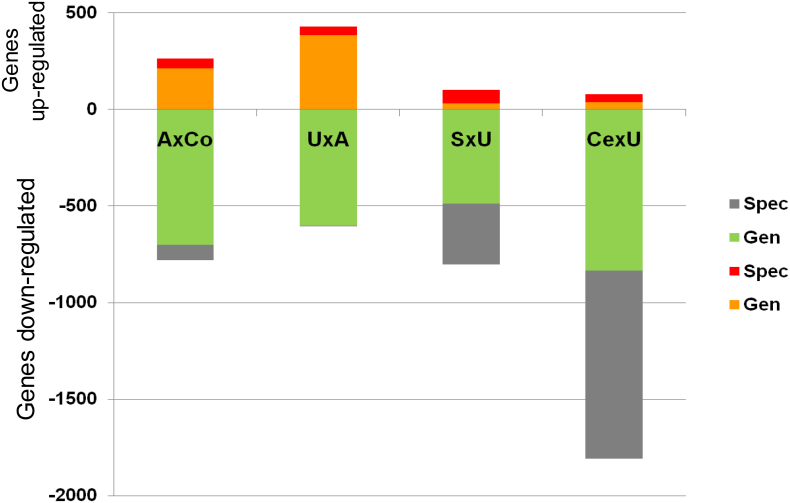
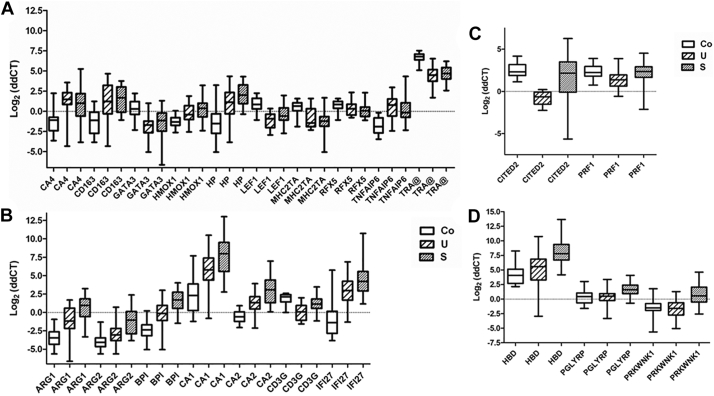
We used microarray hybridization, validated by real-time RT-PCR to analyze whole blood gene expression in healthy Gabonese children and children with various conditions of Plasmodium falciparum infection, including i) asymptomatic infection, ii) uncomplicated malaria, iii) malaria associated with severe anemia and iv) cerebral malaria.
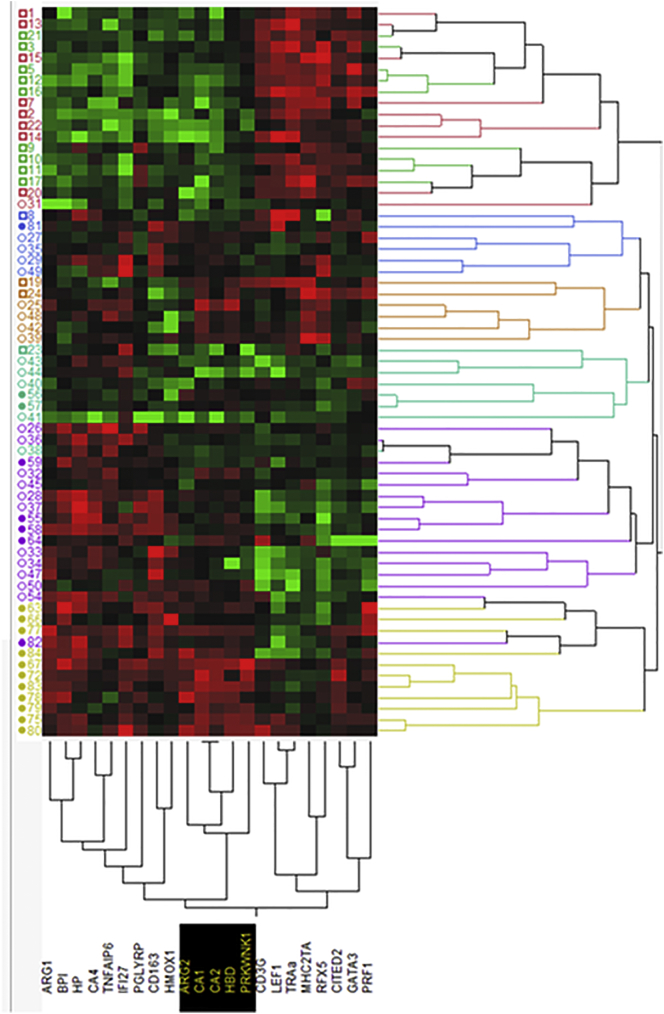
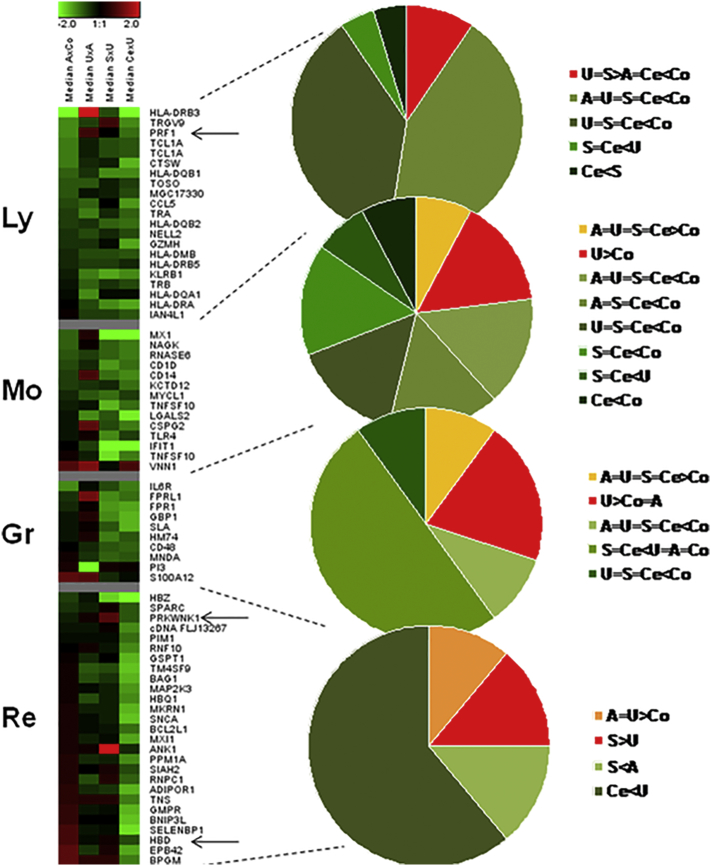
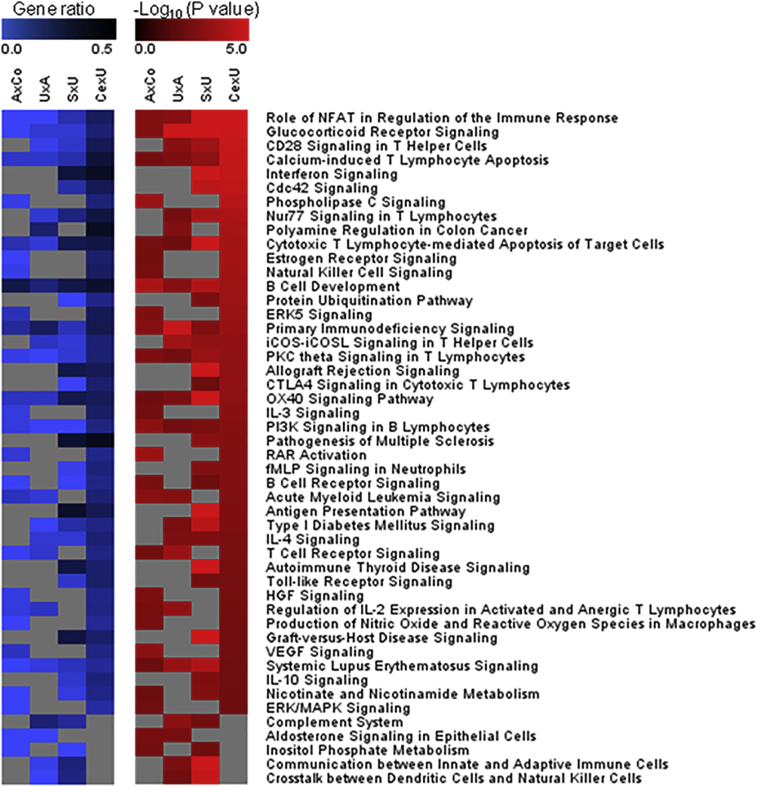
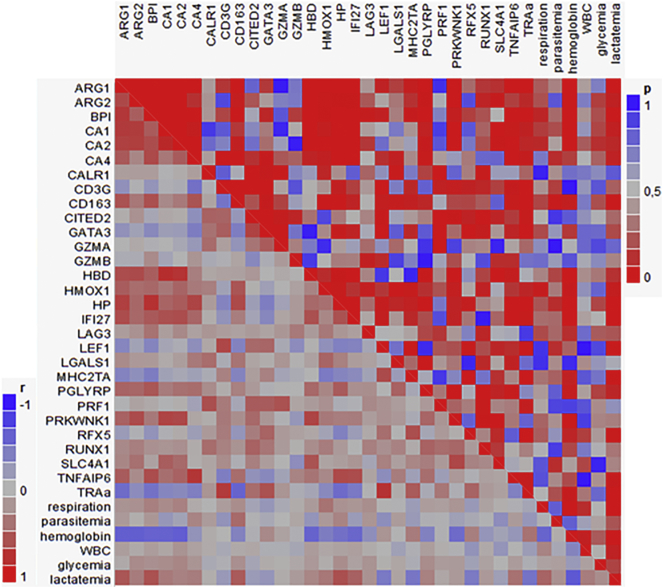
Our data indicate that the expression profile of 22 genes significantly differed among the investigated groups. Immunoglobulin production, complement regulation and IFN beta signaling, in particular IRF7 and ISRE binding signatures in the corresponding genes, were most conspicuous. Down-regulation in cerebral malaria seems to rely on AhRF, GABP and HIF1 hypoxia transcription factors. ARG1, BPI, CD163, IFI27, HP and TNFAIP6 transcript levels correlated positively with lactatemia, and negatively with hemoglobin concentrations.
Differences in gene expression profile reflect distinct immunopathological mechanisms of P. falciparum infection. They emerge as potential prognostic markers for early therapeutic measures and need to be validated further. FUND: This work was supported by a grant of the NGFN (Nationales Genomforschungsnetz 01GS0114) and by a CNPq (Conselho Nacional de Desenvolvimento Científico e Tecnológico, Brazil) PhD scholarship for A. B. W. Boldt. The funders had no role in study design, data collection and analysis, decision to publish, or preparation of the manuscript.
血细胞谱系的转录组学研究支持对人类疟疾免疫病理学的不同特征的理解。
我们使用微阵列杂交,通过实时 RT-PCR 验证,分析了来自健康加蓬儿童和各种恶性疟原虫感染状态儿童的全血基因表达,包括 i)无症状感染,ii)无并发症的疟疾,iii)疟疾相关严重贫血,iv)脑型疟疾。
我们的数据表明,所研究组之间有 22 个基因的表达谱显著不同。免疫球蛋白产生、补体调节和 IFN-β信号转导,特别是相应基因中的 IRF7 和 ISRE 结合特征,最为明显。脑型疟疾中的下调似乎依赖于 AhRF、GABP 和 HIF1 缺氧转录因子。ARG1、BPI、CD163、IFI27、HP 和 TNFAIP6 的转录水平与乳酸性血症呈正相关,与血红蛋白浓度呈负相关。
基因表达谱的差异反映了恶性疟原虫感染的不同免疫病理机制。它们作为潜在的预后标志物出现,用于早期治疗措施,需要进一步验证。
这项工作得到了 NGFN(国家基因组研究网络 01GS0114)和 CNPq(巴西国家科学技术发展理事会)博士奖学金的资助,用于支持 A.B.W. Boldt 的研究。资助者在研究设计、数据收集和分析、出版决定或手稿准备方面没有作用。