Department of Emergency Medicine, Thomas Jefferson University, USA.
Department of Emergency Medicine, Thomas Jefferson University, USA.
Brain Res. 2019 May 15;1711:91-96. doi: 10.1016/j.brainres.2019.01.014. Epub 2019 Jan 10.
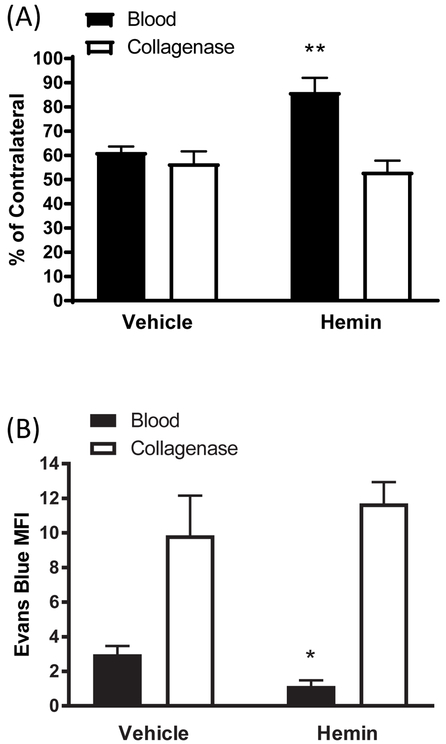
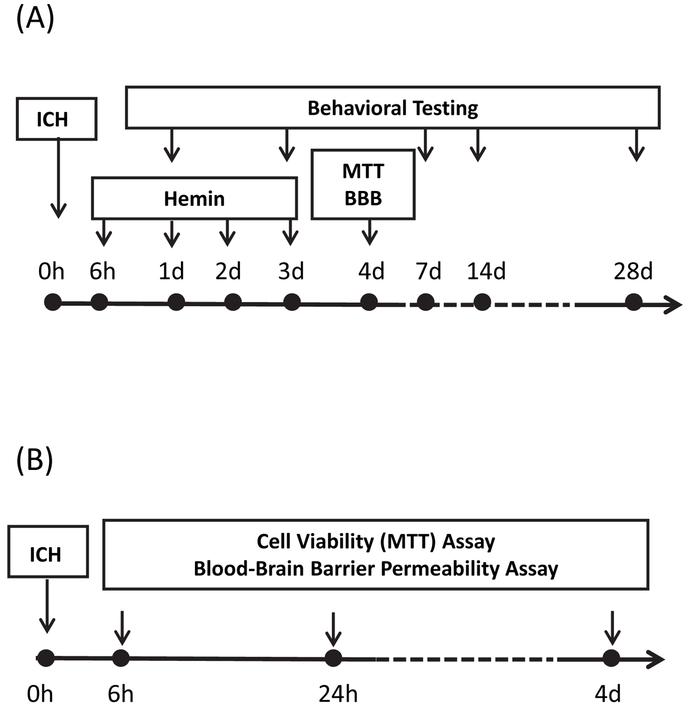
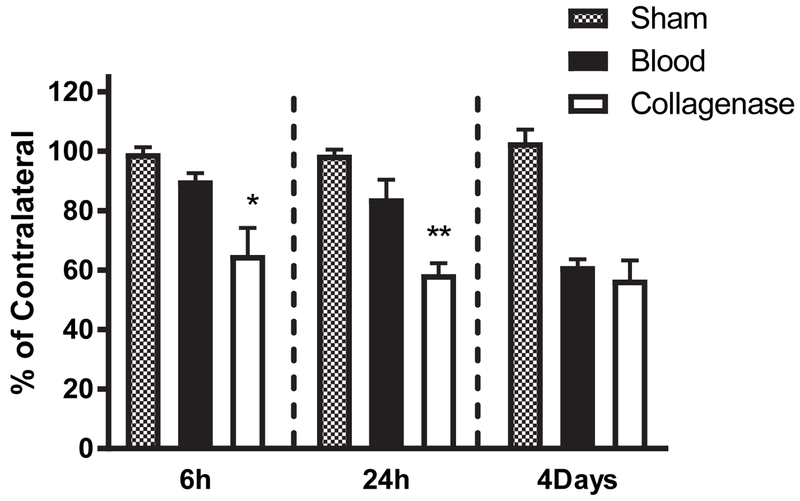
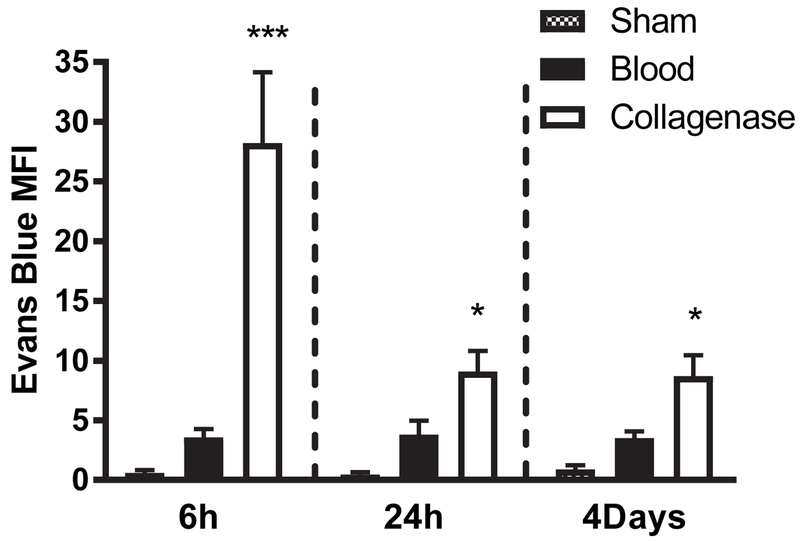
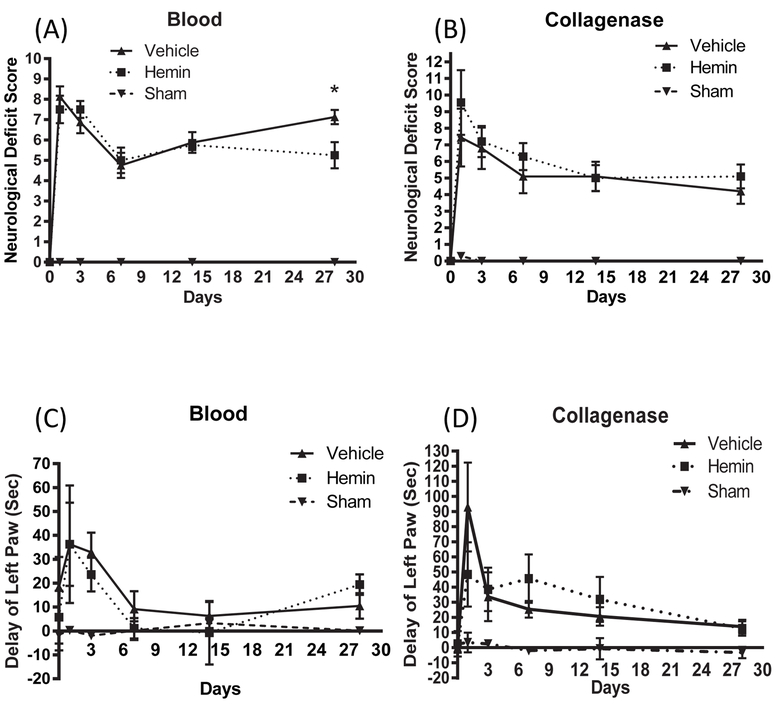
The effective time window of any therapeutic in an experimental stroke model is limited by the rate of injury progression. Intracerebral hemorrhage in rodents is commonly induced by striatal injection of either autologous blood or bacterial collagenase, which digests local blood vessels. During time window studies of the heme oxygenase-1 inducer hemin, which is protective when administered within 1-3 h in both models, the rate of perihematomal injury was directly compared after striatal blood or collagenase injection. Surprisingly, about 80% of the loss of perihematomal cell viability as measured by MTT reduction assay occurred within 6 h of collagenase injection. In contrast, significant viability loss was not observed at this time point after autologous blood injection, but rather it progressed over the subsequent four days to a level similar to that produced by collagenase. Consistent with these observations, systemic hemin therapy reduced blood-brain barrier disruption and perihematomal cell injury when initiated at 6 h after striatal injection of blood but not collagenase. These results indicate that the rate of early cell injury differs markedly in the collagenase and blood injection ICH models, which may contribute to inconsistent results in time window studies. The blood injection model may be more appropriate for prolonged time window studies of a neuroprotective agent.
任何治疗方法在实验性中风模型中的有效时间窗口都受到损伤进展速度的限制。在啮齿动物中,脑内出血通常通过纹状体注射自体血液或细菌胶原酶来诱导,后者可消化局部血管。在血红素加氧酶-1诱导剂血红素的时间窗研究中,该药物在两种模型中均在 1-3 小时内给药具有保护作用,在纹状体血液或胶原酶注射后直接比较了血肿周围损伤的速度。令人惊讶的是,用 MTT 还原测定法测量的血肿周围细胞活力丧失约 80%发生在胶原酶注射后 6 小时内。相比之下,在这个时间点,自体血注射后没有观察到明显的细胞活力丧失,而是在随后的四天内逐渐增加到与胶原酶相似的水平。与这些观察结果一致,全身性血红素治疗在纹状体注射血液后 6 小时开始时可降低血脑屏障破坏和血肿周围细胞损伤,但在注射胶原酶时则无效。这些结果表明,胶原酶和血液注射 ICH 模型中的早期细胞损伤速度差异显著,这可能导致时间窗研究中的结果不一致。血液注射模型可能更适合于神经保护剂的长时间窗研究。