Department of Biomedical Engineering, Oregon Health & Science University, 3303 SW Bond Ave., Portland, OR 97239, USA.
Department of Chemical Engineering, University of Waterloo, 200 University Ave. W, Waterloo, ON N2L3G1, Canada.
Acta Biomater. 2019 Mar 1;86:291-299. doi: 10.1016/j.actbio.2019.01.008. Epub 2019 Jan 10.
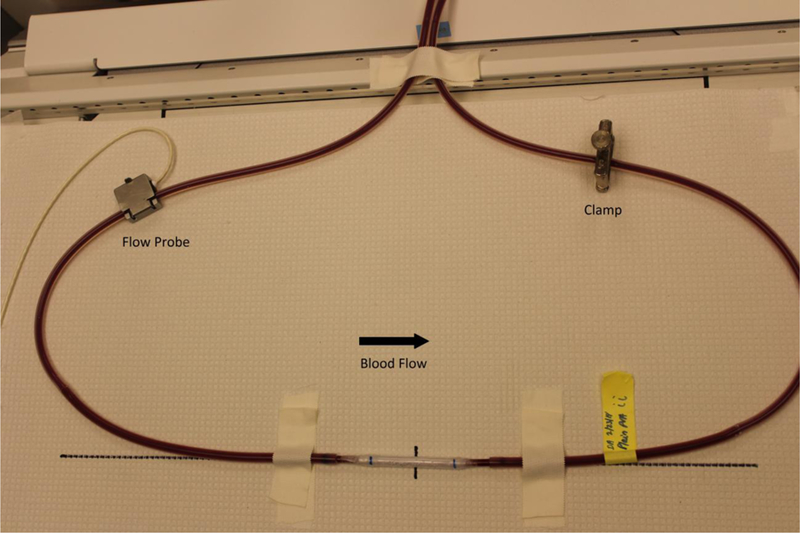
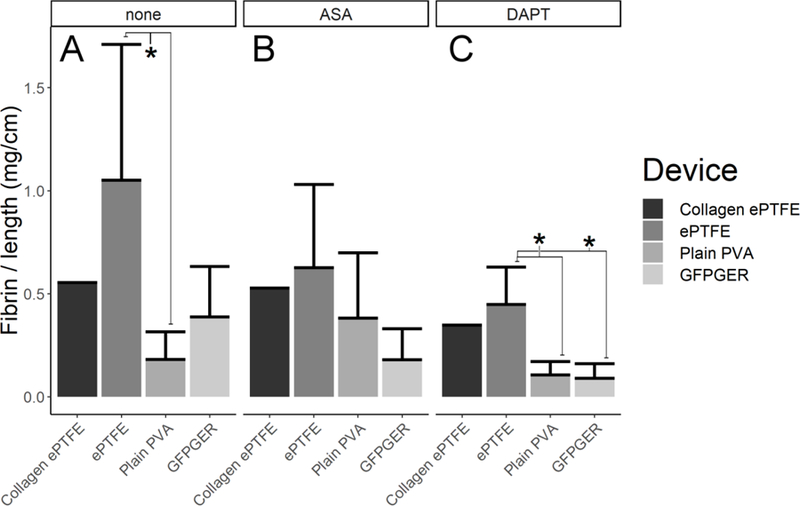
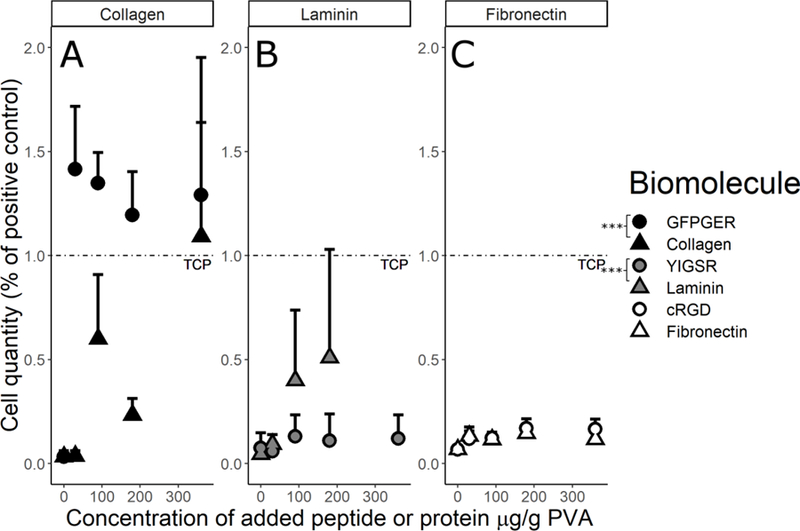
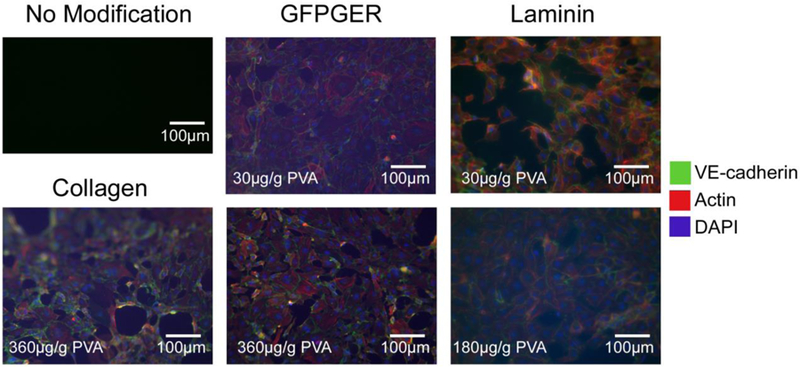
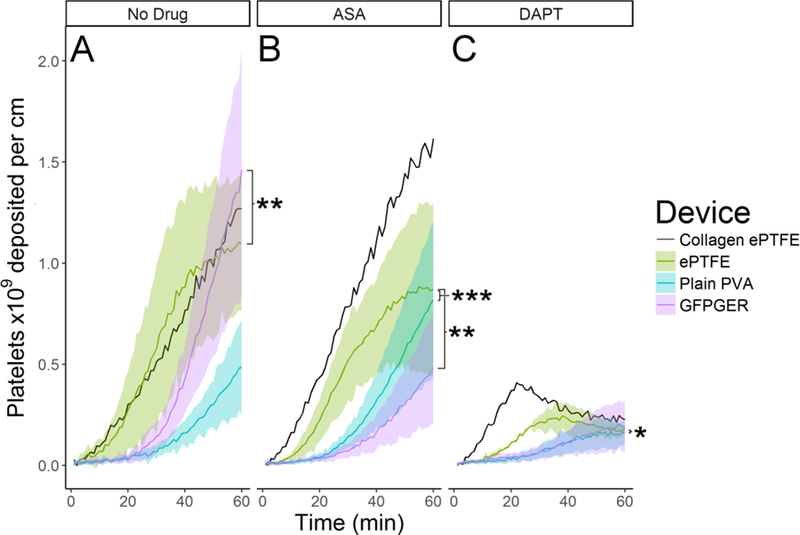
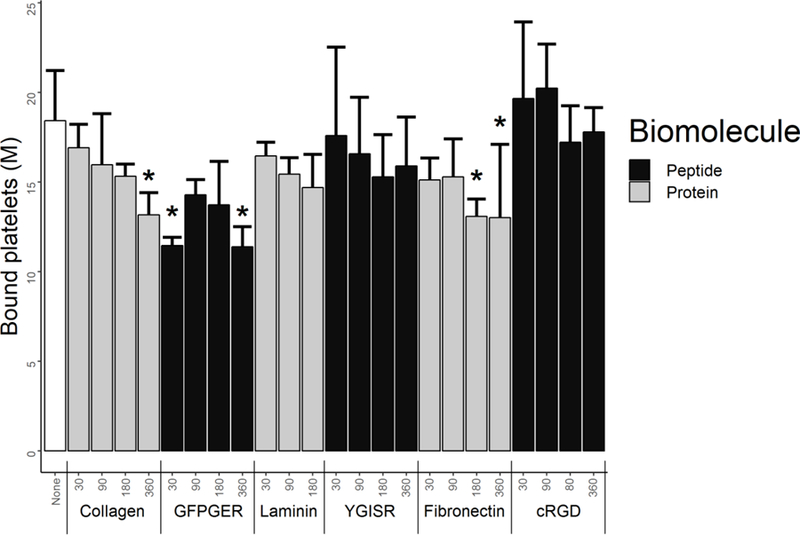
Poly(vinyl alcohol) (PVA) has shown promise as a biomaterial for cardiovascular application. However, its antifouling properties prevent in vivo endothelialization. This work examined the endothelialization and thrombogenicity of modified PVA with different concentrations of proteins and adhesion peptides: collagen, laminin, fibronectin, GFPGER, YIGSR, and cRGD. Material surface properties were quantified, and the endothelialization potential was determined with human endothelial colony forming cells. Additionally, platelet attachment was assessed in vitro with human platelet rich plasma, and promising samples were tested in an ex vivo shunt model. This well-established arteriovenous shunt model was used with and without clinically-relevant antiplatelet therapies, specifically acetylsalicylic acid (ASA) with and without clopidogrel to examine the minimum necessary treatment to prevent thrombosis. Collagen, laminin, and GFPGER biomolecules increased endothelialization, with GFPGER showing the greatest effect at the lowest concentrations. GFPGER-PVA tubes tested under whole blood did exhibit an increase in platelet (but not fibrin) attachment compared to plain PVA and clinical controls. However, application of ASA monotherapy reduced the thrombogenicity of GFPGER-PVA below the clinical control with the ASA. This work is significant in developing cardiovascular biomaterials-increasing endothelialization potential while reducing bleeding side effects by using an antiplatelet monotherapy, typical of clinical patients. STATEMENT OF SIGNIFICANCE: We modified the endothelialization potential of synthetic, hydrogel vascular grafts with proteins and peptides of the vascular tissue matrix. Cell attachment was dramatically increased with the GFPGER peptide, and while some additional platelet attachment was seen under flow with whole blood, this was completely knocked down using clinical antiplatelet monotherapy. This indicates that long-term patency of this biomaterial could be improved without the associated bleeding risk of multiple platelet therapies.
聚乙烯醇(PVA)作为心血管应用的生物材料具有很大的潜力。然而,其抗污性能阻止了体内内皮细胞的形成。本研究考察了不同浓度蛋白质和粘附肽修饰的 PVA 的内皮化和血栓形成特性:胶原蛋白、层粘连蛋白、纤连蛋白、GFPGER、YIGSR 和 cRGD。定量了材料表面特性,并用人内皮集落形成细胞测定了内皮化潜力。此外,还通过富含血小板的人血浆评估了血小板黏附性,并在体外分流模型中测试了有前途的样本。该成熟的动静脉分流模型用于和不用于临床相关抗血小板治疗,具体为乙酰水杨酸(ASA)加和不加氯吡格雷,以检查预防血栓形成所需的最低治疗。胶原蛋白、层粘连蛋白和 GFPGER 生物分子增加了内皮化,其中 GFPGER 在最低浓度时表现出最大的效果。在全血中测试的 GFPGER-PVA 管与普通 PVA 和临床对照相比,确实显示血小板(而非纤维蛋白)黏附增加。然而,ASA 单药治疗可降低 GFPGER-PVA 的血栓形成性,使其低于 ASA 临床对照。这项工作对于开发心血管生物材料具有重要意义,通过使用典型的临床患者的抗血小板单药治疗,提高了内皮化潜力,同时减少了出血副作用。意义声明:我们用血管组织基质的蛋白质和肽修饰了合成的、水凝胶血管移植物的内皮化潜力。GFPGER 肽显著增加了细胞黏附性,虽然在全血流动下观察到一些额外的血小板黏附,但使用临床抗血小板单药治疗完全抑制了这种黏附。这表明这种生物材料的长期通畅性可以得到改善,而不会增加多种血小板治疗相关的出血风险。