Rizwan Muhammad, Yao Yuan, Gorbet Maud B, Tse John, Anderson Deirdre E J, Hinds Monica T, Yim Evelyn K F
Department of Chemical Engineering, University of Waterloo, 200 University Avenue West, Waterloo, ON, Canada N2L 3G1.
Systems Design Engineering, University of Waterloo, 200 University Avenue West, Waterloo, ON, Canada N2L 3G1.
ACS Appl Bio Mater. 2020 Jan 21;3(1):693-703. doi: 10.1021/acsabm.9b01026. Epub 2019 Nov 19.
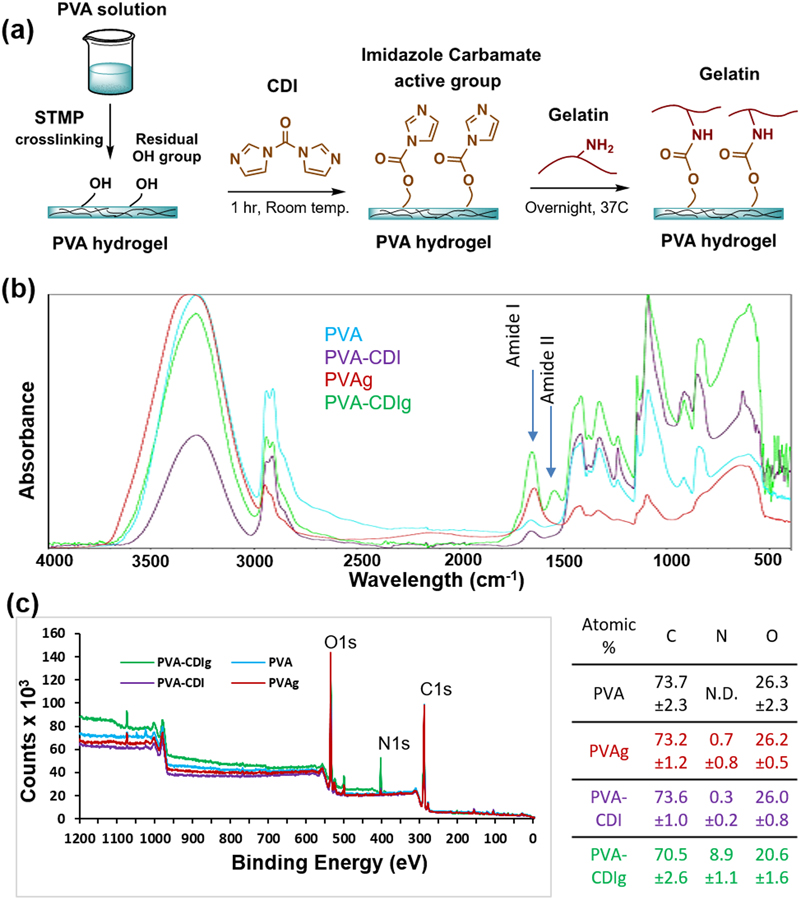
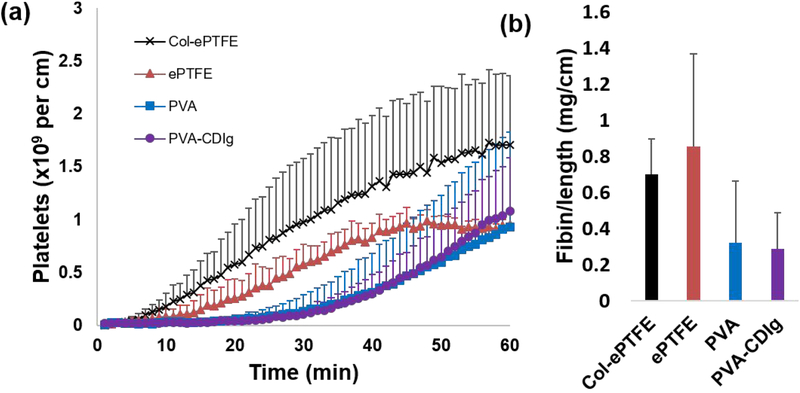
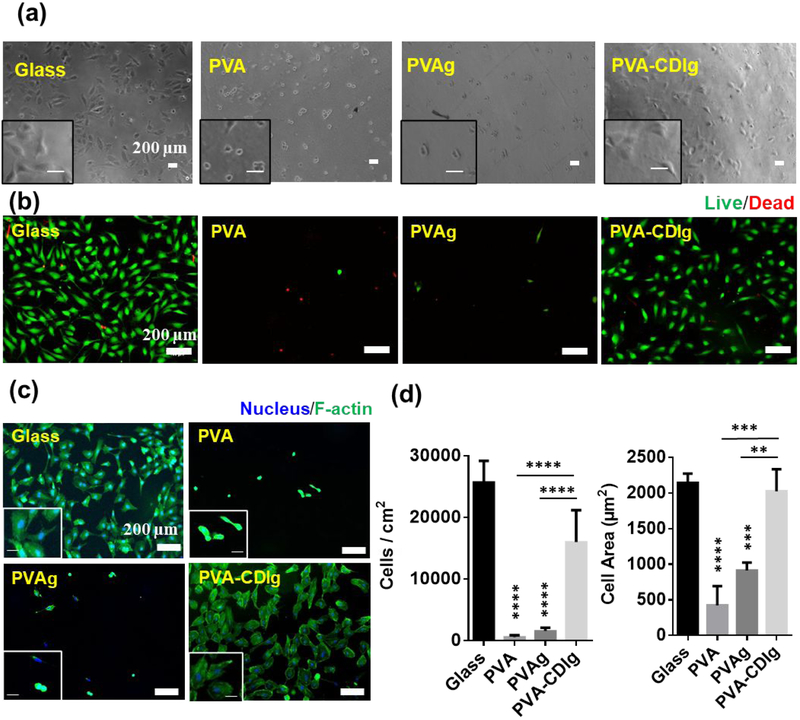
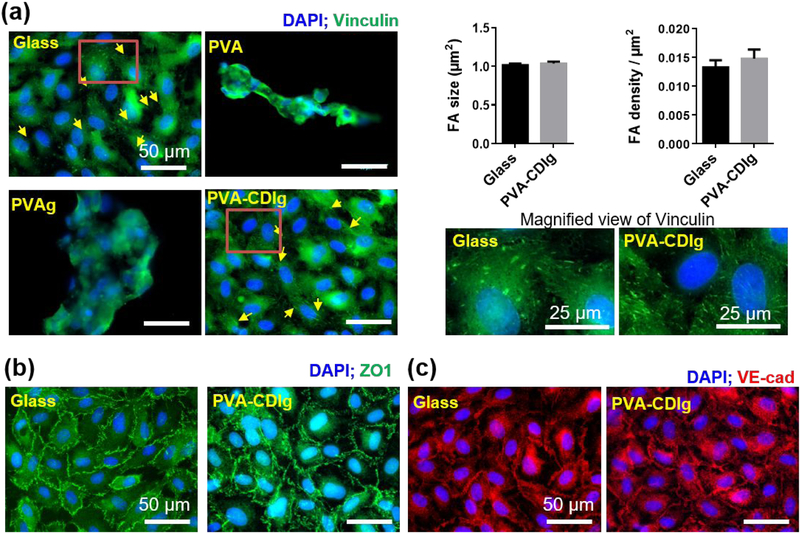
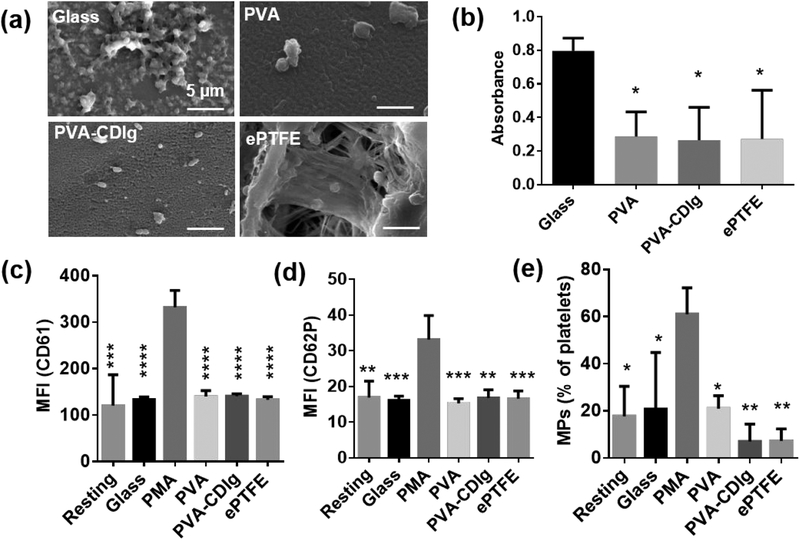
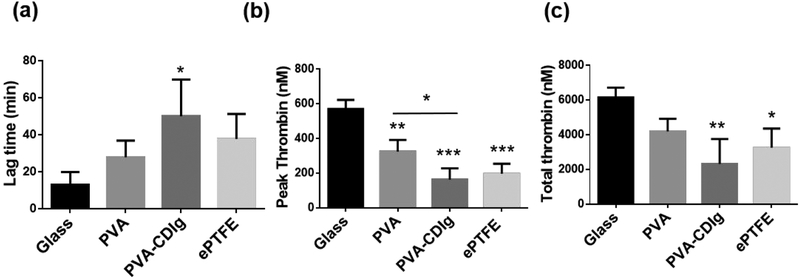
Cardiovascular diseases remain the leading cause of death worldwide. Patency rates of clinically-utilized small diameter synthetic vascular grafts such as Dacron® and expanded polytetrafluoroethylene (ePTFE) to treat cardiovascular disease are inadequate due to lack of endothelialization. Sodium trimetaphosphate (STMP) crosslinked PVA could be potentially employed as blood-compatible small diameter vascular graft for the treatment of cardiovascular disease. However, PVA severely lacks cell adhesion properties, and the efforts to endothelialize STMP-PVA have been insufficient to produce a functioning endothelium. To this end, we developed a one-pot method to conjugate cell-adhesive protein via hydroxyl-to-amine coupling using carbonyldiimidazole by targeting residual hydroxyl groups on crosslinked STMP-PVA hydrogel. Primary human umbilical vascular endothelial cells (HUVECs) demonstrated significantly improved cells adhesion, viability and spreading on modified PVA. Cells formed a confluent endothelial monolayer, and expressed vinculin focal adhesions, cell-cell junction protein zonula occludens 1 (ZO1), and vascular endothelial cadherin (VE-Cadherin). Extensive characterization of the blood-compatibility was performed on modified PVA hydrogel by examining platelet activation, platelet microparticle formation, platelet CD61 and CD62P expression, and thrombin generation, which showed that the modified PVA was blood-compatible. Additionally, grafts were tested under whole, flowing blood without any anticoagulants in a non-human primate, arteriovenous shunt model. No differences were seen in platelet or fibrin accumulation between the modified-PVA, unmodified PVA or clinical, ePTFE controls. This study presents a significant step in the modification of PVA for the development of next generation endothelialized synthetic vascular grafts.
心血管疾病仍然是全球主要的死亡原因。临床上使用的小直径合成血管移植物(如涤纶和膨体聚四氟乙烯(ePTFE))用于治疗心血管疾病时,由于缺乏内皮化,通畅率不足。三聚磷酸钠(STMP)交联的聚乙烯醇(PVA)有可能用作治疗心血管疾病的血液相容性小直径血管移植物。然而,PVA严重缺乏细胞粘附特性,使STMP-PVA内皮化的努力不足以产生有功能的内皮。为此,我们开发了一种单步方法,通过使用羰基二咪唑将细胞粘附蛋白通过羟基到胺的偶联,靶向交联的STMP-PVA水凝胶上的残留羟基。原代人脐血管内皮细胞(HUVECs)在改性PVA上的细胞粘附、活力和铺展显著改善。细胞形成汇合的内皮单层,并表达纽蛋白粘着斑、细胞间连接蛋白紧密连接蛋白1(ZO1)和血管内皮钙粘蛋白(VE-钙粘蛋白)。通过检测血小板活化、血小板微粒形成、血小板CD61和CD62P表达以及凝血酶生成,对改性PVA水凝胶的血液相容性进行了广泛表征,结果表明改性PVA具有血液相容性。此外,在非人类灵长类动物动静脉分流模型中,在没有任何抗凝剂的全血流条件下对移植物进行了测试。在改性PVA、未改性PVA或临床对照ePTFE之间,血小板或纤维蛋白积累没有差异。这项研究为开发下一代内皮化合成血管移植物对PVA进行改性迈出了重要一步。