Department of Physiology and Pharmacology, University of Toledo College of Medicine & Life Sciences, Toledo, OH, USA; Department of Physiology, Augusta University, Augusta, GA, USA.
Department of Physiology and Pharmacology, University of Toledo College of Medicine & Life Sciences, Toledo, OH, USA; Department of Physiology, Augusta University, Augusta, GA, USA.
Pharmacol Res. 2019 Mar;141:276-290. doi: 10.1016/j.phrs.2019.01.015. Epub 2019 Jan 10.
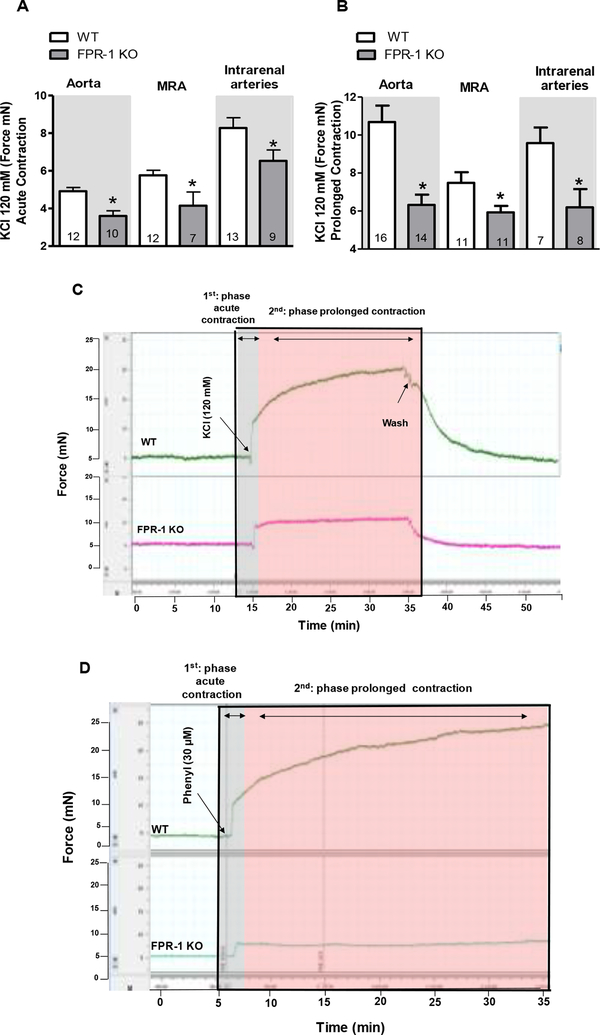
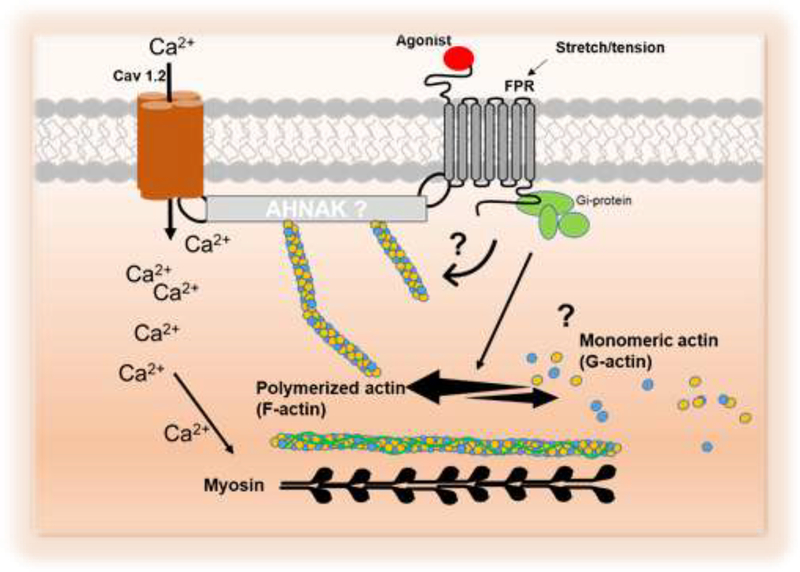
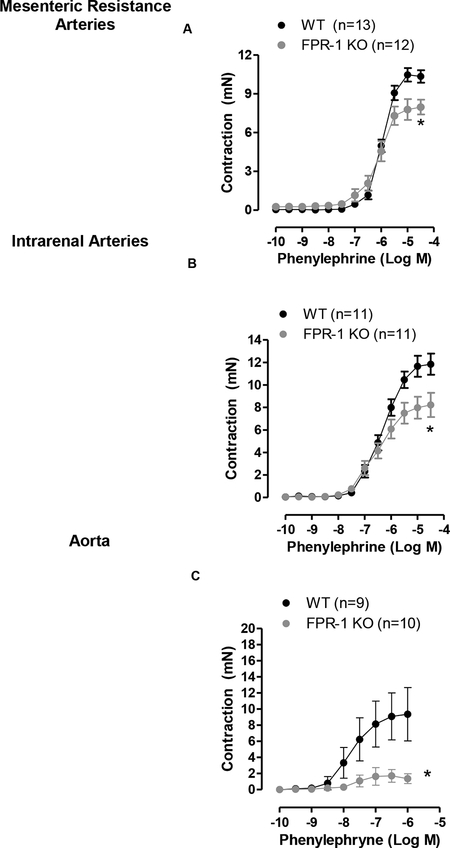
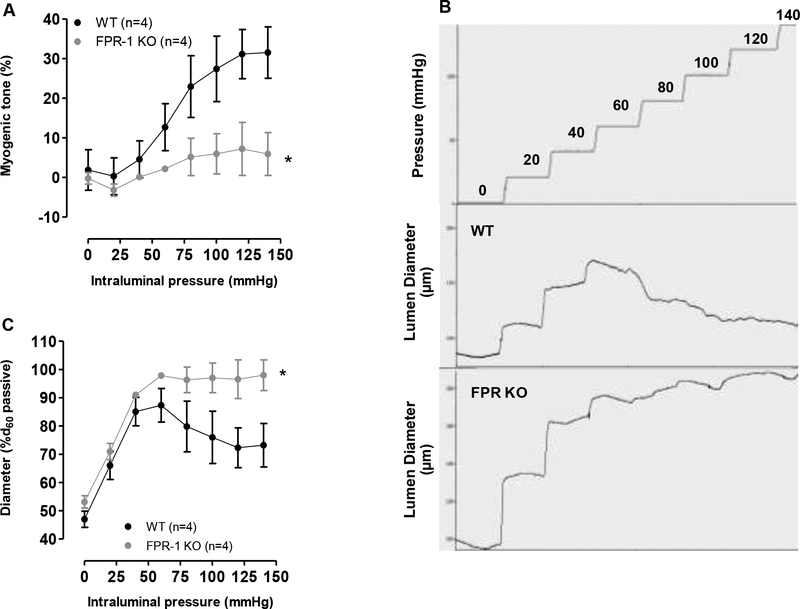
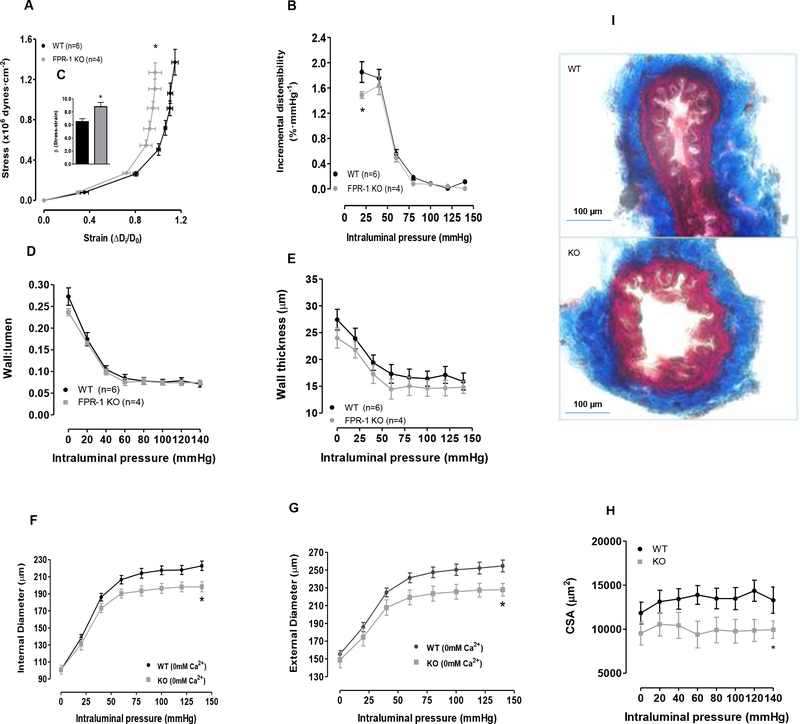
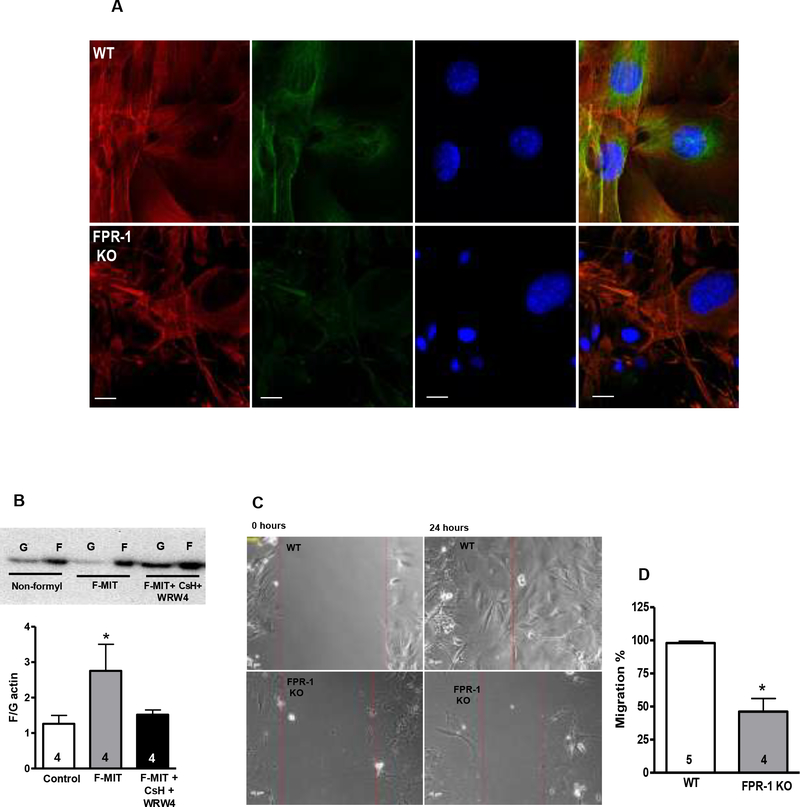
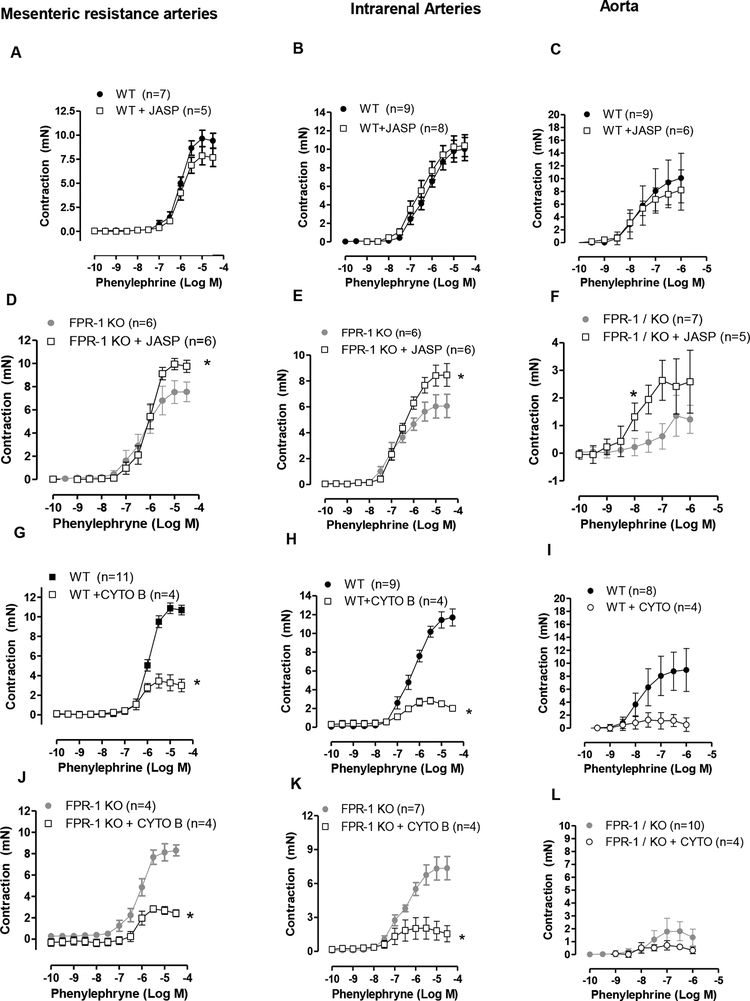
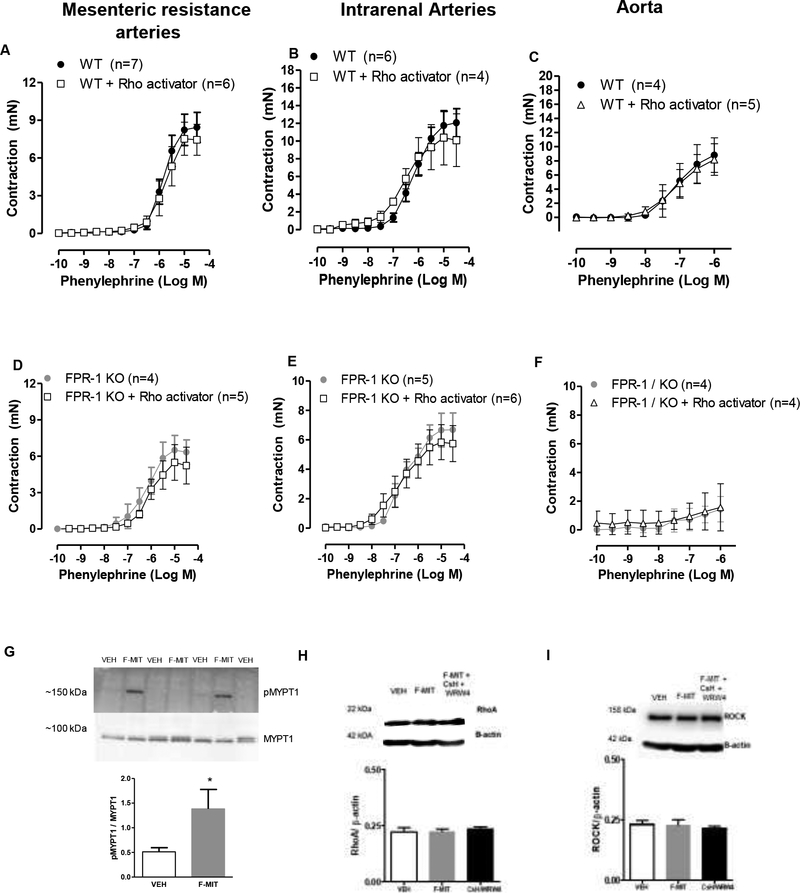
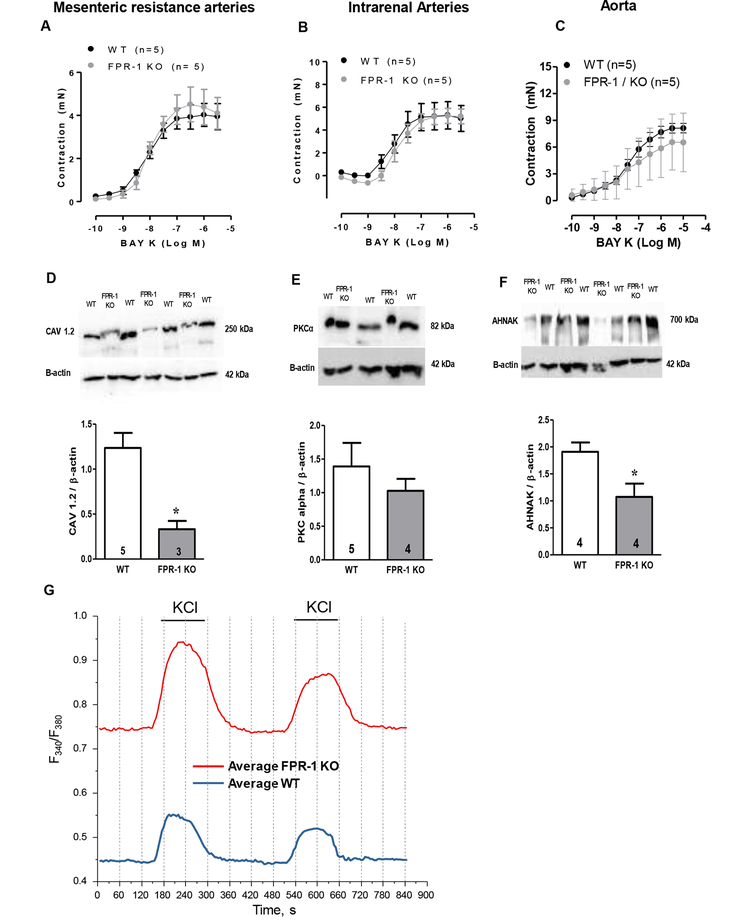
Several human diseases, include cancer and stroke are characterized by changes in immune system activation and vascular contractility. However, the mechanistic foundation of a vascular immuno-physiology network is still largely unknown. Formyl peptide receptor-1 (FPR-1), which plays a vital role in the function of the innate immune system, is widely expressed in arteries, but its role in vascular plasticity is unclear. We questioned why a receptor that is crucial for immune defense, and cell motility in leukocytes, would be expressed in vascular smooth muscle cells (VSMCs). We hypothesized that activation of FPR-1 in arteries is important for the temporal reorganization of actin filaments, and consequently, changes in vascular function, similar to what is observed in neutrophils. To address our hypothesis, we used FPR-1 knockout and VSMCs lacking FPR-1. We observed that FPR-1 activation induces actin polymerization in wild type VSMCs. Absence of FPR-1 in the vasculature significantly decreased vascular contraction and induced loss of myogenic tone to elevated intraluminal pressures via disruption of actin polymerization. Actin polymerization activator ameliorated these responses. In conclusion, we have established a novel role for FPR-1 in VSMC contractility and motility, similar to the one observed in sentinel cells of the innate immune system. This discovery is fundamental for vascular immuno-pathophysiology, given that FPR-1 in VSMCs not only functions as an immune system receptor, but it also has an important role for the dynamic plasticity of arteries.
几种人类疾病,包括癌症和中风,其特征是免疫系统激活和血管收缩性发生变化。然而,血管免疫生理学网络的机制基础在很大程度上仍然未知。甲酰肽受体-1(FPR-1)在先天免疫系统的功能中起着至关重要的作用,它广泛表达于动脉中,但它在血管可塑性中的作用尚不清楚。我们想知道为什么一种在白细胞中对免疫防御和细胞迁移至关重要的受体,会在血管平滑肌细胞(VSMCs)中表达。我们假设,动脉中 FPR-1 的激活对于肌动蛋白丝的时空重组织很重要,因此,血管功能发生变化,类似于在中性粒细胞中观察到的那样。为了验证我们的假设,我们使用了 FPR-1 敲除和缺乏 FPR-1 的 VSMCs。我们观察到 FPR-1 激活诱导野生型 VSMCs 中的肌动蛋白聚合。血管中 FPR-1 的缺失显著降低了血管收缩,并通过破坏肌动蛋白聚合导致血管功能丧失和对升高的管腔内压力的肌源性张力丧失。肌动蛋白聚合激活剂改善了这些反应。总之,我们已经确立了 FPR-1 在 VSMC 收缩性和运动性中的新作用,与先天免疫系统的哨兵细胞中观察到的作用相似。鉴于 FPR-1 在 VSMCs 中的功能不仅作为免疫系统受体,而且对于动脉的动态可塑性也具有重要作用,因此这一发现对于血管免疫病理生理学是至关重要的。