Instituto de Histología y Embriología, Facultad de Ciencias Médicas, Universidad Nacional de Cuyo-CONICET, Mendoza, Argentina.
PLoS One. 2019 Jan 14;14(1):e0209820. doi: 10.1371/journal.pone.0209820. eCollection 2019.
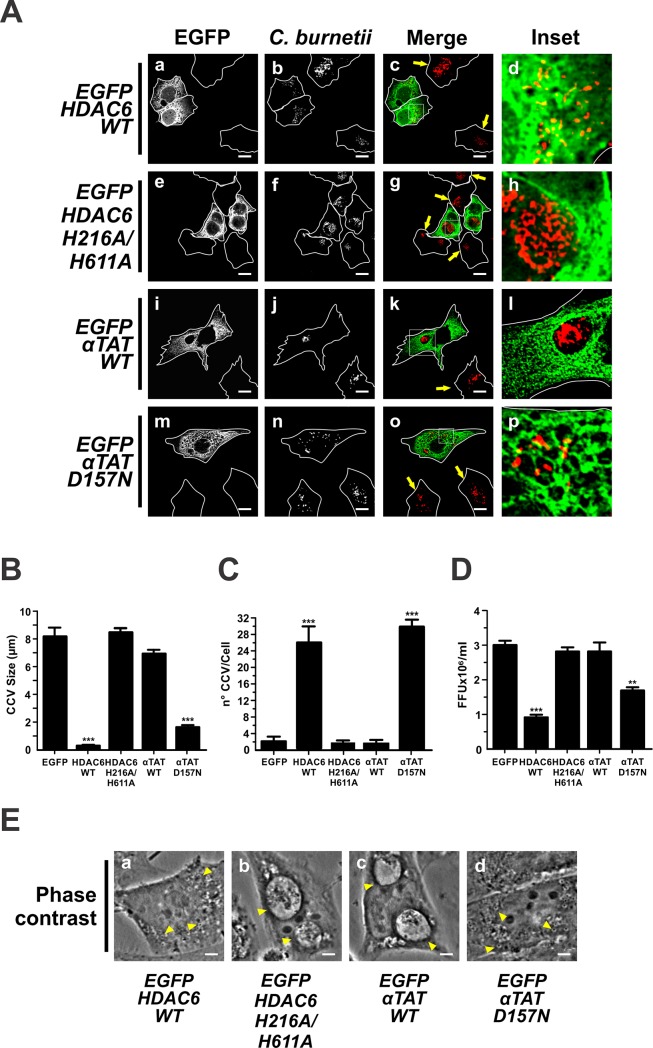
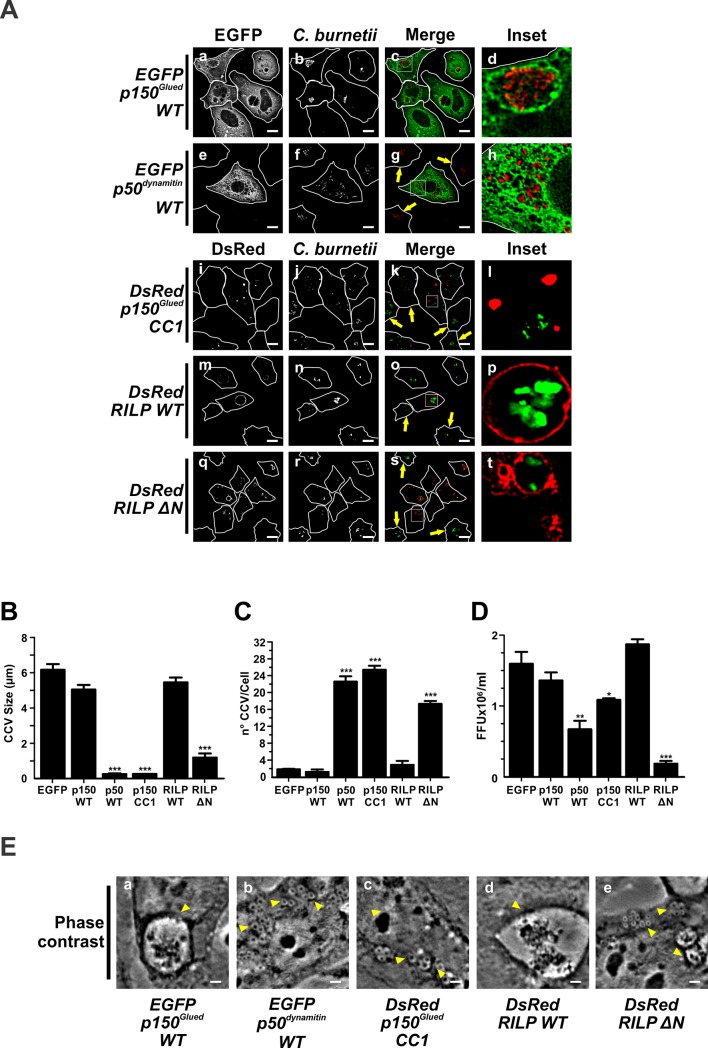
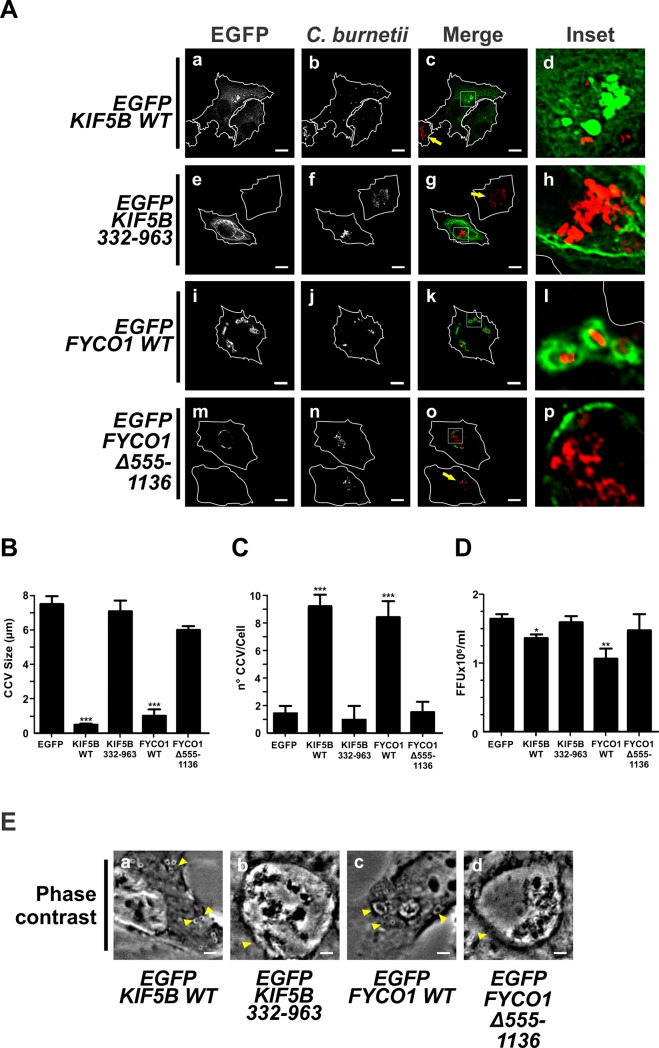
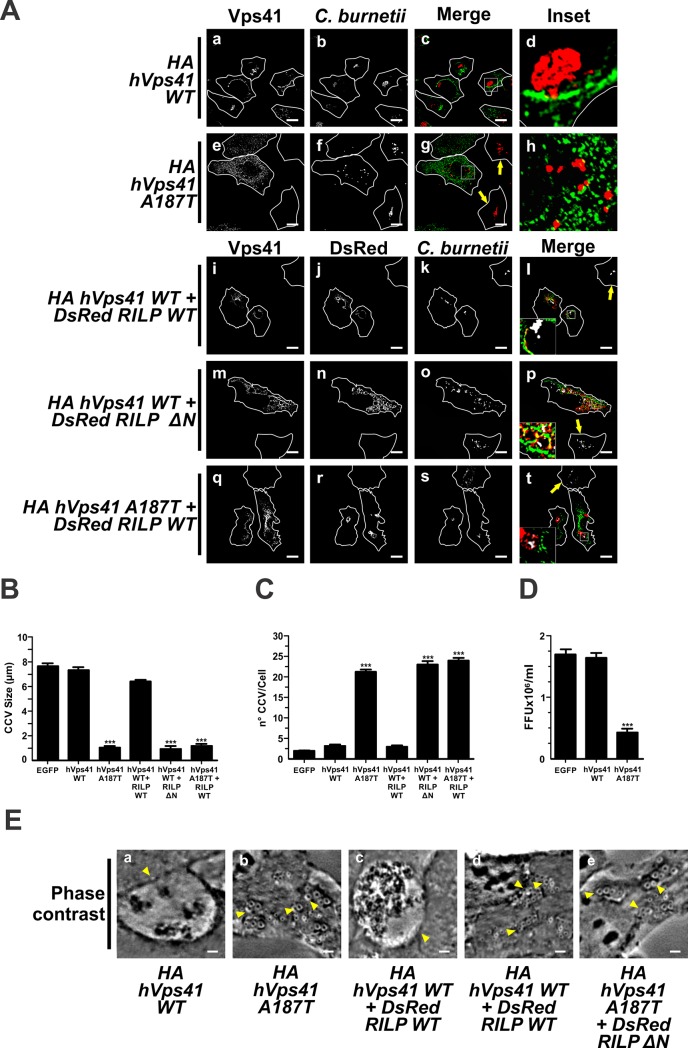
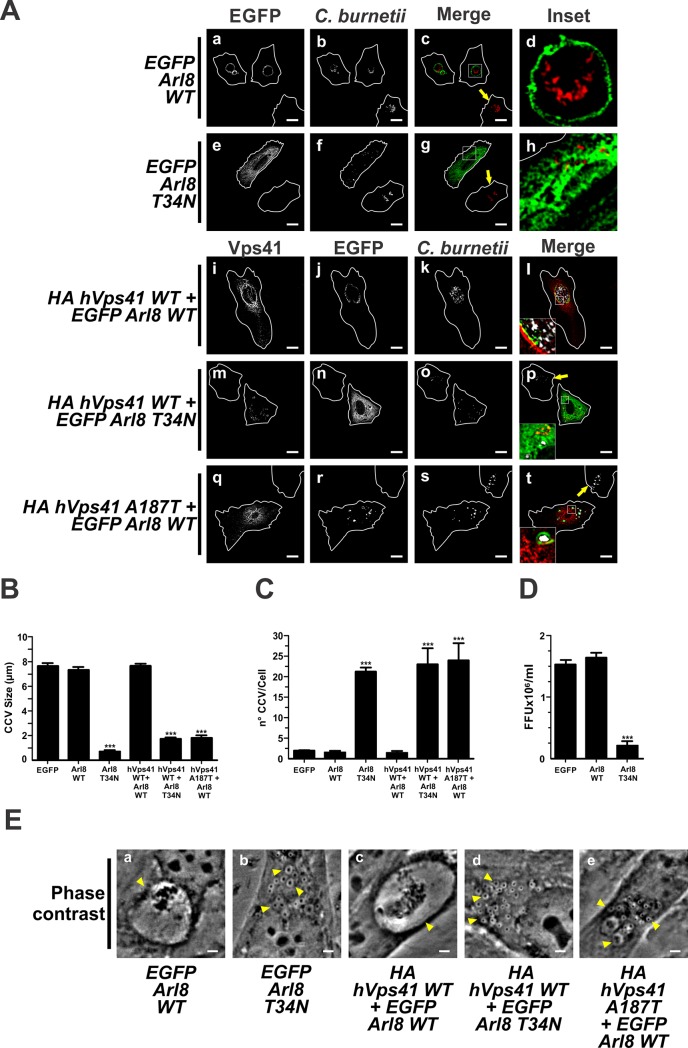
Microtubules (Mts) are dynamic cytoskeleton structures that play a key role in vesicular transport. The Mts-mediated transport depends on motor proteins named kinesins and the dynein/dynactin motor complex. The Rab7 adapter protein FYCO1 controls the anterograde transport of the endocytic compartments through the interaction with the kinesin KIF5. Rab7 and its partner RILP induce the recruitment of dynein/dynactin to late endosomes regulating its retrograde transport to the perinuclear area to fuse with lysosomes. The late endosomal-lysosomal fusion is regulated by the HOPS complex through its interaction with RILP and the GTPase Arl8. Coxiella burnetii (Cb), the causative agent of Q fever, is an obligate intracellular pathogen, which generates a large compartment with autophagolysosomal characteristics named Cb-containing vacuole (CCV). The CCV forms through homotypic fusion between small non-replicative CCVs (nrCCV) and through heterotypic fusion with other compartments, such as endosomes and lysosomes. In this work, we characterise the role of Mts, motor proteins, RILP/Rab7 and Arl8 on the CCV biogenesis. The formation of the CCV was affected when either the dynamics and/or the acetylation state of Mts were modified. Similarly, the overexpression of the dynactin subunit non-functional mutants p150Glued and RILP led to the formation of small nrCCVs. This phenomenon is not observed in cells overexpressing WT proteins, the motor KIF5 or its interacting protein FYCO1. The formation of the CCV was normal in infected cells that overexpressed Arl8 alone or together with hVps41 (a HOPS subunit) or in cells co-overexpressing hVps41 and RILP. The dominant negative mutant of Arl8 and the non-functional hVps41 inhibited the formation of the CCV. When the formation of CCV was affected, the bacterial multiplication diminished. Our results suggest that nrCCVs recruit the molecular machinery that regulate the Mts-dependent retrograde transport, Rab7/RILP and the dynein/dynactin system, as well as the tethering processes such as HOPS complex and Arl8 to finally originate the CCV where C. burnetii multiplies.
微管(Mts)是一种动态的细胞骨架结构,在囊泡运输中起着关键作用。Mts 介导的运输依赖于被称为驱动蛋白的马达蛋白和动力蛋白/动力蛋白复合物。Rab7 衔接蛋白 FYCO1 通过与驱动蛋白 KIF5 的相互作用控制内吞小泡的正向运输。Rab7 及其伴侣 RILP 诱导动力蛋白/动力蛋白复合物募集到晚期内体,调节其逆行运输到核周区与溶酶体融合。晚期内体-溶酶体融合受 HOPS 复合物调节,通过其与 RILP 和 GTPase Arl8 的相互作用。柯克斯体(Cb)是 Q 热的病原体,是一种必需的细胞内病原体,它产生一个具有自噬溶酶体特征的大型隔室,称为含有 Cb 的空泡(CCV)。CCV 通过小非复制性 CCV(nrCCV)之间的同源融合以及与其他隔室(如内体和溶酶体)之间的异源融合而形成。在这项工作中,我们描述了 Mts、马达蛋白、RILP/Rab7 和 Arl8 在 CCV 发生中的作用。当 Mts 的动态和/或乙酰化状态发生改变时,CCV 的形成受到影响。同样,动力蛋白复合物亚基非功能性突变体 p150Glued 和 RILP 的过表达导致小 nrCCV 的形成。在过表达 WT 蛋白、马达蛋白 KIF5 或其相互作用蛋白 FYCO1 的细胞中,未观察到这种现象。在单独过表达 Arl8 或与 HOPS 亚基 hVps41 一起过表达或在共过表达 hVps41 和 RILP 的感染细胞中,CCV 的形成正常。Arl8 的显性负突变体和非功能性 hVps41 抑制了 CCV 的形成。当 CCV 的形成受到影响时,细菌的增殖减少。我们的结果表明,nrCCV 招募了调节 Mts 依赖性逆行运输、Rab7/RILP 和动力蛋白/动力蛋白复合物以及连接过程(如 HOPS 复合物和 Arl8)的分子机制,最终形成了 C. burnetii 增殖的 CCV。