Johansson Marie, Rocha Nuno, Zwart Wilbert, Jordens Ingrid, Janssen Lennert, Kuijl Coenraad, Olkkonen Vesa M, Neefjes Jacques
Department of Molecular Medicine, National Public Health Institute, Biomedicum, FI-00251 Helsinki, Finland.
J Cell Biol. 2007 Feb 12;176(4):459-71. doi: 10.1083/jcb.200606077. Epub 2007 Feb 5.
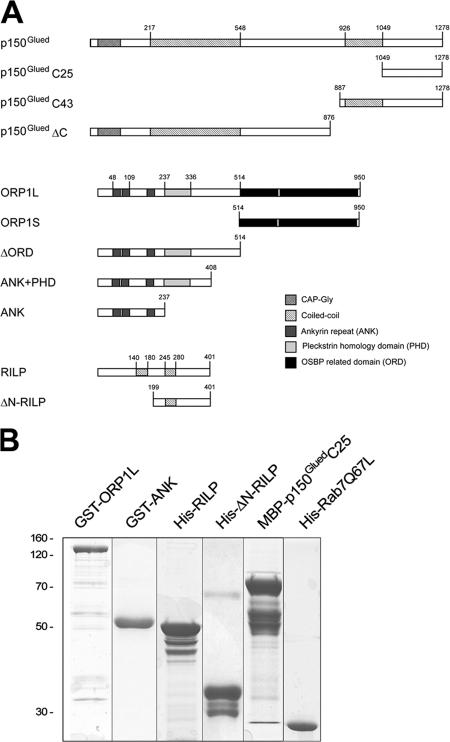
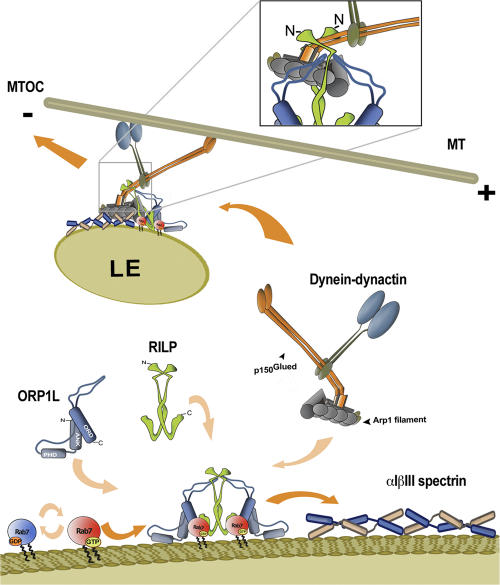
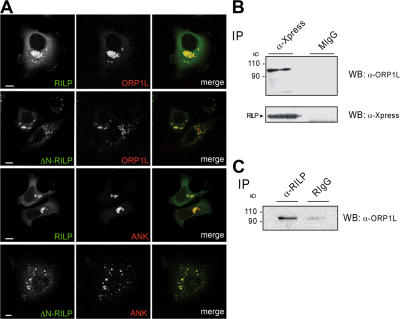
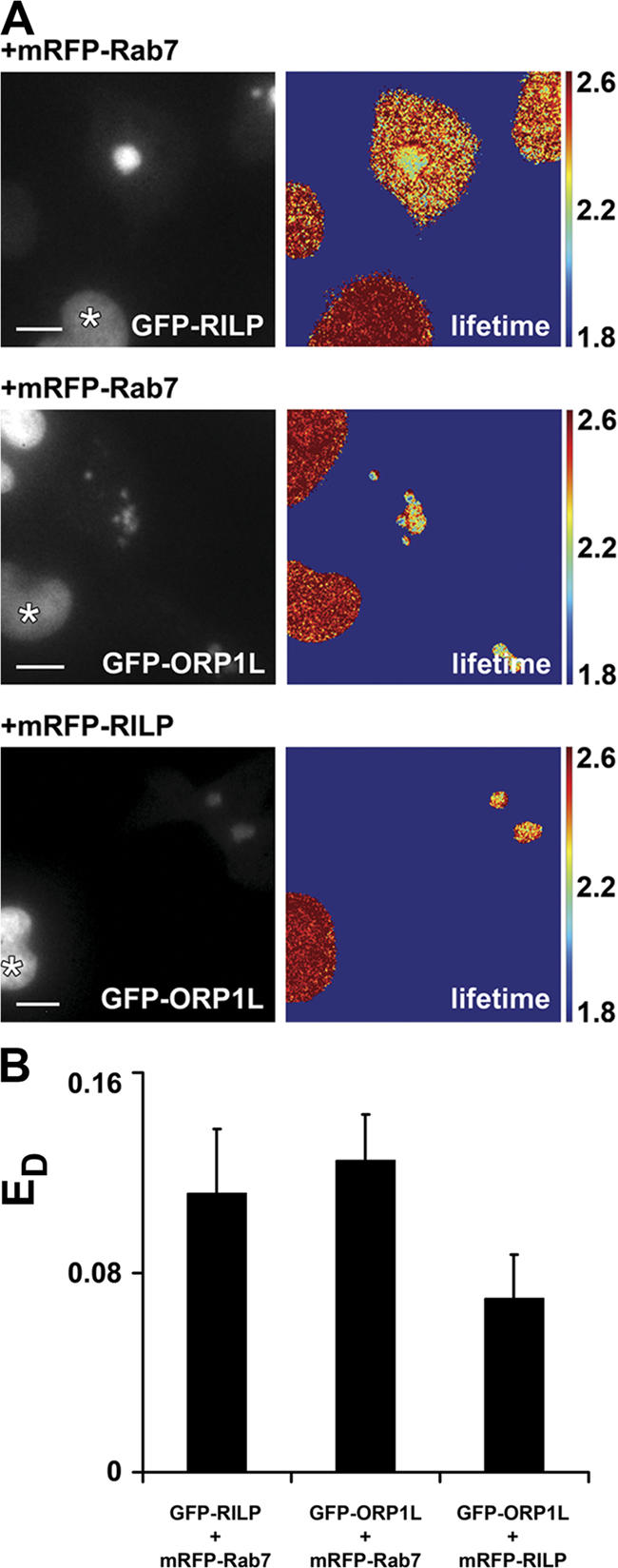
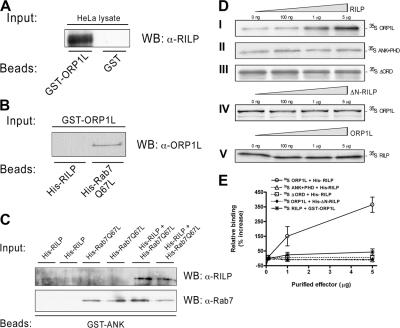
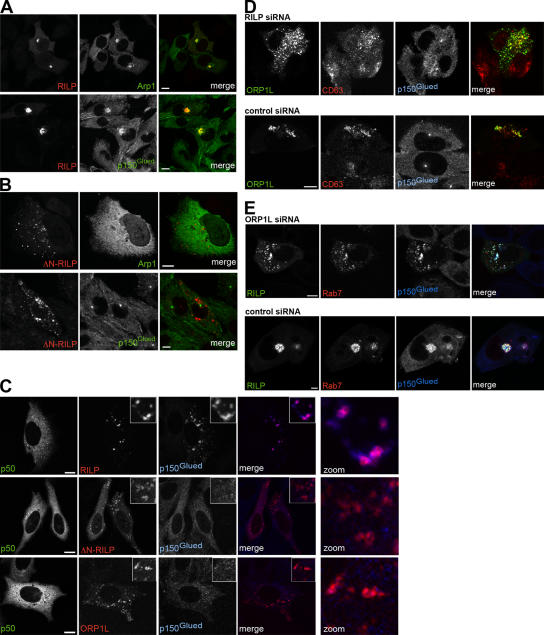
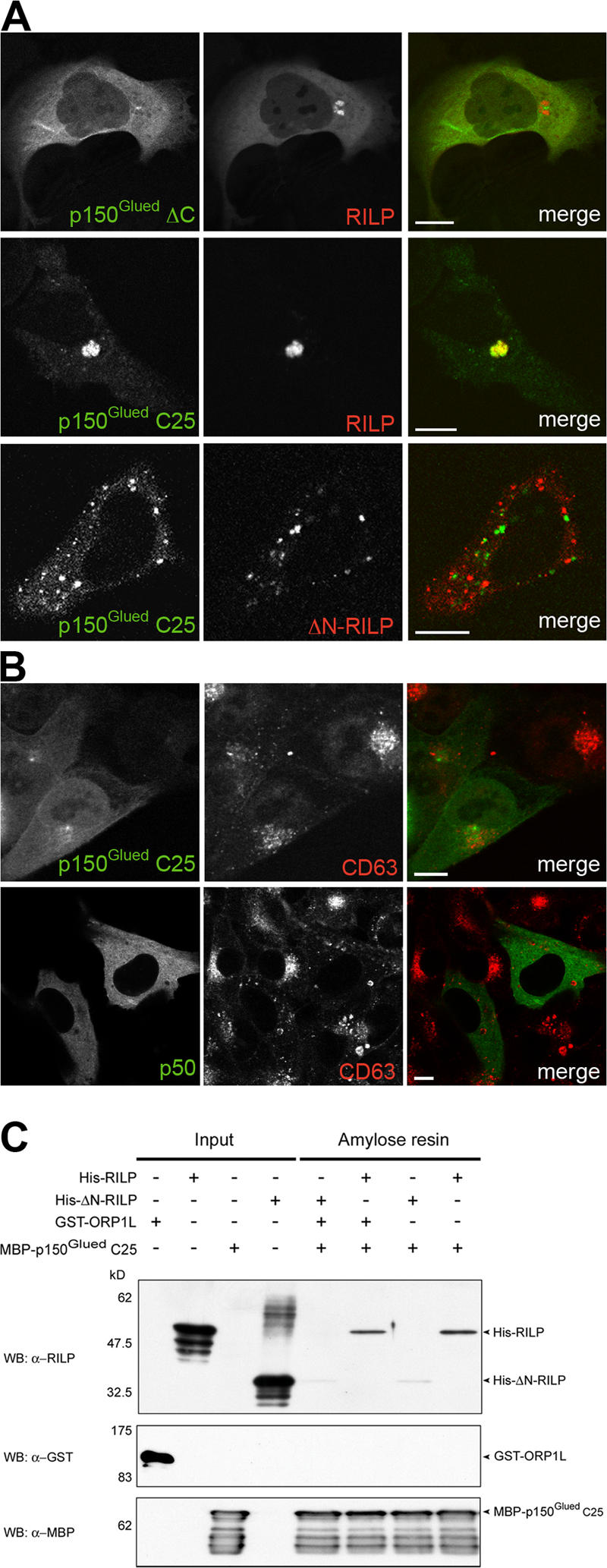
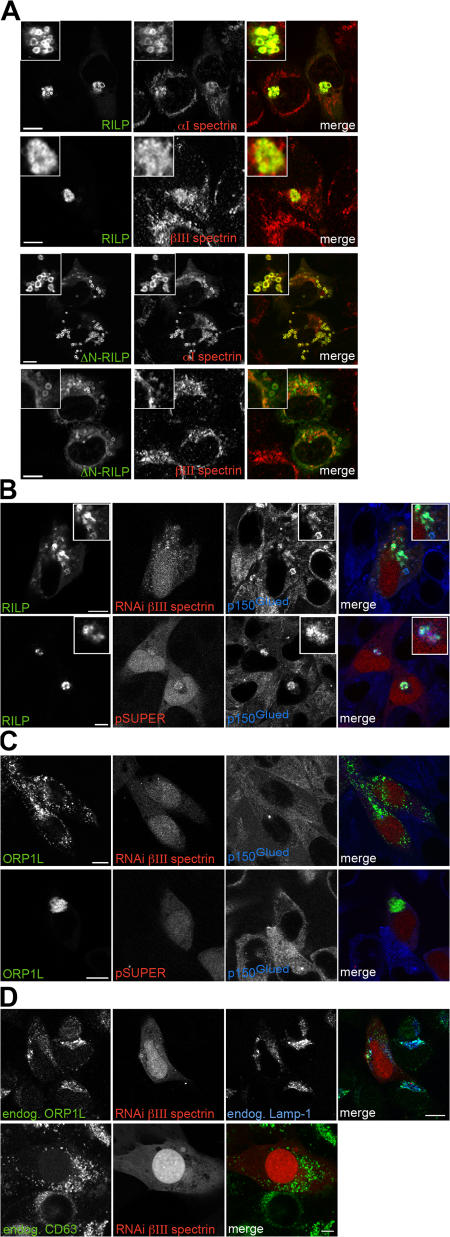
The small GTPase Rab7 controls late endocytic transport by the minus end-directed motor protein complex dynein-dynactin, but how it does this is unclear. Rab7-interacting lysosomal protein (RILP) and oxysterol-binding protein-related protein 1L (ORP1L) are two effectors of Rab7. We show that GTP-bound Rab7 simultaneously binds RILP and ORP1L to form a RILP-Rab7-ORP1L complex. RILP interacts directly with the C-terminal 25-kD region of the dynactin projecting arm p150(Glued), which is required for dynein motor recruitment to late endocytic compartments (LEs). Still, p150(Glued) recruitment by Rab7-RILP does not suffice to induce dynein-driven minus-end transport of LEs. ORP1L, as well as betaIII spectrin, which is the general receptor for dynactin on vesicles, are essential for dynein motor activity. Our results illustrate that the assembly of microtubule motors on endosomes involves a cascade of linked events. First, Rab7 recruits two effectors, RILP and ORP1L, to form a tripartite complex. Next, RILP directly binds to the p150(Glued) dynactin subunit to recruit the dynein motor. Finally, the specific dynein motor receptor Rab7-RILP is transferred by ORP1L to betaIII spectrin. Dynein will initiate translocation of late endosomes to microtubule minus ends only after interacting with betaIII spectrin, which requires the activities of Rab7-RILP and ORP1L.
小GTP酶Rab7通过向负端移动的动力蛋白复合物动力蛋白-动力激活蛋白控制晚期内吞运输,但具体机制尚不清楚。Rab7相互作用溶酶体蛋白(RILP)和氧化固醇结合蛋白相关蛋白1L(ORP1L)是Rab7的两个效应器。我们发现,结合GTP的Rab7同时结合RILP和ORP1L,形成RILP-Rab7-ORP1L复合物。RILP直接与动力激活蛋白突出臂p150(Glued)的C端25-kD区域相互作用,这是动力蛋白募集到晚期内吞区室(LEs)所必需的。然而,Rab7-RILP介导的p150(Glued)募集不足以诱导动力蛋白驱动的LEs负端运输。ORP1L以及βIII血影蛋白(囊泡上动力激活蛋白的通用受体)对于动力蛋白的活性至关重要。我们的结果表明,内体上微管动力蛋白的组装涉及一系列连锁事件。首先,Rab7募集两个效应器RILP和ORP1L,形成三方复合物。接下来,RILP直接与p150(Glued)动力激活蛋白亚基结合,募集动力蛋白。最后,特定的动力蛋白受体Rab7-RILP由ORP1L转移至βIII血影蛋白。只有在与βIII血影蛋白相互作用后,动力蛋白才会启动晚期内体向微管负端的转运,而这需要Rab7-RILP和ORP1L的活性。