Department of Veterinary Pathobiology, University of Missouri, Columbia, Missouri, USA.
Laboratory of Infectious Disease Research, University of Missouri, Columbia, Missouri, USA.
Infect Immun. 2019 Mar 25;87(4). doi: 10.1128/IAI.00757-18. Print 2019 Apr.
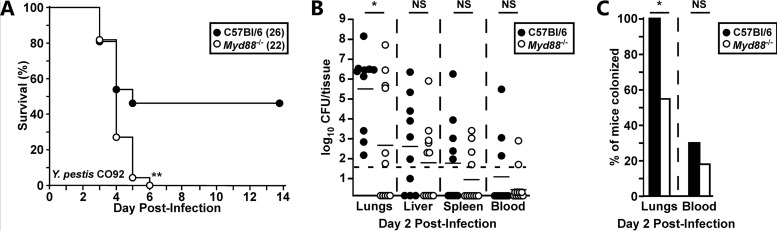
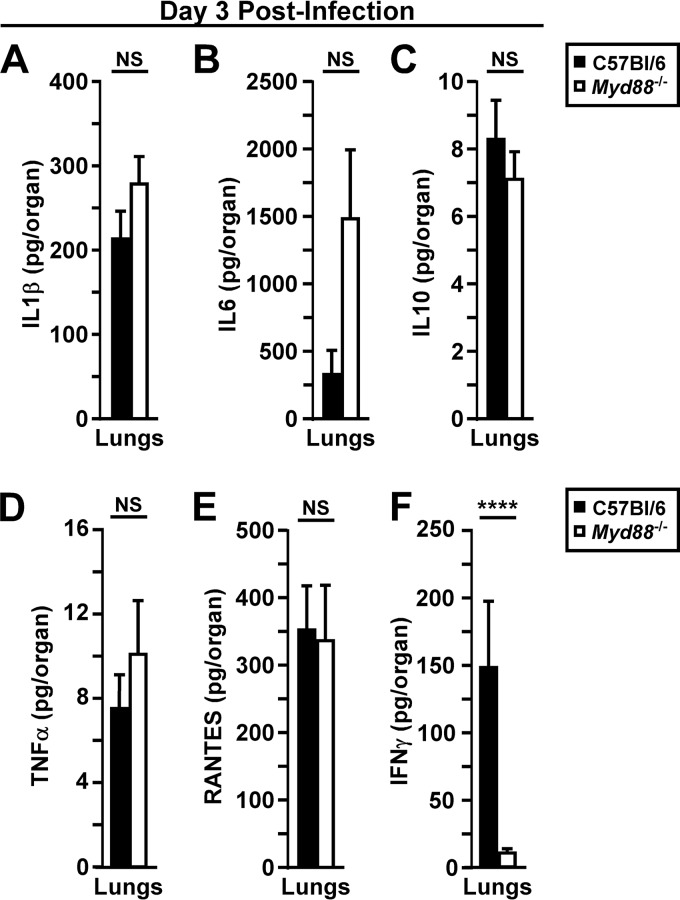
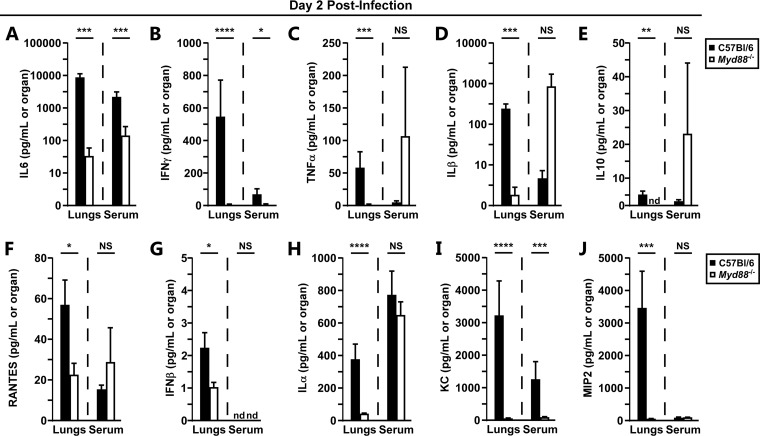
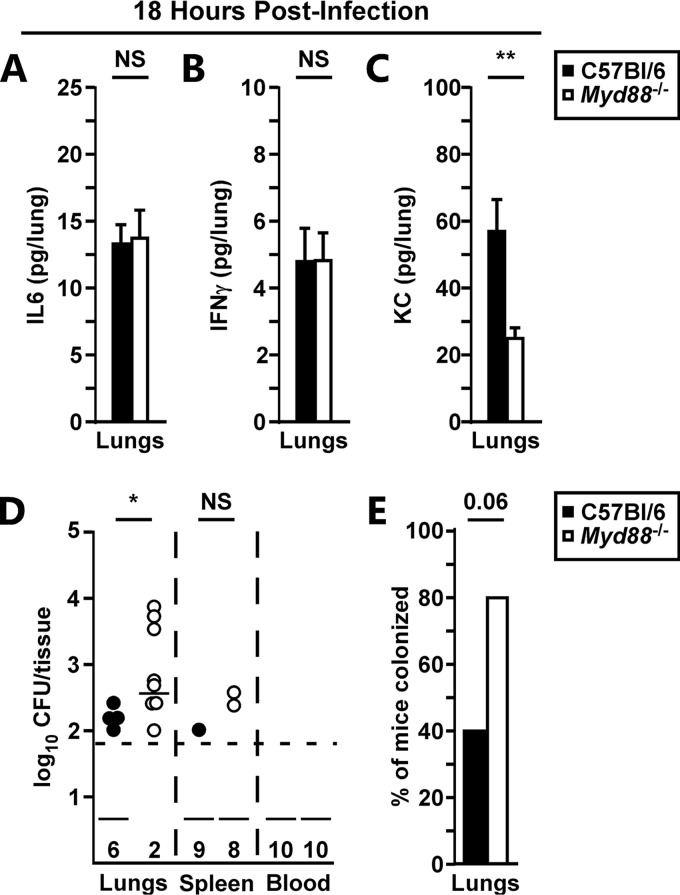
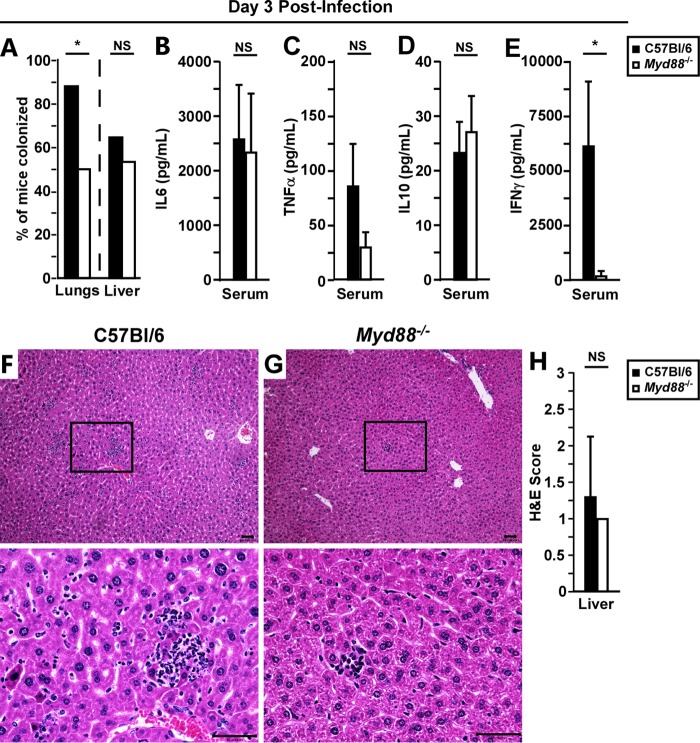
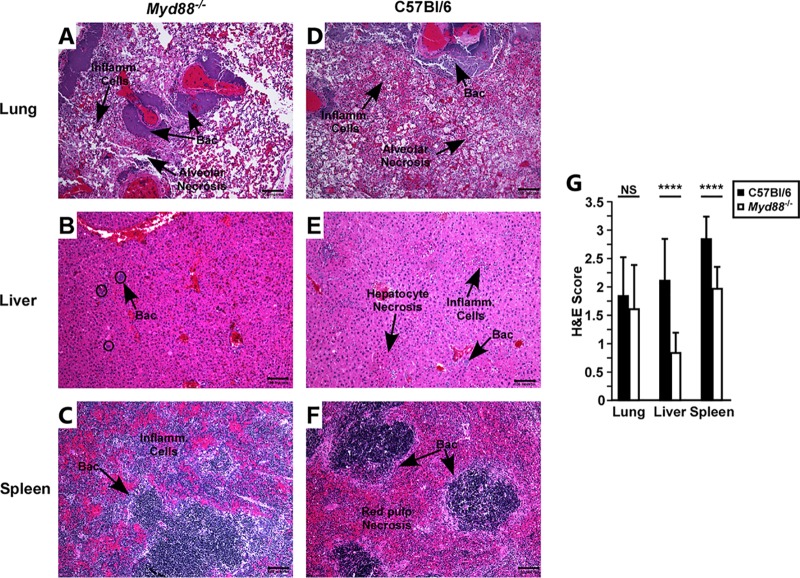
causes bubonic, pneumonic, and septicemic plague. Although no longer responsible for pandemic outbreaks, pneumonic plague continues to be a challenge for medical treatment and has been classified as a reemerging disease in some parts of the world. In the early stage of infection, inflammatory responses are believed to be suppressed by virulence factors in order to prevent clearance, while later, the hyperactivation of inflammation contributes to the progression of disease. In this work, we sought to identify the host factors that mediate this process and studied the role of the Toll/interleukin 1 (IL-1) receptor adapter and major inflammatory mediator myeloid differentiation primary response 88 (MyD88) in pneumonic plague. We show that pulmonary challenge of mice with wild-type (WT) results in significant loss of pro- and anti-inflammatory cytokines and chemokines, especially gamma interferon (IFN-γ) and KC, in the lungs compared to that in WT mice. Bacterial growth in the lungs occurred more rapidly in the WT mice, however, indicating a role for the MyD88 response in facilitating the primary lung infection. Nevertheless, mice were more sensitive to lethality from secondary septicemic plague. Together these findings indicate a central role for MyD88 during the biphasic inflammatory response to pulmonary infection. In the early phase, low-level MyD88-dependent chemokine expression limits initial growth but facilitates access to a protected replicative niche. The later hyperinflammatory phase is partially MyD88 dependent and ineffective in the lungs but controls systemic infection and reduces the progression of secondary septicemic plague.
导致腺鼠疫、肺鼠疫和败血型鼠疫。虽然不再引发大流行疫情,但肺鼠疫仍然是治疗的挑战,并在世界上某些地区已被归类为再现疾病。在感染的早期阶段,炎症反应被认为被毒力因子抑制以防止清除,而在后期,炎症的过度激活导致疾病进展。在这项工作中,我们试图确定介导这一过程的宿主因素,并研究 Toll/白细胞介素 1(IL-1)受体接头和主要炎症介质髓样分化初级反应 88(MyD88)在肺鼠疫中的作用。我们表明,与野生型(WT)小鼠相比,WT 小鼠肺部受到野生型(WT)的肺部攻击会导致肺部促炎和抗炎细胞因子和趋化因子(尤其是γ干扰素(IFN-γ)和 KC)的显著丧失。然而,在 WT 小鼠中,肺部的细菌生长更快,表明 MyD88 反应在促进原发性肺部感染中起作用。尽管如此,小鼠对继发性败血型鼠疫的致死性更为敏感。这些发现共同表明 MyD88 在肺部 感染的双相炎症反应中起核心作用。在早期阶段,低水平的 MyD88 依赖性趋化因子表达限制了初始生长,但有利于 进入受保护的复制生态位。后期的过度炎症期部分依赖于 MyD88,在肺部无效,但控制全身感染并减少继发性败血型鼠疫的进展。