Department of Pharmacology and Cancer Biology, Duke University Medical Center, Durham, NC, USA.
Division of Medical Oncology, Department of Medicine, Duke University Medical Center, Durham, NC, USA.
Oncogene. 2019 May;38(18):3402-3414. doi: 10.1038/s41388-018-0672-7. Epub 2019 Jan 14.
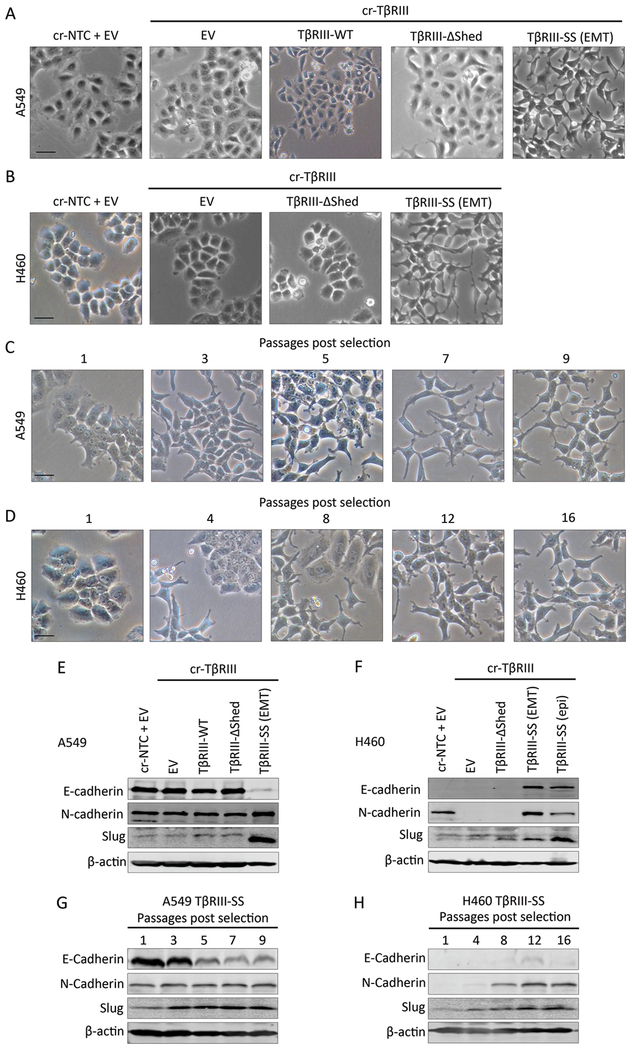
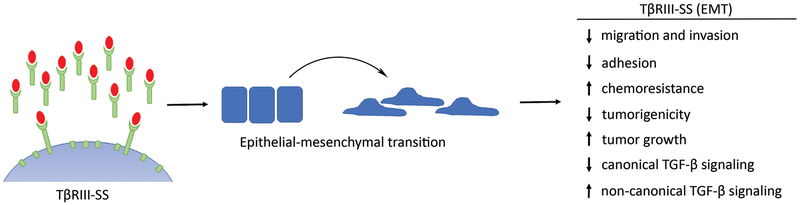
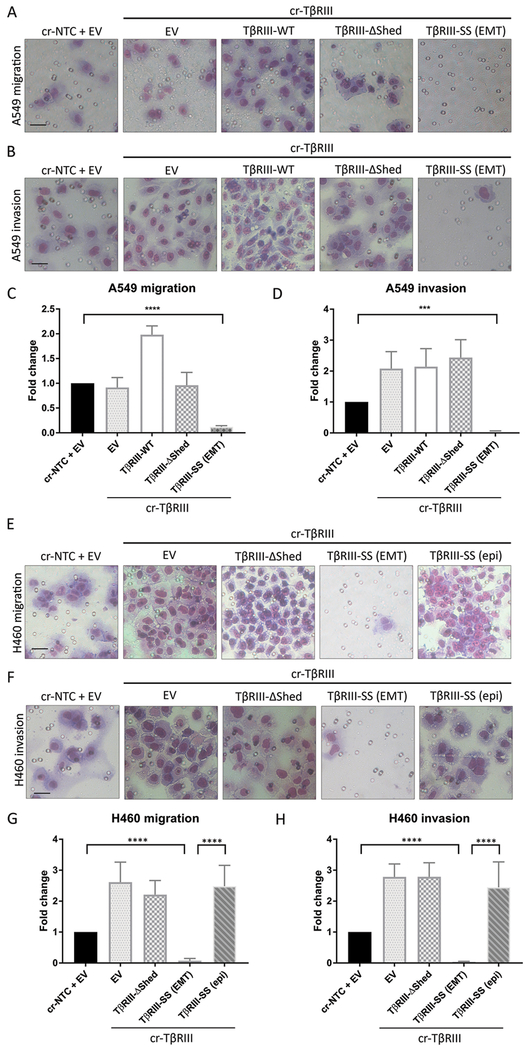
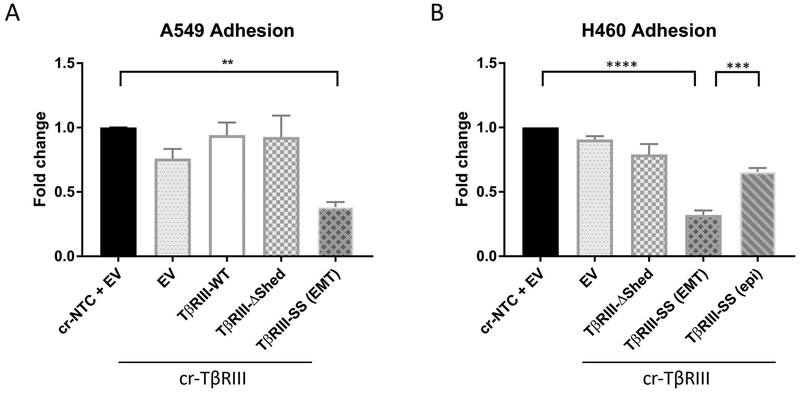
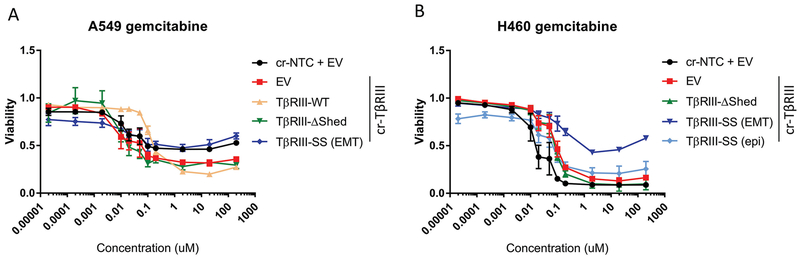
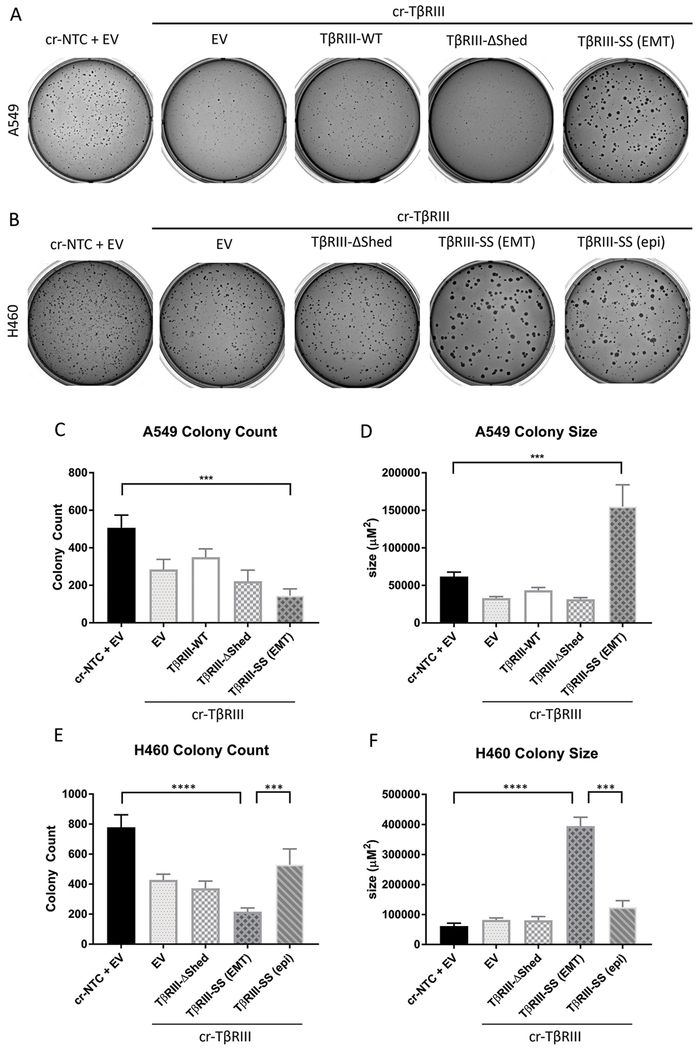
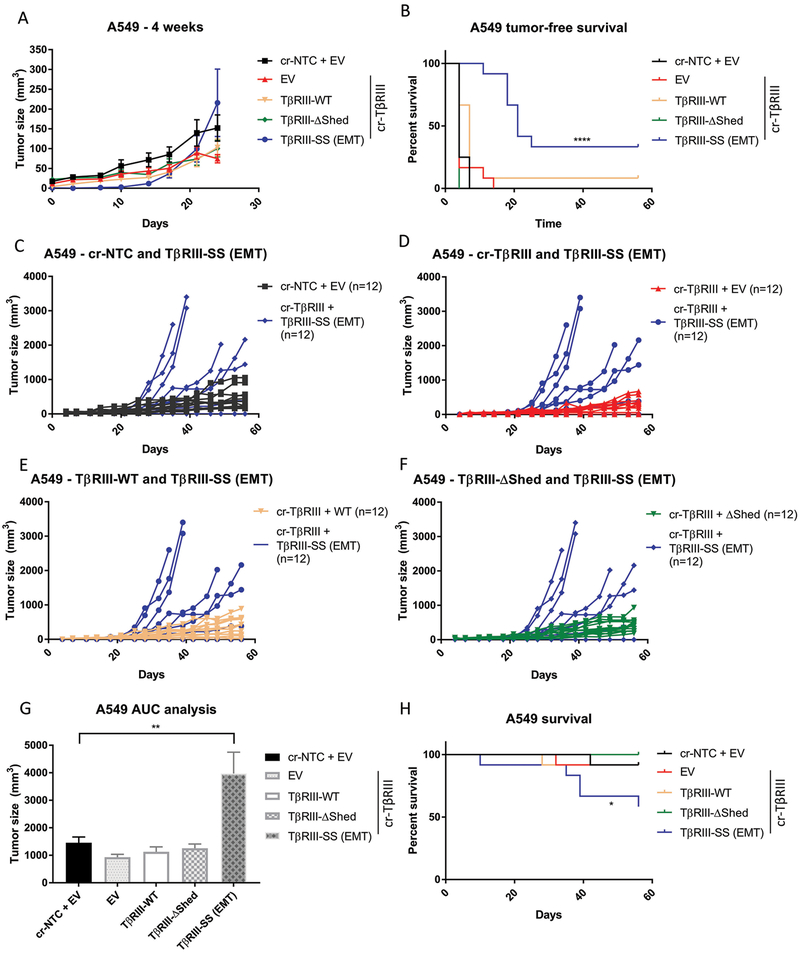
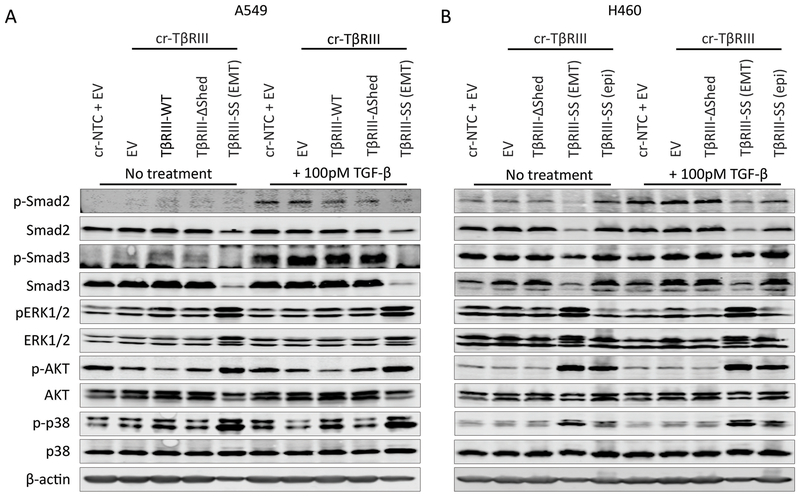
The type III TGF-β receptor (TβRIII) is a TGF-β co-receptor that presents ligand to the type II TGF-β receptor to initiate signaling. TβRIII also undergoes ectodomain shedding to release a soluble form (sTβRIII) that can bind ligand, sequestering it away from cell surface receptors. We have previously identified a TβRIII extracellular mutant that has enhanced ectodomain shedding ("super shedding (SS)"-TβRIII-SS). Here, we utilize TβRIII-SS to study the balance of cell surface and soluble TβRIII in the context of lung cancer. We demonstrate that expressing TβRIII-SS in lung cancer cell models induces epithelial-to-mesenchymal transition (EMT) and that these TβRIII-SS (EMT) cells are less migratory, invasive and adhesive and more resistant to gemcitabine. Moreover, TβRIII-SS (EMT) cells exhibit decreased tumorigenicity but increased growth rate in vitro and in vivo. These studies suggest that the balance of cell surface and soluble TβRIII may regulate a dichotomous role for TβRIII during cancer progression.
III 型转化生长因子-β 受体(TβRIII)是一种 TGF-β 共受体,可将配体呈递给 II 型 TGF-β 受体以启动信号转导。TβRIII 还会发生外显子脱落,释放出一种可溶性形式(sTβRIII),可以与配体结合,将其从细胞表面受体上隔离。我们之前已经鉴定出一种 TβRIII 胞外突变体,它具有增强的外显子脱落能力(“超级脱落(SS)”-TβRIII-SS)。在这里,我们利用 TβRIII-SS 来研究肺癌中细胞表面和可溶性 TβRIII 的平衡。我们证明,在肺癌细胞模型中表达 TβRIII-SS 会诱导上皮-间充质转化(EMT),而这些 TβRIII-SS(EMT)细胞的迁移、侵袭和黏附能力降低,对吉西他滨的耐药性增强。此外,TβRIII-SS(EMT)细胞在体外和体内的肿瘤形成能力降低,但生长速度加快。这些研究表明,细胞表面和可溶性 TβRIII 的平衡可能调节 TβRIII 在癌症进展过程中的双重作用。